Eco-Friendly Custom Tumblers: Sustainable Materials and Practices for 2026
Explore sustainable custom tumbler options including recycled stainless steel, ocean-bound plastic, bamboo lids, and eco-friendly decoration methods. Includes cost comparisons, certifications guide, and corporate green drinkware program planning.
Rohan Mehta
Head of Marketing at RareCustom. Rohan covers sustainability trends and helps businesses choose eco-friendly custom tumblers that align with their environmental commitments.
The environmental impact of single-use drinkware has never been more visible. An estimated 500 billion disposable cups are produced globally each year, with the vast majority ending up in landfills or oceans. A single custom tumbler can replace over 500 disposable cups during its usable lifetime, making reusable tumblers one of the simplest and most effective ways to reduce plastic waste. But not all reusable tumblers are created equal from a sustainability perspective. The materials, decoration methods, packaging, and supply chain practices behind a tumbler determine its true environmental footprint — and in 2026, eco-conscious consumers and corporate buyers are scrutinizing every detail.
This guide covers the full spectrum of sustainable custom drinkware options available today: from recycled stainless steel tumbler construction and ocean-bound plastic tumbler alternatives to eco-friendly decoration methods, compostable packaging, and corporate green gifting programs. Whether you are an event planner seeking zero-waste events drinkware, a corporate buyer building an ESG compliance gift program, or an individual looking for environmentally friendly gifts that make a real impact, the information below will help you choose green tumblers that align with your values without sacrificing quality, durability, or design appeal. For background on tumbler construction materials, review the stainless steel vs plastic vs glass comparison.
The Environmental Case for Custom Tumblers
The reusable tumbler vs disposable cup comparison is stark. A lifecycle analysis tumbler study conducted by the Environmental Research Institute in 2024 found that a stainless steel reusable tumbler offsets its manufacturing carbon footprint after just 50 uses — roughly 2–3 months for a daily coffee drinker. Over a 5-year lifespan, a single reusable tumbler prevents approximately 1,825 disposable cups from entering the waste stream. When that tumbler is distributed as part of a corporate program to 500 employees, the cumulative impact is over 900,000 disposable cups eliminated.
The carbon footprint drinkware comparison extends beyond cups to lids, straws, sleeves, and packaging. A single-use plastic replacement with a reusable tumbler eliminates not just the cup itself but also the polystyrene lid, the paper sleeve, the plastic straw, and the individual packaging — all of which have their own environmental costs. The International Reusable Packaging Association estimates that switching to reusable drinkware reduces per-serving carbon emissions by 60–85% compared to single-use alternatives.

Beyond the direct waste reduction, custom tumblers serve as visible sustainability signals. A branded reusable tumbler carried in a meeting, at a conference, or on a daily commute communicates environmental values to everyone who sees it. This visibility makes eco-friendly promotional tumblers one of the highest-impact items in corporate sustainability programs — combining functional utility with public advocacy for reducing plastic waste.
Sustainable Tumbler Materials
The sustainability of a tumbler starts with its raw materials. In 2026, several material innovations have expanded the options for environmentally conscious custom drinkware far beyond standard virgin stainless steel. Each material category offers distinct environmental benefits, and the right choice depends on the project's priorities — whether that is maximum recycled content, lowest carbon footprint, or the most compelling sustainability story for the target audience.
Recycled Stainless Steel
Recycled stainless steel tumbler construction uses post-consumer and post-industrial scrap steel that is melted down and reformed into new tumbler bodies. The recycling process uses 60–75% less energy than producing virgin stainless steel from iron ore. Food-grade 18/8 recycled stainless steel is chemically identical to virgin material, meaning there is zero compromise in durability, insulation performance, or food safety. Several tumbler manufacturers now offer recycled stainless steel options with recycled content ranging from 50% to 90% post-consumer material.
Ocean-Bound Plastic
Ocean-bound plastic tumbler components are manufactured from plastic waste collected within 50 kilometers of coastlines and waterways before it reaches the ocean. This material, classified as rPET tumbler grade, is processed into food-safe, BPA-free tumbler components including lids, handles, and straw attachments. Using ocean-bound plastic does not sacrifice durability — the material meets the same FDA food-contact standards as virgin plastic — while directly funding coastal cleanup infrastructure. Several ocean cleanup partnerships have emerged in the tumbler industry, with manufacturers committing to removing 1 pound of ocean-bound plastic for every tumbler sold.
Natural Material Accents
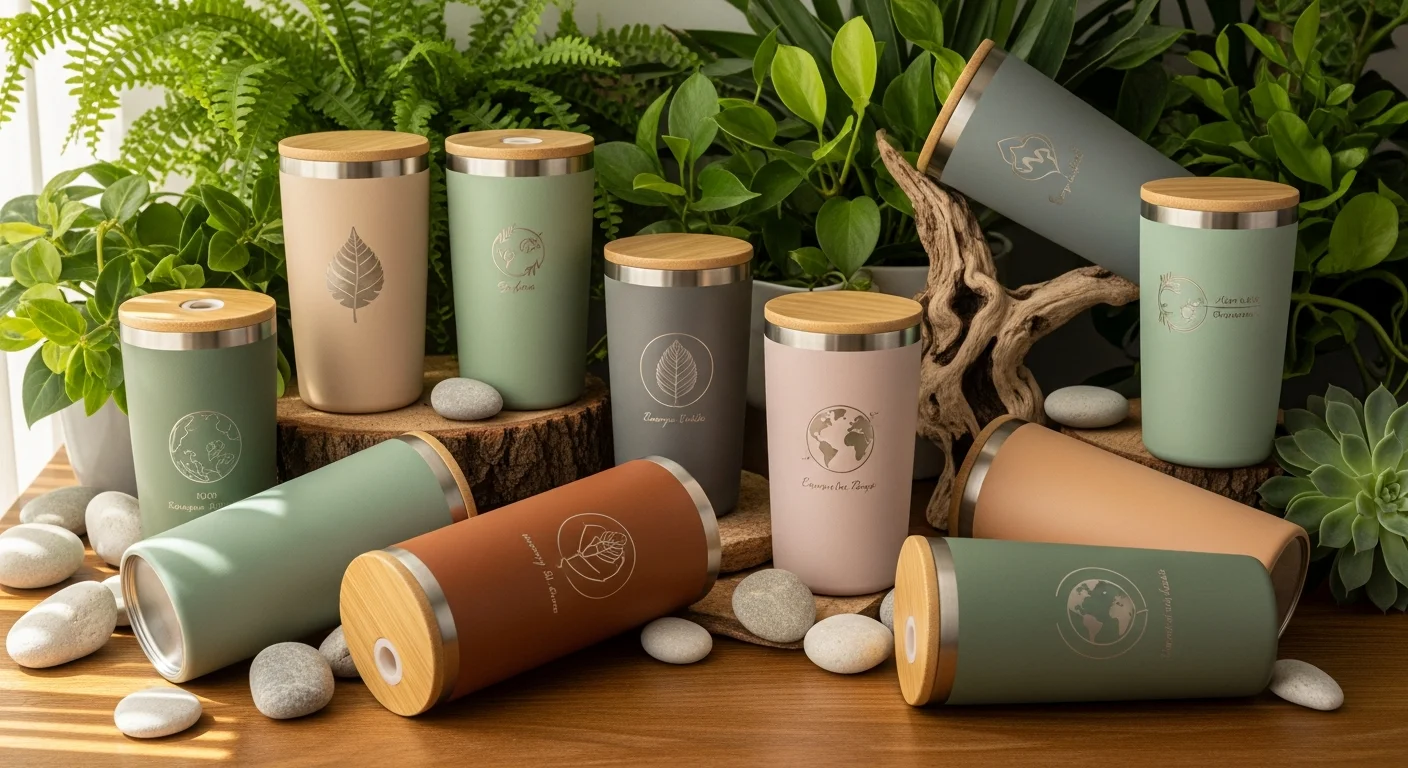
Natural material tumbler construction incorporates renewable resources like bamboo, cork, and sustainably harvested wood into tumbler components. Bamboo lid tumbler designs replace plastic lids with fast-growing bamboo that reaches harvest maturity in 3–5 years compared to decades for hardwood. Cork base tumbler designs use bark harvested from cork oak trees without harming the tree — the bark regenerates every 9–12 years, making cork one of the most sustainable natural materials available. These natural accents reduce the plastic content of a tumbler while adding a distinctive aesthetic that signals environmental consciousness.

Eco-Friendly Decoration Methods
The decoration applied to a custom tumbler contributes to its overall environmental footprint. Some methods use solvent-based inks, PVC-based materials, or energy-intensive processes that undermine the sustainability of the tumbler itself. Choosing eco-friendly decoration ensures the entire product — not just the base material — aligns with green values.
Laser engraving is the most environmentally friendly decoration method for custom tumblers. It uses no inks, solvents, or consumable materials whatsoever. A focused laser beam etches the design directly into the tumbler surface, producing zero chemical waste. The only input is electricity, which can be sourced from renewable energy. The result is a permanent, dishwasher-safe decoration that will never peel, fade, or release microplastics. For a detailed comparison of decoration methods, see the decoration methods guide.
Water-based sublimation inks have replaced many solvent-based alternatives in the sublimation process. These inks produce vivid, full-color prints without volatile organic compounds (VOCs). The sublimation process itself infuses the ink into the polymer coating rather than layering it on top, meaning there is no ink film to crack, peel, or shed microplastic particles over time. When combined with a recycled stainless steel tumbler body, water-based sublimation produces an end-to-end sustainable custom drinkware product.
UV printing with eco-certified inks uses LED curing that consumes 70–80% less energy than traditional UV lamp systems. Eco-certified UV inks are formulated without heavy metals, PVC, or phthalates. While UV printing does apply a physical ink layer to the tumbler surface, modern formulations are designed for exceptional adhesion and durability, minimizing the risk of flaking that could introduce microplastics into the environment.
Sustainable Packaging Options
Eco-friendly tumbler packaging extends the sustainability commitment from the product to the unboxing experience. Compostable packaging options have expanded significantly in 2026, making plastic-free shipping a realistic choice for bulk and individual orders alike.
Recycled cardboard boxes made from 100% post-consumer fiber are the standard for sustainable tumbler packaging. These boxes provide the same structural protection as virgin cardboard while diverting waste from landfills. Look for FSC-certified (Forest Stewardship Council) packaging to ensure the fiber comes from responsibly managed forests or verified recycled sources.
Compostable protective inserts replace expanded polystyrene (EPS) foam and plastic bubble wrap. Molded pulp inserts made from recycled paper conform to the tumbler shape and absorb impact during shipping. Cornstarch-based packing peanuts dissolve in water and break down completely in industrial composting facilities. Honeycomb paper wrap provides cushioning equivalent to bubble wrap without any plastic content.
Soy-based or water-based printing inks for custom packaging graphics eliminate petroleum-based ink from the unboxing experience. These inks produce vibrant, high-quality printing on recycled cardboard surfaces while remaining safe for composting and recycling streams.

Corporate Green Drinkware Programs
Corporate sustainability goals increasingly include Scope 3 emissions — the indirect emissions from purchased goods, business travel, and employee activities. Custom tumblers sit squarely in this category, and corporations are seeking green tumblers that contribute to ESG compliance targets. A well-designed corporate green drinkware program does more than distribute tumblers: it measures impact, communicates values, and drives behavioral change across the organization.
The most effective corporate programs pair tumbler distribution with a measurable waste reduction initiative. For example, a company distributing 1,000 recycled stainless steel tumblers to employees can eliminate disposable cup purchases from breakrooms and cafeterias, tracking the reduction in disposable cup procurement as a quantifiable sustainability metric. At an average of 3 disposable cups per employee per day, a 1,000-person program prevents over 780,000 cups from entering the waste stream annually. This data point becomes a powerful element in ESG reporting and corporate sustainability communications.
Green gifting programs for clients and partners extend the impact beyond internal operations. A corporate gift tumbler made from recycled stainless steel with a bamboo lid, packaged in compostable materials, and accompanied by a card explaining the environmental impact sends a message that resonates with clients who share sustainability values. Some programs include a QR code on the tumbler that links to a landing page tracking the cumulative environmental impact of the entire tumbler program — total cups displaced, carbon saved, and plastic prevented from reaching waterways.

Eco-Friendly Tumblers for Events
Zero-waste events are a growing category in event planning, and reusable event drinkware is one of the most impactful changes an event organizer can make. A 500-person conference that provides reusable custom tumblers instead of disposable cups prevents an estimated 4,500–7,500 disposable cups, lids, and straws from being used over a 3-day event.
Cup deposit programs at festivals and outdoor events have proven highly effective. Attendees receive a custom tumbler upon entry and pay a small deposit ($3–5) that is refunded when the tumbler is returned at the end of the event. Return rates typically range from 40–60%, meaning 40–60% of attendees keep their tumblers as souvenirs (and future reusable cups), while the returned tumblers can be washed and reused at the next event. This model dramatically reduces single-use cup waste while creating a branded keepsake that extends brand visibility for months or years after the event.
For weddings and private events, eco-friendly tumblers serve as both functional drinkware and sustainable favors. Guests use the tumbler throughout the event and take it home as a memento, replacing both the disposable drinkware and the traditional throwaway favor. The weddings and events guide covers specific design ideas for occasion-specific eco-friendly tumblers.
Cost Comparison: Eco vs Standard Materials
The price premium for sustainable custom drinkware has shrunk considerably as demand has increased and supply chains have matured. In 2026, the typical cost differences between eco-friendly and standard tumbler options are smaller than most buyers expect.
- Recycled stainless steel vs virgin stainless steel: 5–15% premium. A standard 20oz stainless steel tumbler priced at $12 per unit would cost $12.60–13.80 in recycled stainless steel. At quantities over 500 units, the premium often drops to 5–8%.
- Bamboo lid vs standard plastic lid: $0.50–1.00 additional per unit. Bamboo lids require more complex manufacturing but are increasingly standardized, driving costs down.
- Cork base vs standard rubber base: $0.75–1.50 additional per unit. Cork bases are a premium accent that signals quality and sustainability.
- Compostable packaging vs standard packaging: $0.30–0.75 additional per unit. Molded pulp inserts and recycled cardboard cost slightly more than EPS foam and virgin cardboard, but the difference is narrowing rapidly.
- Eco-certified inks vs standard inks: $0.00–0.25 additional per unit. Many decoration suppliers have transitioned to eco-certified inks as their default, eliminating the premium entirely.
When calculating the total cost premium for a fully sustainable tumbler program, the typical uplift is 10–20% over a standard equivalent. For a $15 per-unit standard tumbler, the eco-friendly version costs $16.50–18.00. At volume pricing through the pricing tiers detailed in the pricing guide, the absolute dollar difference per unit shrinks further, making sustainable options accessible for programs of virtually any budget.
Certifications and Claims to Look For
Sustainability claims in the drinkware industry range from rigorously verified certifications to vague, unsubstantiated marketing language. Understanding the difference between meaningful certifications and greenwashing protects your investment and your organization's credibility. Non-toxic materials and food-safe sustainable construction should always be verified, not assumed.
- BPA-free: Indicates the product contains no bisphenol A, a chemical associated with health concerns. This is the minimum standard for any food-contact drinkware and should be verified for all plastic components including lids and straws.
- FDA food-contact compliant: Confirms the tumbler materials meet US Food and Drug Administration standards for direct food and beverage contact. This certification applies to the tumbler body, lid, straw, and any coatings.
- FSC certified (packaging): The Forest Stewardship Council certification on packaging materials verifies that paper and cardboard fiber comes from responsibly managed forests or certified recycled sources.
- 1% for the Planet: Some tumbler brands commit 1% of annual sales to environmental nonprofits through this verified giving program. Products from 1% for the Planet members directly fund conservation and environmental restoration.
- Global Recycled Standard (GRS): This certification verifies the recycled content of materials and tracks the chain of custody from recycled input to finished product. A GRS-certified recycled stainless steel tumbler has independently verified recycled content.
- Carbon Neutral certified: Products or companies that have measured, reduced, and offset their carbon emissions to achieve net-zero carbon footprint. Look for third-party verification from organizations like the Carbon Trust or Climate Neutral Certified.
Avoid products that use vague claims like "eco-friendly" or "green" without specifying what makes them sustainable. Ask suppliers for specific certifications, recycled content percentages, and documentation of their sustainability claims. A reputable supplier will provide this information readily. For a deeper look at tumbler trends driving sustainability in 2026, see the design trends guide.
When marketing your sustainable tumblers to recipients or customers, lead with specific data rather than general claims. "Made from 75% post-consumer recycled stainless steel" is more credible and compelling than "eco-friendly tumbler." Include the environmental impact metrics on hang tags, packaging inserts, or QR-linked landing pages: cups displaced per year, carbon offset equivalent, and recycled content percentage. These specifics transform a sustainability claim from marketing language into verified environmental advocacy that builds trust with increasingly discerning consumers and corporate procurement teams evaluating vendors against sustainability scorecards.
For organizations pursuing comprehensive sustainability programs, the tumbler is often just one component of a broader plastic-free shipping and zero-waste initiative. Pairing sustainable tumblers with reusable straws (stainless steel or silicone), reusable tote bags, and compostable cleaning supplies creates a cohesive green gifting program that demonstrates commitment beyond a single product. The pricing guide can help you budget for these expanded program components while maintaining cost-effectiveness at scale.
Choose Sustainable Tumblers
Eco-friendly custom tumblers represent one of the most practical intersections of sustainability and marketing. Every reusable tumbler in circulation is a disposable cup not in a landfill, and every branded sustainable tumbler is a visible statement of environmental values. The materials, decoration methods, and packaging options available in 2026 make it possible to create a fully sustainable custom tumbler program at a modest cost premium — typically 10–20% over standard alternatives.
RareCustom offers a full range of sustainable custom tumbler options including recycled stainless steel bodies, bamboo lids, cork bases, and compostable packaging. Our eco-friendly decoration methods — laser engraving with zero chemical waste and water-based sublimation inks — ensure your design is as sustainable as your tumbler. Start designing your eco-friendly tumbler using our free online tool, or contact our team for a custom sustainability assessment of your tumbler program.
Related Articles
- Sublimation vs Laser Engraving vs UV Printing for Custom Tumblers
- Stainless Steel vs Plastic vs Glass: Choosing the Right Custom Tumbler
- Custom Tumblers for Corporate Gifts and Employee Branding
- Custom Tumblers for Weddings and Events
- Custom Tumbler Pricing Breakdown
- Custom Tumbler Design Trends 2026
Share this article
Written by
Rohan Mehta
Head of Marketing at RareCustom. Rohan covers sustainability trends and helps businesses choose eco-friendly custom tumblers that align with their environmental commitments.