How to Choose the Right T-Shirt Fabric for Custom Printing
Compare cotton, polyester, tri-blend, and organic fabrics for custom t-shirt printing. Learn which fabric works best for DTG, screen printing, and sublimation.
Aisha Patel
Head of Materials Science & Sustainability at RareCustom. M.S. in Textile Engineering from NC State with AATCC certification and ISSP Sustainability Practitioner certification. 7+ years evaluating fabrics, materials, and eco-friendly production processes.
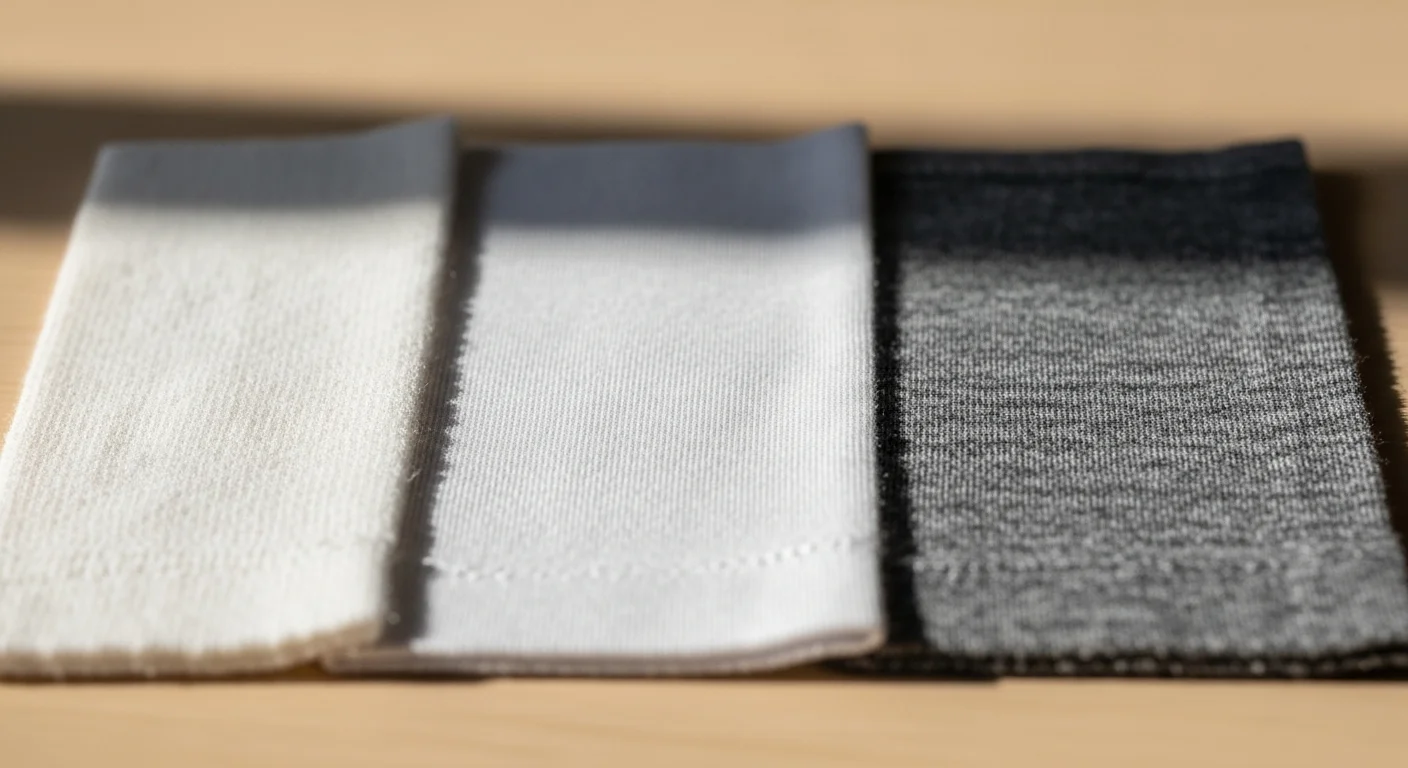
The fabric you choose for your custom t-shirts affects everything: how the print looks, how the shirt feels on the body, how it holds up after repeated washes, and how much it costs per unit. Yet fabric selection is one of the most overlooked decisions in the custom apparel process. Most people jump straight to designing their graphic without considering whether the blank garment underneath will complement or undermine their vision.
This guide breaks down every major t-shirt fabric type used in custom t-shirt printing today. You will learn the strengths and weaknesses of cotton, polyester, tri-blend, and organic options, understand how fabric weight affects comfort and durability, and discover which fabrics pair best with each printing method. By the end, you will be able to choose the perfect blank for any project with confidence.
100% Cotton: The Classic Choice
Cotton remains the most popular fabric for custom printed t-shirts, and for good reason. It is soft, breathable, and absorbs ink beautifully, producing vibrant prints with a smooth hand feel. Within the cotton category, however, there are important distinctions that significantly affect quality and price.
Carded Open-End Cotton is the most affordable option. The fibers are shorter and less uniform, resulting in a slightly rougher texture and a heavier feel. These shirts work well for promotional giveaways, single-use event shirts, and situations where budget is the primary concern. The print quality is acceptable but lacks the crispness you get on finer cotton.
Ringspun Cotton represents a meaningful step up. The fibers are twisted more tightly during manufacturing, producing a smoother, softer fabric with a more refined surface. Ringspun cotton accepts ink more evenly than carded cotton, resulting in sharper detail and more vivid colors. This is the sweet spot for most custom t-shirt projects that balance quality and cost.
Combed Ringspun Cotton goes one step further. The fibers are combed to remove short strands and impurities before being spun, resulting in the softest and most uniform cotton fabric available. Combed ringspun tees have a noticeably luxurious feel and produce the highest quality prints. They cost more per unit but deliver a premium product that customers associate with retail-quality apparel.
Organic Cotton is grown without synthetic pesticides or fertilizers and is increasingly in demand from environmentally conscious consumers. The feel and print quality are comparable to conventional cotton, but the environmental footprint is significantly smaller. Organic cotton blanks carry a price premium, but for brands positioning themselves around sustainability, that premium communicates authenticity and commitment.
Polyester: Performance and Sublimation
Polyester has earned a strong position in custom apparel, especially for athletic wear, performance tees, and sublimation printing. The synthetic fibers are inherently moisture-wicking, meaning they pull sweat away from the skin and dry quickly. This makes polyester the go-to choice for sports teams, gym apparel, outdoor events, and any situation where the wearer will be active.
From a printing perspective, polyester is the only fabric compatible with dye sublimation, a process where heat turns ink into gas that bonds permanently with the polyester fibers. Sublimation produces incredibly vibrant, photographic-quality prints that will never crack, peel, or fade because the ink is literally part of the fabric. However, sublimation only works on white or very light-colored polyester garments.
The drawback of 100% polyester is the feel. Many people find it less comfortable than cotton against the skin, and it tends to retain odors more readily. For custom printing methods other than sublimation, polyester can also present challenges. DTG inks do not absorb into polyester fibers the same way they do cotton, which can lead to color fidelity issues and reduced washability. If you want to understand the differences between printing methods in more detail, check out our screen printing vs DTG comparison guide.

Tri-Blend: The Best of Three Worlds
Tri-blend fabric combines three materials, typically 50% polyester, 25% cotton, and 25% rayon, to create a garment that borrows the best qualities from each. The cotton provides softness and ink absorption. The polyester adds durability and shape retention. The rayon contributes a silky drape and prevents the fabric from feeling stiff.
The result is an incredibly soft, lightweight shirt with a slightly heathered appearance that looks and feels like a well-worn vintage tee straight out of the package. Tri-blend shirts have become the premium option for brand merchandise, retail-style apparel, and any project where the wearer's comfort is the top priority.
Tri-blends work well with DTG and screen printing, though the heathered texture means prints take on a slightly muted, vintage quality compared to the same design on solid white cotton. Many designers actually prefer this effect because it gives the print an organic, lived-in look that consumers associate with high-end streetwear. Price-wise, tri-blend blanks sit at the premium end of the spectrum, so they are best suited for projects where perceived value justifies the investment.
Understanding Fabric Weight (GSM)
Fabric weight is measured in grams per square meter (GSM) and directly affects how a shirt feels, drapes, and holds up over time. Understanding GSM helps you choose the right shirt for the season, the use case, and the customer expectation.

| GSM Range | Weight Class | Best For | Characteristics |
|---|---|---|---|
| 110-140 | Lightweight | Summer events, giveaways, layering | Thin, airy, less durable |
| 145-180 | Midweight | Everyday wear, branded merch, retail | Balanced comfort and durability |
| 185-220 | Heavyweight | Streetwear, premium blanks, outerwear tees | Substantial feel, structured drape |
| 220+ | Super Heavyweight | Oversized streetwear, workwear | Very thick, boxy structure |
Lightweight shirts in the 110-140 GSM range are perfect for summer events, promotional giveaways, and situations where cost per unit needs to be low. They feel cool in hot weather but tend to be less durable and may become see-through in lighter colors.
Midweight shirts between 145 and 180 GSM are the industry standard for custom printing. They offer a balanced combination of comfort, durability, and value. Most ringspun cotton tees fall in this range, making them ideal for everyday wear and branded merchandise.
Heavyweight shirts at 185 GSM and above have become increasingly popular thanks to the streetwear movement. These substantial garments hold their shape better, resist wrinkles, and provide a premium feel that justifies higher retail pricing. If you are building a brand around premium custom apparel, heavyweight blanks communicate quality before the customer even sees the design.
Fabric and Printing Method Compatibility
Not every fabric works with every printing method. Choosing the wrong combination leads to poor print quality, premature fading, and disappointed customers. Here is a quick compatibility reference to guide your decision.
| Printing Method | Best Fabric | Acceptable | Avoid |
|---|---|---|---|
| Screen Printing | 100% Cotton | Tri-Blend, Cotton-Poly | 100% Polyester (plastisol migration risk) |
| DTG | 100% Cotton, Ringspun | Tri-Blend | 100% Polyester |
| Sublimation | 100% Polyester (white) | High-poly blends | 100% Cotton, dark fabrics |
| DTF | All fabrics | All fabrics | None (universal method) |
| Heat Transfer Vinyl | Cotton, Cotton-Poly | Polyester (low temp) | Very delicate fabrics |
If you are unsure which printing method suits your project, our comparison of custom t-shirt options can help you narrow down the choices based on quantity, budget, and design complexity.
Shrinkage and Care Considerations
Fabric choice directly affects how a shirt behaves after washing, and communicating care instructions to your customers prevents disappointment and returns. Cotton shirts are the most prone to shrinkage, especially carded open-end varieties that can shrink 3 to 5 percent after the first hot wash. Ringspun and combed cotton shrink less because the tighter fiber construction resists contraction.
Polyester is dimensionally stable and virtually shrink-proof, making it a reliable choice for consistent sizing across production runs. Tri-blend fabrics fall somewhere in between, with minimal shrinkage thanks to the polyester content that stabilizes the garment.
Pre-shrunk garments have already undergone a shrinking process during manufacturing and will experience minimal additional shrinkage. When evaluating blanks for your custom project, always check whether the garment is pre-shrunk. If it is not, consider sizing up to compensate. For detailed care guidance that you can share with your customers, our custom t-shirt care and washing guide covers everything from water temperature to drying methods.
When to Choose Which Fabric
Choosing the right fabric comes down to understanding your priorities. If softness and print quality are paramount, go with combed ringspun cotton. If performance and moisture management matter most, choose polyester. If you want the best possible hand feel at a premium price point, tri-blend is your answer. And if sustainability is central to your brand identity, organic cotton blanks communicate your values through the garment itself.
Budget also plays a significant role. Carded cotton is the least expensive, followed by ringspun cotton, polyester, tri-blend, and organic cotton. For a deeper breakdown of how fabric choice impacts your per-unit cost, our pricing guide explains the full cost structure of custom t-shirts from blank garment to finished product.
Frequently Asked Questions
What is the best fabric for custom t-shirt printing?
For most custom printing projects, ringspun cotton offers the best balance of print quality, comfort, and cost. It produces sharp, vibrant prints with DTG and screen printing while feeling soft against the skin. If you need moisture-wicking performance, polyester is preferred. For the ultimate soft feel, tri-blend fabric is the premium choice.
Can you screen print on polyester t-shirts?
Screen printing on polyester is possible but requires special low-cure inks to prevent dye migration, a phenomenon where the polyester dye bleeds through the printed ink and alters the color. For best results with polyester, sublimation printing or DTF printing are more reliable methods that produce long-lasting, vibrant results.
What does GSM mean for t-shirts?
GSM stands for grams per square meter and indicates the weight and thickness of the fabric. Lower GSM values (110-140) mean a lighter, thinner shirt ideal for warm weather. Midweight shirts (145-180 GSM) are the most versatile for everyday wear. Heavyweight shirts (185+ GSM) provide a premium, structured feel popular in streetwear and retail merchandise.
Is tri-blend better than 100% cotton for custom printing?
Tri-blend fabric is softer and more comfortable than most cotton options, but prints appear slightly muted due to the heathered texture. If maximum print vibrancy and sharpness are your priority, 100% ringspun cotton is better. If the wearer's comfort and a vintage aesthetic are more important, tri-blend is the superior choice. The decision depends on your project goals and budget.
How much do different t-shirt fabrics shrink after washing?
Carded cotton can shrink 3 to 5 percent after the first hot wash. Ringspun and combed cotton typically shrink 1 to 3 percent. Polyester is virtually shrink-proof. Tri-blend fabrics experience minimal shrinkage thanks to their polyester content. Always check whether a garment is pre-shrunk before ordering, and when in doubt, size up to accommodate potential shrinkage.
Share this article
Written by
Aisha Patel
Head of Materials Science & Sustainability at RareCustom. M.S. in Textile Engineering from NC State with AATCC certification and ISSP Sustainability Practitioner certification. 7+ years evaluating fabrics, materials, and eco-friendly production processes.