T-Shirt Care Guide: How to Wash Custom Printed Shirts So They Last
Learn how to wash, dry, iron, and store custom printed t-shirts to maximize print durability. Care tips by printing method and fabric type for long-lasting prints.
Aisha Patel
Head of Materials Science & Sustainability at RareCustom. M.S. in Textile Engineering from NC State with AATCC certification and ISSP Sustainability Practitioner certification. 7+ years evaluating fabrics, materials, and eco-friendly production processes.
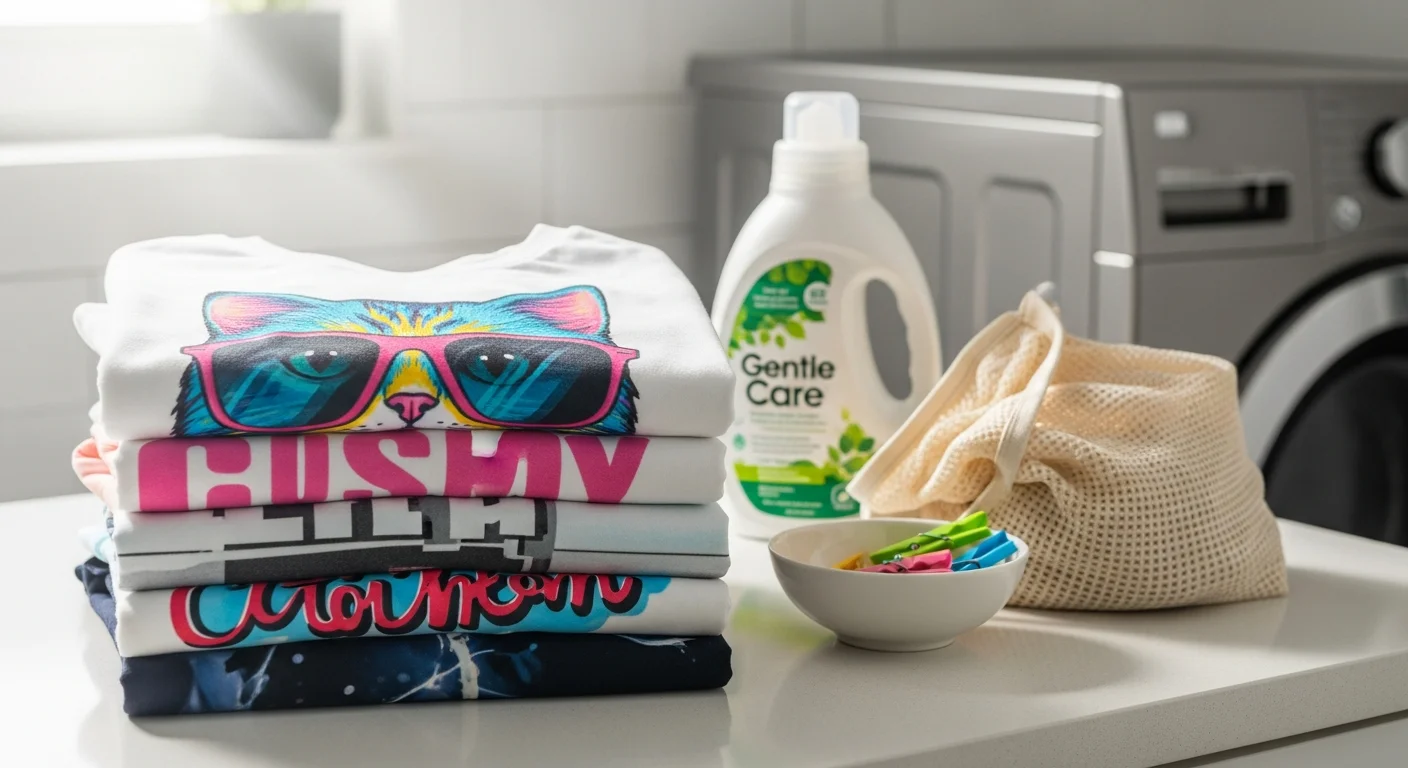
You invested time choosing the perfect design, selecting the right shirt, and waiting for your custom t-shirt to arrive. Now you want it to last. Proper care is the difference between a custom print that stays vibrant for years and one that cracks, fades, or peels after a handful of washes. The good news is that caring for custom printed shirts is straightforward once you know the rules.
This guide covers everything you need to know about washing, drying, ironing, and storing your custom t-shirts so the prints remain sharp and the fabric stays comfortable wash after wash. Whether your shirt was screen printed, DTG printed, or heat transferred, you will find specific care instructions tailored to each method.
Quick Care Cheat Sheet
Before diving into the details, here is a quick reference for caring for any custom printed t-shirt. Follow these five rules and your prints will last significantly longer than average.
- Wash inside out in cold water on a gentle cycle
- Use mild detergent without bleach or fabric softener
- Air drying is always the safest option; if using a dryer, use a low heat setting
- Iron inside out and never place a hot iron directly on the print
- Store folded in a cool, dry place away from direct sunlight
These five steps apply to virtually every custom printed shirt regardless of printing method or fabric type. The sections below explain the reasoning behind each rule and provide additional tips for specific situations.
For a printable version of these care instructions, many customers photograph the list above and save it to their phone for easy reference on laundry day. Some even tape a copy to the inside of their laundry room cabinet as a quick visual reminder.
How Printing Method Affects Care

Not all prints are created equal, and the method used to apply your design affects how you should care for the shirt. Understanding the differences between screen printed care, DTG printing care, and heat transfer care helps you tailor your routine for maximum print durability.
Screen printed shirts are among the most durable custom prints available. The ink sits on top of the fabric in a thick layer that bonds firmly through heat curing. Properly cured screen prints can withstand 100 or more washes with minimal fading or cracking. The primary threat to screen prints is high heat, which can cause the plastisol ink to soften and crack over time. Cold water washing and low heat or air drying protect the ink layer effectively.
DTG (direct-to-garment) prints use water-based inks that are absorbed into the fabric fibers rather than sitting on top. This creates a softer hand feel but requires slightly more careful treatment. DTG printing care centers around preserving the ink within the fibers. Cold water, gentle cycles, and avoiding harsh detergents that strip color are essential. Well-cared-for DTG prints typically last 50 or more washes with vibrant color retention. For a deeper comparison of these methods, check our guide on screen printing vs DTG.
Heat transfer and vinyl prints adhere to the fabric surface through heat bonding. These prints are the most susceptible to peeling and cracking because the adhesive bond can weaken over time. Washing inside out is critically important for heat transfers because the agitation of the wash cycle combined with other garments can physically peel the transfer from the fabric. Low heat drying and careful ironing are essential for long-lasting prints with this method.
Regardless of method, the ink cure time for new shirts matters. Most printing methods require a 24 to 48 hour curing period after production before the first wash. If you receive a custom shirt and it smells slightly of ink or feels tacky, allow it an extra day before washing to ensure the cure is complete.
Washing Your Custom Printed T-Shirts

Washing is where most print damage occurs, making it the most important step to get right. Following a few simple rules protects your prints without adding complexity to your laundry routine.
Always wash inside out. Turning your shirt inside out before placing it in the washing machine shields the printed surface from friction against other garments, the drum of the machine, and buttons or zippers that can scratch and abrade the print. This single step is the most impactful thing you can do for print longevity.
Use cold water. Cold water washing protects both the print and the fabric. Hot water accelerates color fading in the fabric and can soften ink layers, particularly plastisol inks used in screen printing. Cold water is gentler on all components of the shirt and is better for the environment as well. Set your machine to cold or cool and resist the temptation to use warm or hot settings.
Select the gentle cycle. The gentle cycle reduces agitation, which is the mechanical force that wears down prints over time. Standard and heavy-duty cycles create more friction between garments, increasing the risk of cracking, peeling, and fading. If your machine has a "delicates" or "hand wash" setting, these are even gentler options for your most treasured custom shirts.
Choose a mild detergent. Harsh detergents contain chemicals that strip color from both the fabric and the print. Opt for a mild, liquid detergent without bleach, optical brighteners, or enzymes. Powder detergents can leave residue that builds up on printed surfaces over time, so liquid formulations are generally preferred. Never use bleach on a printed garment. Even color-safe bleach can degrade certain ink types over repeated washes.
Skip the fabric softener. Fabric softener coats fibers with a chemical film that can interfere with ink adhesion, particularly for DTG prints where the ink is absorbed into the fibers. The softening effect may feel pleasant on the fabric, but it gradually weakens the bond between ink and fiber. If you want softer shirts, choose a softer blank fabric from the start rather than relying on chemical softeners.
Using a mesh laundry bag adds an extra layer of protection for custom shirts you particularly value. The bag contains the shirt during the wash cycle, preventing it from tangling with other garments and reducing friction. This is especially recommended for shirts with detailed or delicate prints.
Drying Custom Printed Shirts

How you dry your custom printed shirts has nearly as much impact on print longevity as how you wash them. Heat is the primary enemy during the drying phase, and managing it properly keeps your prints intact for years.
Air drying is the gold standard. Hang to dry on a clothesline, drying rack, or hanger in a well-ventilated area away from direct sunlight. Air drying eliminates heat exposure entirely, preserving both the print and the fabric's structure. Shirts dried on a flat surface retain their shape best because hanging can stretch the neck and shoulders over time. If space allows, lay shirts flat on a clean, dry towel for the gentlest possible treatment.
If you must use a dryer, choose the lowest heat setting. The low heat setting on most dryers is sufficient to dry a t-shirt without reaching temperatures that damage prints. Avoid the regular or high heat settings, which can cause ink to soften, crack, or peel. Remove shirts from the dryer promptly when the cycle ends to prevent wrinkles from setting in the heat.
Avoid tumble dryer sheets. Like liquid fabric softener, dryer sheets deposit a waxy coating on fabrics that can interfere with print adhesion. If static cling is a concern, use a wool dryer ball as a chemical-free alternative that reduces static and drying time without affecting your prints.
For screen printed shirts specifically, the first few drying cycles are the most critical. The heat curing process that bonds the ink to the fabric during production can be partially reversed by excessive dryer heat before the ink has fully settled. Air drying your new screen printed shirts for the first three to five washes, then transitioning to a low heat setting for subsequent dries, gives the ink maximum time to set permanently.
Ironing Printed T-Shirts Safely
Ironing a custom printed shirt requires one fundamental rule: never place a hot iron directly on the print. Direct contact between a hot iron and a printed surface will melt, distort, or permanently damage the design. With that rule in mind, ironing custom shirts is perfectly safe and straightforward.
Iron inside out. Turn the shirt inside out so the iron contacts the fabric rather than the print. This allows you to press wrinkles from the printed area without risking direct heat damage. Use a medium heat setting appropriate for the fabric type. Cotton handles medium to high heat well, while polyester and blends require lower temperatures to avoid scorching.
Use a pressing cloth. If you need to iron the printed area from the outside, place a thin cotton cloth, a piece of parchment paper, or a pressing cloth between the iron and the print. This barrier distributes heat evenly and prevents direct contact. Press firmly but briefly, lifting the iron between strokes rather than sliding it across the print.
Steam with caution. Steam can be used on the non-printed areas of the shirt without concern. However, direct steam on the printed surface can cause moisture damage to certain ink types, particularly water-based DTG inks. When in doubt, iron inside out without steam for the safest results.
For shirts that wrinkle easily, consider using a fabric steamer instead of an iron. Steamers work without direct contact and can remove wrinkles from both the fabric and printed areas without risk of damage. Hold the steamer a few inches from the surface and let the steam do the work. This method is especially effective for garments stored in luggage or drawers for extended periods.
Stain Removal Without Damaging Prints

Stains happen, and knowing how to treat them without damaging your custom print saves shirts that might otherwise be retired prematurely. The key principle is spot cleaning rather than soaking, and gentle treatments rather than aggressive chemicals.
Act quickly. The sooner you address a stain, the easier it is to remove without aggressive treatment. Blot (do not rub) the stain with a clean cloth to absorb excess liquid before it sets into the fibers. Rubbing pushes the stain deeper and can spread it across a larger area, including onto the printed design.
Use a gentle stain remover. Apply a small amount of mild stain remover or liquid dish soap directly to the stain, avoiding the printed area as much as possible. Let it sit for 10 to 15 minutes, then gently work the solution into the stain with your fingers or a soft brush. Rinse with cold water and check the stain before washing the full shirt.
Avoid bleach and harsh chemicals. Bleach, hydrogen peroxide, and strong solvent-based cleaners can strip or discolor both the fabric and the print. Even if the stain is on an unprinted area, chemical residue can transfer to the print during washing. Stick to mild, fabric-safe treatments and accept that some old, set-in stains may not come out completely without risking print damage.
Test on an inconspicuous area. Before applying any stain treatment to a visible area, test it on the inside hem or an area covered by a seam. If the treatment causes discoloration or affects the fabric texture, choose a milder alternative. This precaution takes 30 seconds and can save your favorite shirt.
Storage Tips for Custom T-Shirts
Proper storage protects your custom prints during the weeks or months between wears. How you fold, stack, and store your shirts affects both the print and the fabric's longevity.
Fold rather than hang for long-term storage. Hanging t-shirts for extended periods stretches the neck and shoulders, distorting the fit over time. Fold shirts with the print facing inward so the printed surface does not contact other garments or surfaces that could cause friction or transfer.
Store in a cool, dry place. Heat and humidity accelerate ink degradation and promote mildew growth on fabric. A temperature-controlled closet or dresser drawer is ideal. Avoid storing custom shirts in attics, garages, or other spaces with temperature extremes and moisture fluctuations.
Keep away from direct sunlight. UV exposure fades both fabric dyes and print inks over time. If your storage area receives natural light, ensure shirts are in a drawer, closet, or opaque storage container that blocks UV exposure. This is especially important for bright, vibrant designs where color fading would be most noticeable.
Do not stack heavy items on top of printed shirts. Sustained pressure on a folded print can cause the ink to transfer to adjacent surfaces or develop permanent creases in the design. Store printed shirts in the upper portion of a stack or in a separate drawer section where they are not compressed under heavy items like jeans or sweaters.
How Long Do Custom Prints Last?
Print durability depends on the printing method, care routine, and frequency of wear and washing. Understanding realistic expectations helps you evaluate quality and plan for reprints or replacements.
Screen prints are the durability champions. With proper care, a quality screen print maintains its vibrancy and integrity for 100 or more wash cycles. Many screen printed shirts from decades ago still look great today, a testament to the method's longevity. The print may develop a slight vintage patina over years of wear, which many people find appealing rather than undesirable.
DTG prints typically last 50 to 80 washes with proper care. While not quite as durable as screen printing, modern DTG technology has improved dramatically. The prints fade gradually rather than cracking, maintaining a wearable appearance throughout their lifespan. Following the cold water, inside-out washing protocol extends DTG print life significantly.
Heat transfer and vinyl prints have a shorter lifespan, typically 25 to 50 washes depending on quality. The adhesive bond weakens over time with heat and friction, eventually causing edges to peel or crack. Careful handling and strict avoidance of high heat extend heat transfer longevity but cannot match the durability of screen printing or DTG.
Regardless of method, the single biggest factor in print longevity is care. A screen print exposed to hot water, high-heat drying, and bleach will degrade faster than a heat transfer treated gently with cold water and air drying. Your care routine is the variable you control, and following the guidelines in this article maximizes the life of every custom shirt you own.
Pre-Wash Care for New Custom Shirts
The first wash of a new custom shirt sets the tone for its long-term condition. Taking extra precautions during the initial pre-wash care period protects the fresh print while it fully cures and bonds with the fabric.
Wait 24 to 48 hours before the first wash. Although prints are heat-cured during production, allowing an additional day or two of ambient curing time ensures maximum ink adhesion. This ink cure time is especially important for DTG prints, where the water-based inks benefit from extra drying time before exposure to moisture.
Wash alone or with similar items. For the first wash, either wash the shirt by itself or with a small load of similar soft garments. Avoid mixing with heavy items like jeans, towels, or garments with zippers and buttons that create friction against the fresh print.
Use extra-cold water for the first wash. If your machine has a cold-only option without any warm water blending, use it for the initial wash. This gives the print the gentlest possible introduction to the washing process, minimizing any risk of premature ink softening or color bleeding.
Air dry the first time. Even if you plan to use a dryer for subsequent washes, air dry your new custom shirt after the first wash. This cautious approach gives the print one full wash-and-dry cycle without heat exposure, allowing you to verify the cure quality before introducing any thermal stress.
Common Care Mistakes That Ruin Prints

Knowing what not to do is as important as knowing what to do. These common mistakes account for the majority of premature print failures and are all easily avoidable.
Using hot water. Hot water is the single most damaging element in the laundry routine for custom prints. It softens plastisol inks, accelerates color fading in DTG prints, and weakens heat transfer adhesives. There is no scenario where hot water benefits a custom printed shirt. Always use cold.
High-heat drying. The regular or high heat setting on a tumble dryer subjects your shirt to temperatures that rival the original curing temperature of the ink. Over repeated cycles, this effectively re-melts and re-cures the print under uncontrolled conditions, causing cracking, distortion, and peeling prevention failures. Low heat or air drying protects the print.
Ironing directly on the print. Even a few seconds of direct iron contact can permanently damage a print. The extreme localized heat melts the ink, creating shiny spots, distorted areas, or complete sections of the design lifting off the fabric. Always iron inside out or use a pressing cloth.
Using bleach or harsh chemicals. Bleach destroys both fabric dyes and print inks. Harsh stain removers, dry cleaning solvents, and industrial-strength detergents are all too aggressive for custom printed garments. Stick to mild, liquid detergents and gentle stain treatments.
Overloading the washing machine. Cramming too many garments into a single load increases friction dramatically. Your custom shirt gets compressed, twisted, and rubbed against zippers, buttons, and rough fabrics throughout the cycle. Wash custom shirts in reasonably sized loads with room for garments to move freely.
Care Tips by Fabric Type
Different fabric types have unique care requirements that interact with print care considerations. Matching your care routine to the specific fabric of your custom shirt optimizes both fabric longevity and print durability.
100% cotton t-shirt care. Cotton is the most common fabric for custom t-shirts and responds well to standard care guidelines. It tolerates cold and cool water well, air dries without issues, and holds screen printed and DTG inks effectively. Cotton does shrink slightly with heat, so cold water and air drying also preserve the shirt's fit. Iron on medium-high heat when turned inside out. For more on choosing the right shirt fabric for your design, see our beginner's guide.
Polyester and poly-blend care. Polyester care requires lower temperatures across the board. Polyester melts at lower temperatures than cotton, meaning high-heat drying and ironing pose a greater risk. The fabric is also more prone to static buildup, which attracts lint and debris to the printed surface. Wash in cold water, dry on the lowest heat setting or air dry, and iron on the polyester setting if needed. Avoid fabric softener, which is particularly problematic on polyester fibers.
Tri-blend care. Tri-blend fabrics (cotton, polyester, and rayon) combine the properties of all three fibers. They are softer and more delicate than pure cotton, requiring the gentle cycle and cold water without exception. Tri-blends are prone to shrinkage and stretching, so air drying flat is the preferred method. The soft hand feel of tri-blends pairs beautifully with DTG prints, but the delicate fibers require attentive care.
Performance and moisture-wicking care. Technical fabrics used in athletic and performance shirts have specific care needs. These fabrics should never be exposed to fabric softener, which clogs the moisture-wicking channels in the fibers. Wash in cold water with a sport-specific detergent that removes odor without coating the fibers. Air dry or use the no-heat or air-fluff dryer setting to preserve both the technical properties and any printed designs.
Order Custom T-Shirts Built to Last
Print durability starts with quality production. At RareCustom, every custom t-shirt is produced using industry-leading equipment, premium inks, and proper curing processes that maximize the longevity of your design. We use high-quality plastisol inks for screen printing and the latest water-based inks for DTG that are formulated for long-lasting prints and vibrant color retention.
Our production process includes quality control checks at multiple stages to ensure every shirt meets our standards before shipping. We verify print alignment, color accuracy, and cure quality so you receive a product that is built to withstand years of wear and washing.
Ready to create a custom shirt that lasts? Use our free design tool to build your design, choose your shirt and printing method, and place your order with confidence. Every order ships free with no minimum quantity required. For help selecting the right printing method for your design and durability needs, check out our guide on custom t-shirt pricing and options.
Related Articles
Share this article
Written by
Aisha Patel
Head of Materials Science & Sustainability at RareCustom. M.S. in Textile Engineering from NC State with AATCC certification and ISSP Sustainability Practitioner certification. 7+ years evaluating fabrics, materials, and eco-friendly production processes.