Custom Athletic Socks for Sports Teams: Performance Meets Team Spirit
Design high-performance custom athletic socks for basketball, soccer, football, and running teams. Covers moisture-wicking fabrics, cushioned zones, grip soles, and uniform coordination.
Terrence Okafor
Head of Production at RareCustom with 20+ years in commercial printing. Terrence's sport-specific expertise helps teams select the right athletic sock construction for peak performance.
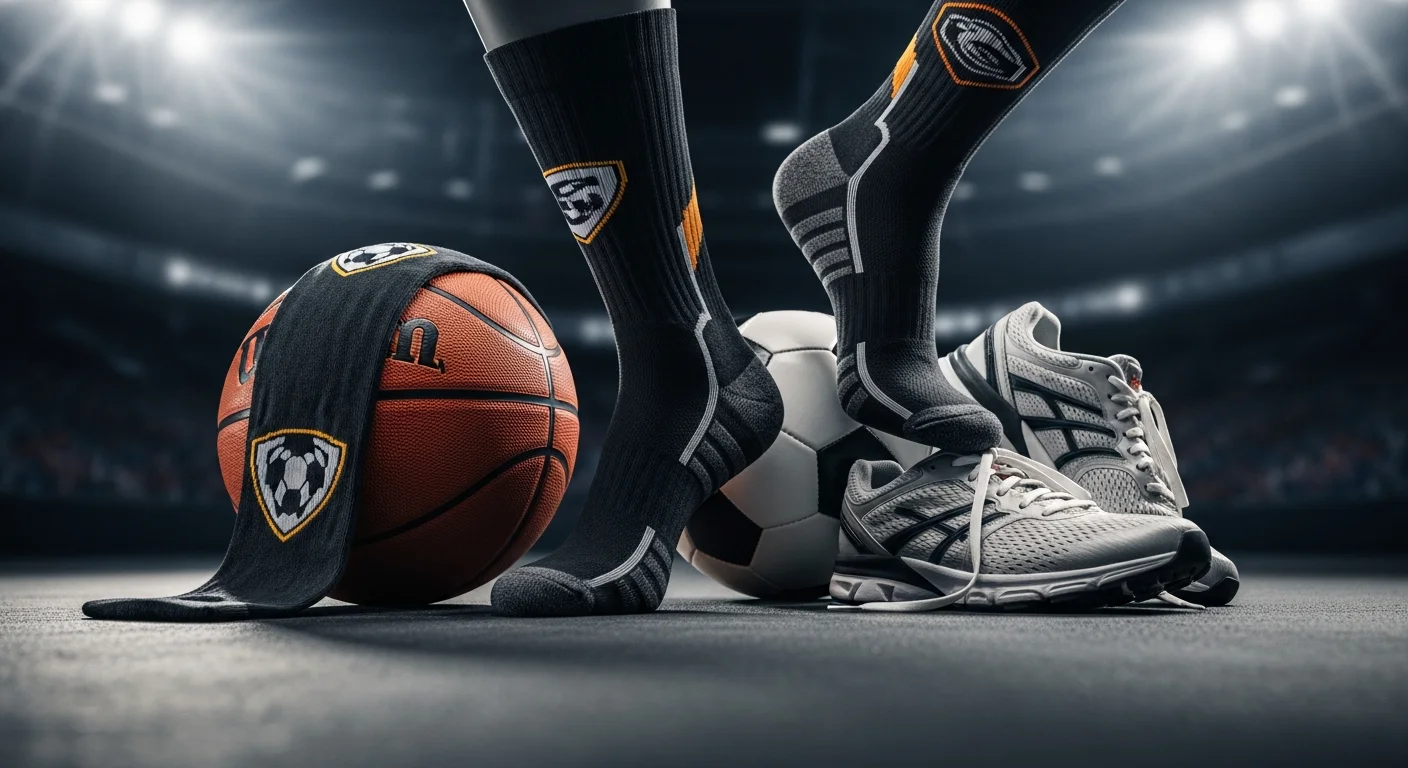
When outfitting a sports team, socks are often the last item on the checklist — an afterthought added at the end of the uniform order. That is a mistake. Custom athletic socks play a critical role in player performance, comfort, and injury prevention. The right sock reduces blisters, manages moisture, provides arch support, and cushions high-impact zones. The wrong sock — a generic cotton crew sock grabbed from a department store shelf — can cause hot spots, restrict circulation, and leave athletes distracted by discomfort when they should be focused on the game.
Beyond performance, custom team socks complete the uniform look. Mismatched socks on a basketball court or soccer pitch look sloppy and undermine the professional image that teams work hard to project. A coordinated sock that matches the team jersey in color and design elevates the entire uniform package. This guide covers everything you need to specify when ordering custom athletic socks — from sport-specific performance features to league compliance requirements.
Sport-Specific Sock Requirements
Basketball: Basketball socks are typically crew-length (6 to 8 inches above the ankle) or mid-calf length, made from moisture-wicking polyester blends with 3-5% spandex for compression. Cushioning is concentrated in the forefoot and heel where impact from jumping and lateral cutting is highest. Most basketball leagues require uniform sock color, and many mandate that socks match the primary jersey color. NBA-style elite basketball socks feature targeted cushioning zones, arch compression bands, and left-right specific construction.
Soccer: Soccer socks are knee-high (typically 16 to 18 inches) and must cover shin guards completely per FIFA and most youth league regulations. Fabric is a lightweight polyester-nylon blend with ribbed construction to hold the sock up without slipping during 90 minutes of running. Cushioning is minimal to maintain a close fit inside low-profile cleats. The top of the sock typically features a turnover cuff of 2 to 3 inches. For knee-high sock style details, review the comprehensive style guide.
Football: Football socks vary by position and league level. Skill position players (receivers, defensive backs) often prefer lightweight, over-the-calf socks that sit smoothly under cleats. Linemen may prefer thicker, cushioned options that protect against turf burns and cleat contact. Most leagues require socks to match the team's primary or secondary color. Youth football leagues often specify that socks must be one solid color with no visible logos or patterns.
Running: Running socks prioritize moisture management and blister prevention above all else. They are typically low-cut (ankle or no-show) with seamless toe construction to eliminate friction. Fabric blends include merino wool for temperature regulation or synthetic blends (polyester-nylon-spandex) for maximum moisture wicking. Cushioning is light to moderate, focused on the heel and ball of the foot. Running teams and clubs use custom socks as part of their team identity and as merchandise for race-day events.
Performance Features That Matter

Moisture-Wicking Fabric: The single most important performance feature in athletic socks is moisture management. Polyester, nylon, and merino wool all wick sweat away from the skin to the outer surface of the sock where it can evaporate. Cotton, by contrast, absorbs moisture and holds it against the skin, creating a wet, friction-prone environment that breeds blisters. For serious athletic use, cotton content should be zero or minimal (under 10%). Reference the fabric guide for detailed material comparisons.
Arch Support Band: A compression band around the midfoot provides structural support to the arch, reduces fatigue during extended play, and prevents the sock from bunching inside the shoe. The band should be snug but not restrictive — tight enough to feel supportive, loose enough to avoid circulation issues. Most quality athletic socks use a 2 to 3 inch wide elastic band knitted into the arch area.
Cushioned Zones: Strategic cushioning in the heel, forefoot, and toe box absorbs impact and reduces stress on joints. The level of cushioning varies by sport: basketball and running socks benefit from moderate to heavy cushioning, while soccer and cycling socks perform better with minimal cushioning for a closer fit. Cushioning is created by looping extra yarn on the inside of the sock (terry loops), adding thickness to specific areas without making the entire sock bulky.
Ventilation Channels: Mesh ventilation panels on the top of the foot and along the sides increase airflow and accelerate moisture evaporation. These panels use a thinner knit construction that allows air to circulate while maintaining structural integrity. Ventilation channels are especially valuable for sports played in warm conditions or indoor environments with limited air circulation.
Seamless Toe Construction: Traditional socks have a seam across the toe that can cause irritation during repetitive motion. Seamless toe construction uses a linking process that creates a smooth, flat toe closure with no raised seam. This eliminates a common source of blisters and hot spots, particularly in running and soccer where the toes are under constant pressure. For proper sizing to ensure a snug, blister-free fit, review the sizing guide.
Team Uniform Coordination with Jerseys
Custom athletic socks should be designed as part of the complete uniform package, not as a standalone accessory. Match the primary sock color to the dominant jersey color, and use accent colors from the jersey for cuff stripes, logo placement, or heel-toe contrast areas. This creates a polished, head-to-toe team look that projects professionalism at every level of play.
When ordering home and away uniforms, order two sock colorways to match. A common approach is a dark sock (matching the home jersey) and a white sock (for away games). Some teams opt for a single sock color that works with both uniform sets — typically the team's primary color if it contrasts sufficiently with both light and dark shorts.
For programs outfitting multiple teams across different sports, establish a universal sock color standard. Use the same one or two team colors for socks across all sports, varying only the sock length and performance features per sport. This simplifies ordering, reduces per-pair costs through volume discounts, and creates a visually consistent athletic program identity.
League and School Regulations
Before finalizing your sock design, check the specific uniform regulations for your league or governing body. Common requirements include: socks must be a single uniform color for the entire team, socks must match the primary uniform color, visible manufacturer logos must be smaller than a specified size (often 2.25 square inches), and socks must cover the ankle bone completely. High school athletic associations (NFHS) and NCAA both publish detailed uniform guidelines that include sock specifications.
Youth leagues tend to have stricter sock regulations than adult recreational leagues. Many youth soccer leagues require white socks only, regardless of the team's color scheme. Youth basketball leagues often mandate that all team members wear identical socks in a color that matches the jersey. Violating sock regulations can result in technical fouls, game delays, or even forfeiture, so compliance is non-negotiable.
Material Recommendations by Sport
Basketball: 60-70% polyester, 20-25% nylon, 5-10% spandex, 2-5% rubber. This blend provides moisture wicking, durability, compression, and grip. Terry-loop cushioning in the heel and forefoot. Weight: 60-80 grams per pair.
Soccer: 65-75% nylon, 15-20% polyester, 5-10% spandex, 2-5% rubber. Nylon-dominant construction provides the durability needed to withstand shin guard friction and cleat contact. Minimal cushioning for a close fit. Weight: 50-70 grams per pair.
Football: 55-65% polyester, 20-30% nylon, 5-10% spandex, 3-5% rubber. Similar to basketball but with heavier cushioning options for linemen and additional reinforcement in high-abrasion areas. Weight: 70-100 grams per pair depending on cushioning level.
Running: 40-50% merino wool or 60-70% polyester, 20-25% nylon, 5-10% spandex. Merino wool excels at temperature regulation and odor control for distance runners. Synthetic blends are lighter and faster-drying for sprinters and race-day use. Weight: 30-50 grams per pair.
Grip Socks for Indoor Sports
Grip socks feature rubberized dots, bars, or patterns on the sole that provide traction on smooth surfaces. They have become essential for indoor sports including basketball (on polished hardwood), volleyball, indoor soccer (futsal), and wrestling. The grip elements prevent foot slippage inside the shoe, reducing energy loss and improving agility during quick direction changes.

Custom grip socks for teams can feature grip patterns in team colors, adding a branded element to the functional feature. Silicone grip printing is applied after the sock is knitted and adds approximately $1.00 to $2.00 per pair to the production cost. The grip pattern should cover the ball of the foot and heel — the two primary contact points inside the shoe. Full-sole grip coverage is unnecessary and can make the sock feel stiff.
Professional athletes in soccer (Premier League, MLS) and basketball (NBA) have popularized grip socks, and the trend has filtered down to youth and recreational leagues. Many players now wear grip socks under their team socks, but custom team grip socks eliminate the need for this doubled-up approach by combining team branding with performance traction in a single sock.
Ordering Timeline for Season Start
Team sock orders should be placed well in advance of the season to avoid rush fees and ensure every player is equipped for the first game. Here is a recommended timeline:
12 to 16 weeks before season: Collect player sizes using the sizing guide, finalize the design with team colors and any custom elements, and submit the order to the manufacturer. For youth team sizing, reference the youth-specific guide which includes growth allowance recommendations.
8 to 12 weeks before season: Approve production samples if ordered. Verify color match, fit, and cushioning level. Confirm quantities based on final roster.
4 to 6 weeks before season: Receive finished socks. Distribute to players during uniform fitting sessions. Order 10-15% extra pairs in the most common sizes to cover mid-season roster additions, replacements for lost or damaged socks, and growth-related size changes for youth players.
Budget approximately $6.00 to $12.00 per pair for quality custom athletic socks at team-order quantities (typically 24 to 100 pairs). Volume discounts apply at higher quantities — a program ordering 200+ pairs across multiple teams can expect per-pair costs of $4.50 to $7.00 depending on complexity and materials.
Frequently Asked Questions
Do custom athletic socks improve performance compared to generic socks?
Yes, measurably. Sport-specific construction — moisture wicking, targeted cushioning, arch compression, and grip soles — reduces blisters, improves in-shoe stability, and decreases foot fatigue. A 2024 study in the Journal of Sports Engineering found that athletes wearing performance socks reported 35% fewer blister incidents and 18% less perceived foot fatigue over a season compared to those wearing generic cotton socks.
What is the minimum order quantity for custom team athletic socks?
Most manufacturers require 24 to 48 pairs minimum for custom athletic socks. Some sublimation-based producers offer minimums as low as 12 pairs. For knit-in designs with custom yarn colors, expect minimums of 100 to 200 pairs. Youth programs ordering fewer than 24 pairs may want to consider sublimation printing on blank performance socks as an alternative.
Can custom socks match the exact colors of existing team jerseys?
Yes. Provide the manufacturer with Pantone TCX (textile) color codes, or send a physical swatch of the jersey fabric for color matching. Most manufacturers offer free yarn dip samples so you can verify the color match before committing to a full production run. Digital color proofs are useful for initial review but always request physical samples for final approval.
Are grip socks legal in all sports leagues?
Grip socks are permitted in most leagues, but some governing bodies require that any visible grip pattern match the sock color or be covered by the team sock. In professional soccer, many players cut the feet out of their team-issued socks and wear grip socks underneath, taping the seam. Custom team grip socks eliminate this workaround by integrating the grip into the official team sock. Always verify with your specific league before ordering.
Share this article
Written by
Terrence Okafor
Head of Production at RareCustom with 20+ years in commercial printing. Terrence's sport-specific expertise helps teams select the right athletic sock construction for peak performance.