Custom Outdoor Pillows: Best Materials, UV Protection & Weather-Resistant Designs
Everything you need to know about custom outdoor pillows — from UV-resistant fabrics like Sunbrella and Olefin to weather-proof printing methods, sizing for patios, and care tips to extend pillow life.
Aisha Patel
Materials Science & Sustainability Specialist at RareCustom. Aisha evaluates outdoor fabrics, UV-resistant inks, and weather-proof treatments for durable custom outdoor pillows.
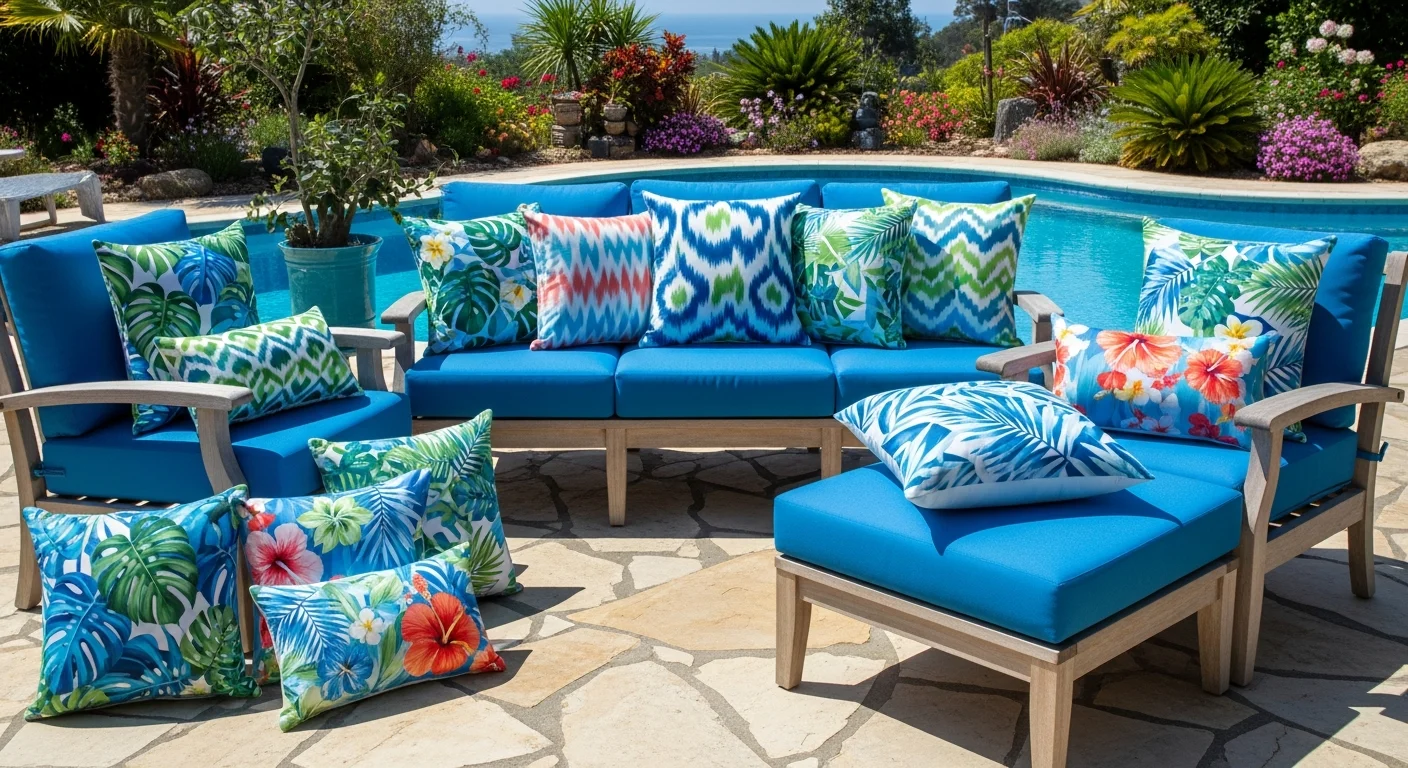
Bringing personalized design to your patio, deck, or poolside seating sounds great in theory — until the sun fades your custom print, rain soaks through the fabric, and mildew starts growing in the fill. Standard indoor custom pillows are not built to withstand the elements, and learning that lesson the hard way means replacing pillows every season.
Custom outdoor pillows require different materials, different printing methods, and different construction techniques than their indoor counterparts. This guide covers every consideration — from fabric selection and UV-resistant printing to water resistance, mildew prevention, and care routines — so your outdoor custom pillows look vibrant season after season.
Why Outdoor Pillows Need Special Treatment
Indoor and outdoor environments expose pillow materials to fundamentally different stressors. Understanding these differences explains why simply tossing an indoor pillow onto patio furniture leads to rapid deterioration:
UV radiation: Direct sunlight is the primary enemy of printed fabrics. Ultraviolet rays break down dye molecules, causing printed images and colors to fade. A standard indoor sublimation print can lose 30 to 50 percent of its color saturation after just 200 hours of direct sun exposure. For context, a pillow on a south-facing patio in summer accumulates 200 hours of direct sun in roughly three to four weeks.
Moisture exposure: Rain, morning dew, humidity, pool splashes, and spilled drinks create conditions that standard pillow fabrics and fills are not designed to handle. Water absorption leads to mildew growth inside the fill material and along seams, producing stains, odors, and structural breakdown. Indoor fabrics like cotton canvas absorb moisture and retain it — exactly the opposite of what outdoor use demands.
Temperature swings: Outdoor pillows experience daily temperature ranges that indoor pillows never encounter — from near-freezing overnight lows to 140 degree surface temperatures on sun-exposed furniture in summer. These thermal cycles stress fabric fibers, adhesives, and stitching. Materials must remain flexible and stable across this entire range.
Physical wear: Outdoor pillows face abrasion from textured furniture surfaces (wicker, rough wood, metal mesh), contact with sunscreen and insect repellent (which contain solvents that can damage prints), and exposure to dust, pollen, and airborne debris that acts as fine sandpaper over time.
Best Fabrics for Outdoor Pillows
Fabric choice is the most critical decision when ordering custom outdoor pillows. The right fabric resists UV fading, repels water, resists mildew, and maintains its structure through years of outdoor use. Here are the top options, ranked by overall outdoor performance:
Sunbrella (solution-dyed acrylic): The industry gold standard for outdoor textiles. Sunbrella fabric is solution-dyed, meaning the color is embedded into the fiber during manufacturing rather than applied to the surface afterward. This makes the color essentially permanent — Sunbrella fabrics retain their color for 5 to 10 years in direct sun exposure. The fabric is also water-resistant, mildew-resistant, and bleach-cleanable. It carries a 5-year warranty against fading. The downside is cost — Sunbrella is significantly more expensive than polyester alternatives.
Olefin (polypropylene): An excellent mid-range option that offers strong UV resistance, inherent water repellency, and natural mildew resistance at a lower price point than Sunbrella. Olefin is solution-dyed like Sunbrella, providing excellent fade resistance. It dries quickly when wet and does not absorb moisture into the fiber. The texture is slightly coarser than acrylic, and color options may be more limited depending on the supplier.
Outdoor polyester (UV-treated): Standard polyester fabric treated with UV-resistant coatings offers the most affordable outdoor option. UV-treated polyester handles sublimation printing well, producing vibrant colors similar to indoor polyester. However, UV coatings degrade over time (typically 1 to 3 years depending on sun intensity), after which fading accelerates. Best for covered patios, screened porches, and semi-outdoor spaces that receive indirect sunlight.
Marine-grade vinyl: For extremely harsh environments — poolside, boat deck, waterfront — marine vinyl is virtually waterproof, UV-stable, and mildew-proof. Printing options on vinyl are more limited (UV-cured ink or screen printing only), and the texture is smooth and non-fabric, which some people find less inviting for a pillow. Best for functional applications where durability is the absolute priority over comfort.
For a deeper look at fabric options including indoor materials, read our complete custom pillow fabric guide.

UV-Resistant Printing Methods
Even the most UV-resistant fabric is only half the equation. The printing method must also withstand sun exposure without fading. Here is how each printing technique performs outdoors:
Solution-dyeing (best for outdoor): The color is embedded into the fiber before the fabric is woven. This is how Sunbrella and Olefin fabrics achieve their legendary fade resistance. However, solution-dyeing limits you to the manufacturer's pre-existing color palette — custom photographic prints are not possible with this method.
UV-cured ink printing: Specialized inks that are cured (hardened) with ultraviolet light instead of heat. UV-cured inks form a tough, flexible film on the fabric surface that resists sunlight, water, and abrasion. This is the best method for custom full-color designs on outdoor fabrics. UV-cured prints can last 3 to 5 years in direct sun with proper care.
Sublimation with UV-protective topcoat: Standard sublimation printing on polyester followed by application of a UV-protective spray or topcoat. This approach gives you sublimation's unmatched color vibrancy while adding a protective layer that extends outdoor life to 2 to 3 years. The topcoat needs reapplication annually for maximum effectiveness.
Screen printing with UV-resistant inks: Outdoor-rated screen printing inks contain UV stabilizers that slow fading. Combined with Sunbrella or Olefin fabric, screen-printed outdoor pillows can maintain color intensity for 3 to 5 years. This method works best for bold, limited-color designs like logos and geometric patterns. For a detailed comparison of all printing techniques, see our pillow printing methods guide.
Water and Mildew Resistance
Water management is the second pillar of outdoor pillow design (after UV resistance). Both the cover fabric and the fill material must handle moisture without degrading:
Water-repellent fabric coatings: Most outdoor pillow fabrics are treated with a durable water repellent (DWR) finish that causes water to bead up and roll off the surface rather than soaking in. DWR coatings reduce moisture absorption by 90 percent or more. The coating wears down over time but can be refreshed with commercially available fabric waterproofing sprays.
Quick-dry fill materials: Outdoor pillow inserts should use synthetic fill materials that do not absorb water. Polyester fiberfill dries within 2 to 4 hours in warm weather. Reticulated polyester foam (open-cell foam with drainage channels) dries even faster and provides excellent support. Avoid down, feathers, and cotton batting in outdoor pillows — these natural materials absorb moisture, dry slowly, and are highly susceptible to mildew.
Mildew-resistant construction: Look for pillow inserts and covers treated with antimicrobial agents that inhibit mold and mildew growth. Ventilated pillow designs with mesh panels along the bottom allow air circulation that prevents moisture from being trapped inside. Hidden drainage grommets in the corners of the pillow allow trapped water to escape instead of pooling.
Color Fastness Considerations
Color fastness measures how well a printed or dyed color resists fading from environmental exposure. For outdoor custom pillows, three types of color fastness matter:
Lightfastness (UV resistance): Rated on a scale of 1 to 8, where 8 is maximum resistance. Sunbrella fabrics typically rate 7 to 8. UV-cured prints rate 5 to 7. Standard sublimation without UV protection rates 3 to 4. For outdoor pillows that receive more than 4 hours of daily direct sun, target a lightfastness rating of 6 or higher.
Washfastness: How well colors hold up to cleaning. Outdoor pillows get cleaned more frequently than indoor pillows, so wash durability is important. Solution-dyed fabrics can be cleaned with diluted bleach without color loss. Printed fabrics should be cleaned with mild soap and water only.
Rub fastness (abrasion resistance): How well the color resists transfer or wear from physical contact. Outdoor pillows pressed against textured wicker furniture all day experience constant low-level abrasion. UV-cured and solution-dyed colors perform best here; heat transfer vinyl and low-quality DTG prints are most vulnerable.
Outdoor Pillow Size Guide
Outdoor pillow sizing follows slightly different conventions than indoor sizing because outdoor furniture dimensions vary more widely. Use our design tool to preview exact pillow dimensions on your furniture before ordering:
16x16 to 18x18 inches (standard accent): The most versatile outdoor pillow size. Works on dining chairs, smaller lounge chairs, and benches. Two to three pillows of this size fit comfortably on a standard outdoor loveseat. This is the most popular size for custom printed outdoor pillows because it balances visual impact with practicality.
20x20 to 24x24 inches (large accent): Better suited for deep-seated outdoor sofas, oversized lounge chairs, and daybeds. The larger surface area gives more room for detailed custom designs and photographic prints. One or two large accent pillows make a stronger visual statement than several smaller ones.
12x20 to 14x24 inches (lumbar): Rectangular pillows designed for lower back support on chairs and loungers. Lumbar outdoor pillows are functional as well as decorative — they encourage better posture during long afternoons on the patio. Custom designs on lumbar pillows should orient horizontally to take advantage of the wider format.
26x26 to 30x30 inches (floor cushion): Large square cushions for ground-level seating areas — fire pit circles, garden meditation spots, and poolside lounging. Floor cushions should use the thickest, most durable fill available (4 to 6 inches of high-density foam wrapped in polyester fiberfill) because they bear full body weight.

Care and Cleaning Tips for Outdoor Pillows
Proper maintenance dramatically extends the life and appearance of your custom outdoor pillows. Follow these care practices to keep your pillows looking fresh for years:
Weekly maintenance: Brush off loose debris (pollen, leaves, dust) with a soft bristle brush or shake the pillows vigorously. This prevents surface dirt from being ground into the fabric by foot traffic or sitting. A quick brush-off takes thirty seconds per pillow and prevents cumulative staining.
Monthly deep cleaning: Mix one tablespoon of mild dish soap per gallon of warm water. Sponge the solution onto the pillow cover, let it sit for 5 minutes, then rinse thoroughly with a garden hose. Allow pillows to air dry completely in the sun — the UV exposure during drying actually helps kill any mildew spores that may be present.
Mildew removal: If you spot mildew (gray or black spots, musty smell), mix one cup of white vinegar with one cup of water and spray the affected area. Let it sit for 15 minutes, then scrub gently with a soft brush and rinse. For Sunbrella fabric, a diluted bleach solution (one cup bleach per gallon of water) is safe and effective. For printed fabrics, test any cleaning solution on an inconspicuous area first.
Seasonal storage: At the end of the outdoor season, clean all pillows thoroughly, allow them to dry completely, and store them in a breathable fabric storage bag in a dry location. Do not use plastic bags or airtight containers — trapped moisture will cause mildew during storage. A climate-controlled garage, closet, or basement is ideal.

Indoor-Outdoor Crossover Designs
One of the most practical approaches to custom outdoor pillows is designing them to work both indoors and outdoors. A crossover design gives you maximum flexibility — bring the pillows inside during storms, use them in a sunroom during cooler months, and move them back to the patio in spring.
To make crossover designs work, choose a fabric and print method that performs well in both environments. UV-treated polyester with sublimation printing is the sweet spot — it handles moderate outdoor exposure (covered patios, screened porches, 2-4 hours of daily direct sun) while feeling soft and vibrant enough for indoor use. The pillows look like regular indoor accent pillows but have the weather resistance to handle outdoor placement when needed.
Design-wise, choose colors and patterns that complement both your indoor decor and outdoor furniture. Neutral backgrounds with colorful accents tend to be the most versatile. Avoid very dark solid colors on outdoor pillows — they absorb more heat and show dust and pollen more visibly. For custom shaped options that work both indoors and outdoors, explore our custom shaped pillow guide.

Custom outdoor pillows add personality and comfort to any exterior living space. By choosing the right fabric, print method, and fill material — and committing to basic seasonal care — your personalized outdoor pillows will remain vibrant and inviting for years. Start by selecting your outdoor fabric option and uploading your custom design to see exactly how it will look on your patio furniture before placing your order.
Share this article
Written by
Aisha Patel
Materials Science & Sustainability Specialist at RareCustom. Aisha evaluates outdoor fabrics, UV-resistant inks, and weather-proof treatments for durable custom outdoor pillows.