Custom Shopping Tote Bags: Reusable Grocery and Retail Options
Design custom shopping tote bags for grocery stores, retail shops, and farmers markets. Covers bag ban compliance, material options, sizing for groceries, printing for durability, and bulk pricing for retailers.
Marcus Chen
E-Commerce Growth & Merchandising Lead at RareCustom. Marcus helps retailers transition from disposable bags to custom branded reusable shopping totes with data-driven material and design recommendations.
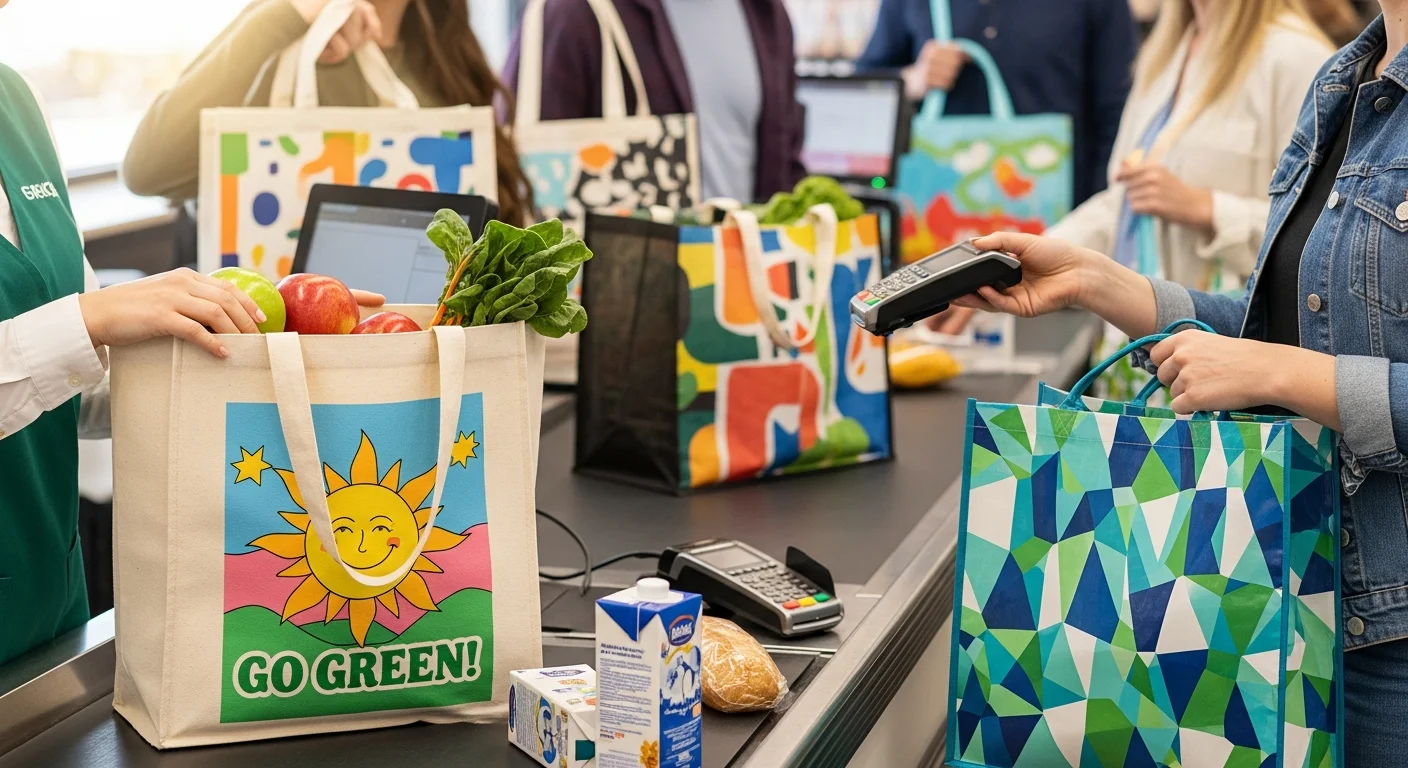
With plastic bag bans now active in 12 US states and hundreds of cities worldwide, reusable custom shopping tote bags have transformed from an eco-friendly novelty into a retail necessity. Grocery stores, boutiques, farmers markets, and e-commerce brands all need branded reusable bags — and the best ones double as mobile advertisements that customers carry through parking lots, neighborhoods, and shopping centers for years.
This guide covers how to create custom shopping tote bags that perform in the real world — bags that survive weekly grocery runs, look great with your branding, and comply with emerging bag regulations.
The Plastic Bag Ban Landscape
As of 2026, plastic bag bans or fees are active in California, New York, New Jersey, Connecticut, Delaware, Hawaii, Maine, Oregon, Vermont, Washington, Colorado, and the District of Columbia. Dozens of additional states have legislation pending. Internationally, over 90 countries have enacted some form of plastic bag regulation.
For retailers in affected areas, reusable bags are not optional — they are required. Custom branded reusable bags turn this mandate into a marketing opportunity. Instead of customers carrying generic reusable bags from other stores (or worse, competing brands), your custom shopping tote becomes the bag they reach for every time they shop.
The key regulatory requirement in most jurisdictions is that reusable bags must be designed for at least 125 uses (some states require 175 uses). This means the bag needs to be durable enough to survive regular washing, heavy loads, and daily wear. Flimsy bags that tear after a few uses do not comply with reusable bag regulations and create a negative brand impression.

Bag Ban Compliance Checklist for Retailers
Navigating bag ban regulations can be complex, especially for retailers operating across multiple jurisdictions. Here is a practical compliance checklist for ensuring your custom shopping tote bags meet legal requirements:
Material thickness requirements: Most bag ban legislation specifies minimum material thickness. California requires reusable bags to be at least 2.25 mil thick for plastic-based bags, while fabric bags must be capable of carrying 22 pounds over a minimum distance of 175 feet for 125 uses. Verify the specific thickness and durability requirements for every jurisdiction where you operate.
Labeling requirements: Several states require reusable bags to display specific labels. This may include the manufacturer's name, the country of origin, the bag's recyclability status, and a statement that the bag is designed for a minimum number of uses. New York, for example, requires bags to state they are "reusable" and include recycling information. Work with your bag supplier to ensure all required labels are integrated into your bag design without compromising your branding.
Fee collection compliance: In some jurisdictions, retailers must charge a fee for reusable bags (typically $0.10-$0.25) and report collected fees. If your custom shopping tote bags are sold at checkout, ensure your POS system tracks bag sales separately for reporting purposes. Some states allow retailers to keep collected fees, while others require partial or full remittance to the state.
Exemptions to know: Certain bag types may be exempt from regulations — produce bags, meat and deli bags, bags for prescriptions, and bags provided by food banks or charitable organizations. Understanding exemptions helps you avoid over-compliance costs on bag types that are not regulated.
Multi-state operations: If your retail chain operates across state lines, create a compliance matrix mapping each state's requirements. Some retailers choose to adopt the most stringent standard across all locations for simplicity, while others customize by region. Either approach is valid — the key is ensuring every location is compliant.
Best Materials for Shopping Tote Bags
Woven polypropylene (PP): The most popular material for reusable custom shopping tote bags worldwide. Woven PP is lightweight, water-resistant, and durable enough for 200+ uses. It is significantly stronger than non-woven PP because the woven construction distributes stress across interlocked fibers rather than bonded sheets. Woven PP bags typically cost $2-$5 per bag in bulk and accept vibrant full-color printing. Laminated versions with a glossy exterior are popular for retailer brands.
10-12oz cotton canvas: The premium option for retailers who want a bag that communicates quality. Canvas shopping bags last 3-5 years with regular use, develop a pleasant patina over time, and are machine washable. The natural, eco-friendly aesthetic appeals to customers at health food stores, boutiques, and farmers markets. Cost: $4-$10 per bag in bulk.
Recycled PET: Recycled polyester shopping bags made from plastic bottles combine sustainability messaging with practical performance. Lightweight, water-resistant, and foldable for compact storage. The "made from recycled bottles" story resonates with eco-conscious shoppers and provides a talking point at checkout.
Insulated shopping totes: A specialty category that includes thermal insulation (foam and reflective lining) to keep cold and frozen items chilled during the drive home. Custom insulated shopping totes are premium products ($8-$15 per bag) popular with grocery stores, meal kit companies, and farm-to-table delivery services.

Sizing for Grocery Shopping
Grocery shopping places unique demands on tote bag sizing. The ideal grocery tote needs to accommodate heavy, oddly shaped, and potentially wet items:
Standard grocery tote (13" W x 15" H x 8" D): Sized to carry one standard grocery sack's worth of items. The wide bottom gusset allows the bag to stand upright during loading at checkout and in the car trunk. Weight capacity should be 25+ pounds to handle cans, bottles, and dense items.
Large grocery tote (15" W x 16" H x 10" D): For customers who prefer fewer trips with more items per bag. Can handle a full grocery cart's worth of items across 3-4 bags. The larger format provides more branding real estate and is popular for Costco and warehouse club shoppers.
Flat-bottom design is essential. Unlike fashion totes that can have flat (non-gusseted) bottoms, grocery bags must stand upright when loaded. A reinforced flat bottom with gussets on all three sides (bottom plus two side panels) creates a box-like interior that keeps items organized and prevents the bag from tipping in the trunk.
Washability matters. Grocery bags inevitably encounter spilled liquids, leaking produce, and meat packaging condensation. Materials that can be machine washed (cotton canvas) or wiped clean (laminated woven PP, recycled PET) maintain hygiene and appearance over hundreds of uses. Non-washable materials develop odors and stains that discourage continued use.
Customer Incentive Programs Using Custom Shopping Bags
Smart retailers go beyond simply selling custom shopping tote bags at checkout — they build incentive programs around them that drive repeat visits, increase basket size, and strengthen brand loyalty:
Bag-back discount programs: Offer customers a small discount ($0.05-$0.10) each time they bring your branded bag back for their next shopping trip. This incentive costs pennies per transaction but drives measurable increases in repeat visits and brand preference. Major retailers like Whole Foods and Target have proven this model at scale, but independent retailers can implement it just as effectively with a simple POS adjustment.
Loyalty stamp programs: Print a stamp card directly on the interior of your custom shopping tote bag. Each time the customer shops with the bag, they receive a stamp. After 10 stamps, they receive a free item, discount, or upgraded bag. This gamification approach turns a simple reusable bag into an ongoing engagement tool that customers actively want to bring on every shopping trip.
Collectible seasonal designs: Release new bag designs quarterly or seasonally, creating a collectible series. Customers who have the spring design want the summer design. This approach generates repeat purchases of the bags themselves and creates social media sharing opportunities as customers post their growing collections. Pair with a "collect all four" incentive — complete the set and receive a premium gift.
Community partnership bags: Partner with local organizations (schools, sports teams, charities) to create co-branded bags where a portion of each sale supports the partner organization. Parents and supporters actively choose your store specifically to purchase the co-branded bag, driving foot traffic from audiences you might not otherwise reach. This works especially well for grocery stores and community-oriented retailers.
First-purchase welcome bags: Give every first-time customer a free branded shopping tote. The cost ($3-$5 per bag) is a customer acquisition expense that generates ongoing brand impressions and increases the likelihood of repeat visits. New customers who receive a free reusable bag from your store will use that bag — and your competitor's bag stays in the drawer.
Insulated and Specialty Shopping Tote Options
Beyond standard reusable bags, specialty custom shopping tote bags address specific retail niches and customer needs:
Insulated grocery totes: Featuring foam insulation and a reflective Mylar lining, insulated totes maintain cold-chain temperatures for 2-4 hours depending on ambient conditions. Perfect for grocery stores, meal prep delivery services, and frozen food retailers. Custom branding is printed on the exterior shell (typically nylon or woven PP) with the insulation sandwiched between layers. Price range: $8-$15 per bag in bulk quantities.
Wine and bottle totes: Custom shopping totes with internal dividers that protect wine bottles and other glass containers during transport. Available in 2-bottle, 4-bottle, and 6-bottle configurations. Popular with wine shops, liquor stores, and specialty beverage retailers. The dividers prevent bottles from clinking and breaking, solving a real customer pain point while delivering brand visibility.
Produce and mesh bags: Lightweight mesh or semi-transparent bags for fruits and vegetables, replacing single-use produce bags. These can be custom printed with your store logo and sold or given as sets of 3-5 bags. Increasingly popular at farmers markets and organic grocery stores where sustainability is a core brand value.
Foldable compact totes: Custom shopping tote bags that fold into a built-in pouch, keychain attachment, or snap-closure pocket. The ultra-compact folded size (approximately 4" x 4") means customers can keep the bag in a purse, glove compartment, or jacket pocket at all times. This "always available" format dramatically increases actual usage rates compared to standard totes that are often forgotten at home.
Heavy-duty utility totes: Extra-reinforced bags with padded handles, reinforced bottoms, and 40+ pound weight capacity for hardware stores, warehouse clubs, and garden centers. These bags handle heavy, bulky, and sharp-edged items that would destroy standard reusable bags. The premium construction justifies a higher price point ($10-$20) and generates strong brand loyalty among customers who rely on them weekly.
Print Durability for Shopping Bags
Custom shopping tote bags endure more abuse than any other type of tote — frequent loading, trunk storage, washing, and daily handling. Your branding needs to survive all of this:
Screen printing on woven PP: Excellent durability. The ink bonds firmly to the synthetic surface and resists abrasion, moisture, and UV fading. Screen-printed woven PP bags maintain their branding quality for 2-3 years of regular use.
Screen printing on canvas: Very durable. Machine washable prints that last 100+ wash cycles when proper textile inks are used. Wash instructions (cold water, tumble dry low) help preserve print quality. Screen-printed canvas is the gold standard for long-lasting branded shopping bags.
Heat transfer on PP: Moderate durability. Full-color heat transfers allow photographic and gradient designs but may crack or peel after 50-100 uses with heavy handling. Best for bags that will see lighter use (boutique shopping) rather than weekly grocery duty.
Design Strategies for Shopping Bags
Make your logo unmissable. Shopping bags spend most of their visible life being carried through parking lots and stores. Your logo needs to be large enough to read from 20+ feet away. Size your logo to fill at least 50% of the front panel height.
Include store location info. For multi-location retailers, printing store address, phone number, and hours on the back panel turns the bag into a walking store directory. For single-location stores, a map or neighborhood name helps locals connect the brand with their community.
Add a reuse incentive. Print "Bring this bag back for 5 cents off your purchase" or a similar incentive message. This encourages customers to return with your branded bag rather than a competitor's, reinforcing both brand loyalty and sustainability behavior.
Order Custom Shopping Tote Bags
Ready to replace disposable bags with custom branded shopping totes? Start with our design tool to visualize your store branding on different bag styles and materials. No minimum orders, free shipping on orders $75+, and bulk pricing with volume discounts up to 20%. Visit our how it works page to learn about the ordering process.
For retailers ordering 250+ bags, contact our team for custom quotes including insulated options, specialty materials, and multi-location print runs. See our complete custom tote bag pricing for all options.

Share this article
Written by
Marcus Chen
E-Commerce Growth & Merchandising Lead at RareCustom. Marcus helps retailers transition from disposable bags to custom branded reusable shopping totes with data-driven material and design recommendations.