Custom Sticker Pricing Guide: Complete Cost Breakdown for Every Budget
Understand exactly what custom stickers cost with our detailed pricing breakdown covering materials, cutting methods, sizes, quantities, and bulk discount tiers.
Natalie Voss
Founder & CEO of RareCustom. MBA from Stanford with 8 years in e-commerce operations. Natalie makes custom sticker pricing transparent and easy to understand for every buyer.
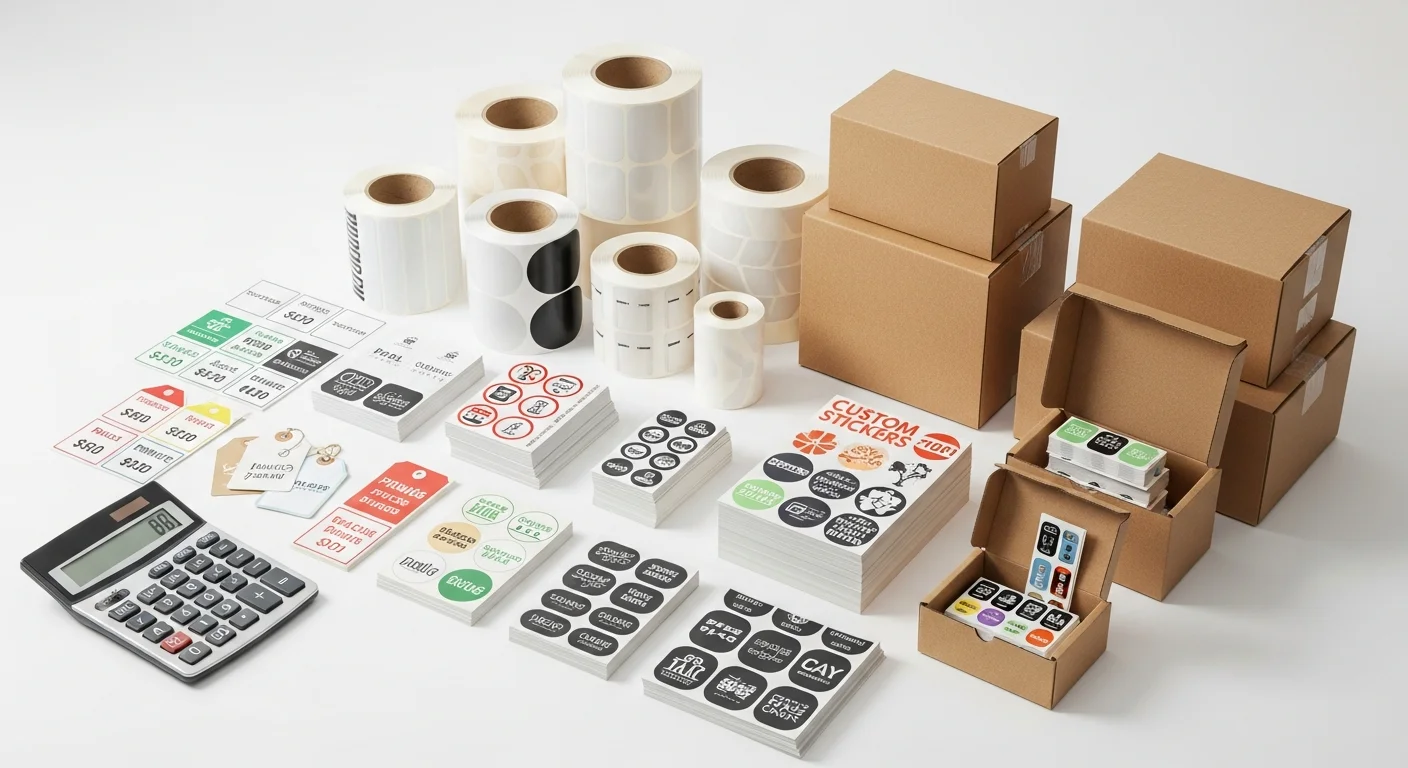
Understanding custom sticker pricing before placing an order prevents budget surprises and helps you maximize the return on every dollar spent. The custom sticker cost varies significantly depending on material, size, cutting method, quantity, and finish — a single 2-inch vinyl die-cut sticker might cost $1.50 while that same design ordered in a quantity of 1,000 drops to $0.12 per unit. This sticker cost breakdown walks through every factor that influences the personalized sticker price, from raw materials and printing technology to hidden fees that some vendors charge and RareCustom eliminates. Whether you are ordering 25 stickers for a personal project or 10,000 for a product launch, understanding sticker per-unit cost economics helps you make informed decisions that align with your budget and goals.
Pricing transparency matters because the sticker industry has historically relied on opaque quoting processes — setup fees, die charges, plate charges, and fulfillment costs that appear only at checkout. At RareCustom, we believe you should know exactly what determines your custom sticker cost before you design a single pixel. This guide provides real-world pricing benchmarks at multiple quantity levels, a material cost comparison, a size cost matrix, and actionable strategies to get the most stickers for your money. By the end, you will understand precisely how bulk sticker pricing works, where the quantity price breaks fall, and how to calculate the sticker ROI for any project. If you are still deciding on a sticker type, review our sticker types comparison first, then return here for the cost analysis.
What Determines Custom Sticker Price?
The total custom sticker cost is a function of five primary variables: material, cutting method, size, quantity, and finish. Each variable contributes a different percentage to the final per-unit price, and understanding these proportions helps you identify the most effective levers for reducing cost without sacrificing quality.

Material accounts for approximately 30 to 40 percent of the per-unit cost. Premium materials like vinyl and holographic film cost more than paper or BOPP, but they also deliver superior durability and appearance. See our materials comparison guide for detailed specifications on each option.
Cutting method accounts for 10 to 20 percent. Die-cut stickers require precision contour cutting, which is more expensive than standard kiss-cut or simple rectangle cuts. The more complex the shape, the more cutting time is required.
Size accounts for 20 to 30 percent. Larger stickers use proportionally more material, ink, and cutting time. There is a direct, near-linear relationship between surface area and cost.
Quantity is the single largest determinant of per-unit cost. Fixed costs (design setup, file preparation, machine calibration) are amortized across all units. Ordering 1,000 stickers instead of 100 can reduce the per-unit cost by 60 to 75 percent.
Finish adds 5 to 15 percent depending on the type. Standard gloss or matte lamination is included in most base pricing. Specialty finishes like holographic laminate, spot UV, or metallic foil add a premium. For details on premium finishes, see our holographic and specialty stickers guide.
Material Costs
Material selection is one of the most impactful cost decisions. Here is a comparative breakdown of the most common sticker materials and their typical cost impact relative to the base price.

Paper stickers are the most affordable option. Uncoated paper costs approximately 30 to 40 percent less than vinyl at equivalent sizes and quantities. Coated (semi-gloss) paper costs about 20 percent less than vinyl. Paper sticker price makes them ideal for indoor labels, planner stickers, and short-term promotional items. However, they are not waterproof and have a limited outdoor lifespan.
BOPP (Biaxially Oriented Polypropylene) stickers sit in the middle of the cost spectrum. BOPP label pricing runs approximately 10 to 15 percent less than vinyl but offers water resistance and tear resistance that paper cannot match. BOPP is the standard choice for food packaging, cosmetics, and bath products.
White vinyl is the industry standard for durable, all-weather stickers. Vinyl sticker cost serves as the baseline against which other materials are measured. A 2-inch vinyl circle at 500 units typically costs $0.15 to $0.25 per unit, depending on finish and vendor.
Clear vinyl adds a premium of 15 to 25 percent over white vinyl because clear sticker price includes the cost of white ink underprinting for color vibrancy on transparent film. Clear stickers require an additional print pass, which increases both material and production costs.
Cutting Method Costs
The way your sticker is cut affects both the per-unit price and the minimum order economics. Here is how cutting methods compare:
Kiss-cut stickers are the most cost-effective cutting method. The blade cuts through the sticker material but not the backing paper, allowing multiple stickers to be produced on a single sheet with minimal waste. Kiss-cut sticker pricing is typically 10 to 15 percent less than die-cut at the same size and quantity because the cutting process is faster and produces less material waste.
Die-cut stickers cut through both the sticker material and the backing paper, producing individual stickers in custom shapes. Die-cut sticker cost is higher due to the precision required and the additional waste material between stickers. Expect die-cut pricing to add 10 to 20 percent over kiss-cut for the same design.
Simple shape cuts (circles, squares, rectangles) are less expensive than complex contour cuts because they use standard tooling. A standard circle die-cut costs approximately 5 percent less than a custom-contour die-cut of the same bounding-box size.
Size Impact on Pricing
Size has a direct and predictable impact on per-unit cost. The sticker price comparison by size follows the surface-area curve — doubling the area approximately doubles the material and ink cost.

Representative per-unit costs (vinyl die-cut, 500 units):
- 1 inch circle: $0.08 – $0.12
- 2 inch circle: $0.15 – $0.22
- 3 inch circle: $0.25 – $0.38
- 4 inch circle: $0.40 – $0.55
- 2 x 3 inch rectangle: $0.18 – $0.28
- 3 x 5 inch rectangle: $0.35 – $0.50
- 3.75 x 7.5 inch bumper sticker: $0.55 – $0.80
The 2 inch vs 3 inch cost difference is roughly 50 to 70 percent per unit. This is why our size guide recommends choosing the smallest size that maintains readability and visual impact — the savings at volume are substantial.
Total Per-Unit Cost by Quantity
Quantity is the most powerful pricing lever. Fixed setup costs are distributed across all units, and material costs decrease at higher volumes due to manufacturing efficiencies and supplier volume discounts.

Per-unit pricing for a 3-inch vinyl die-cut sticker with matte lamination:
- 25 units: $1.20 – $1.80 per sticker
- 50 units: $0.75 – $1.10 per sticker
- 100 units: $0.45 – $0.65 per sticker
- 250 units: $0.30 – $0.45 per sticker
- 500 units: $0.22 – $0.35 per sticker
- 1,000 units: $0.15 – $0.25 per sticker
- 2,500 units: $0.10 – $0.18 per sticker
- 5,000 units: $0.08 – $0.14 per sticker
Notice that the steepest price drops occur between 25 and 250 units. After 1,000 units, the per-unit cost continues to decrease but at a more gradual rate. This means the most significant quantity price breaks happen in the low-to-mid hundreds — making 250 and 500 units the sweet spots for small businesses and event planners.
Bulk Discount Tiers at RareCustom
RareCustom offers tiered volume discount stickers pricing that rewards larger orders with progressively better per-unit rates. Our bulk sticker pricing structure is designed to serve everyone from individual creators ordering 25 stickers to businesses ordering 10,000 or more.
Discount tier structure:
- Standard (1–99 units): Base pricing — no volume discount, but no minimum order costs or setup fees
- Bronze (100–249 units): 15% discount from base pricing
- Silver (250–499 units): 25% discount from base pricing
- Gold (500–999 units): 35% discount from base pricing
- Platinum (1,000–4,999 units): 45% discount from base pricing
- Wholesale (5,000+ units): Custom wholesale sticker cost — contact us for a tailored quote
All tiers include free standard shipping on orders over $50, free digital proofing, and no minimum order costs. Volume discounts apply automatically at checkout — no coupon codes or special requests needed.
Hidden Costs to Watch For (And How RareCustom Avoids Them)
Many sticker vendors advertise low per-unit prices but add charges that significantly inflate the total cost. Understanding hidden costs custom stickers buyers commonly encounter helps you compare quotes accurately.
Setup fees: Some vendors charge $25 to $75 per design for file preparation, color separation, and machine setup. At RareCustom, there are no setup fees — sticker setup fee is zero regardless of design complexity or order size.
Die charges: Traditional die-cut sticker production requires a physical steel die, which costs $50 to $150 and must be re-made for every shape change. Digital die-cutting eliminates this cost entirely. At RareCustom, no die charges apply because we use digital cutting technology.
Plate charges: Screen printing stickers requires separate plates for each color, adding $30 to $50 per color. Digital printing (which RareCustom uses exclusively) requires no plates, so plate charge concerns are eliminated.
Art charges: Some vendors charge hourly rates for design adjustments, file corrections, or format conversions. RareCustom includes basic file preparation in every order and provides a free design tool that outputs print-ready files.
Shipping costs: Sticker shipping cost varies by weight, speed, and destination. Some vendors offer "free shipping" only on orders over $150 or only via the slowest method. RareCustom provides free standard shipping on orders over $50 and transparent pricing on expedited options.
Packaging and fulfillment costs: Packaging cost for individual sticker wrapping, cardstock backing, or poly-bagging adds $0.05 to $0.20 per unit at some vendors. At RareCustom, standard protective packaging is included — stickers arrive flat, clean, and ready to use.
Minimum order quantity fees: Some sticker companies impose minimum order costs of $25 to $100 before you can place any order, effectively adding a surcharge to small orders. RareCustom has no minimum order quantity — you can order as few as one sticker if that is all you need, with no hidden minimum penalty.
Rush production fees: Need stickers fast? Some vendors charge 50 to 100 percent more for expedited production. At RareCustom, standard turnaround is already fast (3 to 5 business days), and rush options are available at transparent, reasonable upcharges clearly displayed before checkout.
Finish and Lamination Add-Ons
Finish upgrades enhance durability and visual appeal but add to the per-unit cost. Understanding your lamination options helps you balance aesthetics with budget. Here is what each option typically adds to the base per-unit price:
- Matte lamination: Included in base pricing for vinyl stickers at most vendors including RareCustom. Provides a smooth, non-reflective finish that resists fingerprints and scratches.
- Glossy lamination: Included in base pricing (or +$0.01 per unit). High-shine finish that enhances color vibrancy.
- Soft-touch lamination: +$0.03 to $0.08 per unit. Velvety texture that feels premium to the touch.
- Holographic lamination: +$0.05 to $0.12 per unit. Adds a rainbow shimmer effect over the entire sticker surface.
- Spot UV coating: +$0.08 to $0.15 per unit. Selective glossy areas on a matte background for contrast and emphasis.
- Metallic foil stamping: +$0.10 to $0.25 per unit. Gold, silver, or rose gold foil applied to specific design elements.
When selecting finishes, consider the sticker's end use. Indoor stickers that will be handled frequently benefit from matte or soft-touch lamination because they resist fingerprints and smudges. Outdoor stickers exposed to UV light and weather need glossy or matte lamination as a minimum — without lamination, inks fade in as little as three months of direct sunlight exposure. For premium brand applications where tactile impression matters, soft-touch lamination creates a luxury feel that customers notice immediately when they pick up the sticker or the product it is applied to.
How to Maximize Your Sticker Budget
Smart ordering strategies can reduce your effective cost per sticker by 30 to 50 percent without compromising quality. Here are proven approaches:
Order at the next tier up. If you need 90 stickers, order 100 to unlock the Bronze discount tier. The additional 10 stickers may cost less than the discount saves on the other 90. Always check whether a slight quantity increase triggers a tiered pricing benefit.
Optimize size. If your design reads clearly at 2 inches, do not default to 3 inches out of habit. The cost per impression — which measures the marketing value calculation of each sticker based on how many people see it over its lifetime — remains high at smaller sizes because stickers are applied to visible surfaces regardless of diameter.
Choose kiss-cut over die-cut when possible. If you are distributing stickers at events or including them in mailers, kiss-cut sheets are easier to handle and 10 to 15 percent cheaper to produce. Reserve die-cut for standalone premium applications.
Consolidate designs. If you need three different designs, order them at the same time on the same material. Consolidating reduces per-order fixed costs and may push your total quantity into a higher discount tier.
Use standard shapes. Custom contour cutting adds cost. If a circle, square, or rounded rectangle achieves the same visual effect as a complex custom shape, choose the standard shape and invest the savings in a higher quantity or premium material.
Consider paper for indoor applications. If your stickers will only be used indoors — planner stickers, envelope seals, indoor product labels — paper sticker price is 30 to 40 percent lower than vinyl. There is no need to pay for outdoor durability when the stickers will never see rain, sunlight, or temperature extremes. Paper stickers are also recyclable, which appeals to eco-conscious customers.
Plan ahead to avoid rush fees. Ordering with standard production timelines (3 to 5 business days) avoids the 50 to 100 percent premium that rush orders incur. Build sticker ordering into your project timeline at least two weeks before you need them — this provides a buffer for proofing, revisions, and standard shipping without paying expedited rates.
To calculate your sticker ROI, use this formula: ROI = (Estimated Impressions x Value per Impression) / Total Sticker Cost. A 3-inch branded sticker applied to a laptop generates an estimated 5,000 impressions over one year. At a cost per impression value of $0.002 (industry average for passive brand impressions), one sticker delivers $10 in marketing value — an outstanding return on a $0.25 investment.
Get Your Custom Sticker Quote
Now that you understand every factor that determines custom sticker cost, you are equipped to make a confident ordering decision. Whether you need a small batch of premium holographic die-cuts or a large run of cost-effective paper stickers, our transparent pricing ensures you know exactly what you will pay before you order.
Use our free design tool to configure your sticker — select material, size, shape, finish, and quantity — and see your per-unit and total price update in real time. Or browse our full custom sticker product page for quick pricing at popular sizes and quantities. Have a complex project or need wholesale pricing? Contact our team for a personalized quote.
Related Articles
Share this article
Written by
Natalie Voss
Founder & CEO of RareCustom. MBA from Stanford with 8 years in e-commerce operations. Natalie makes custom sticker pricing transparent and easy to understand for every buyer.