Custom Compression Socks: Health, Recovery & Performance Benefits
Explore the health and performance benefits of custom compression socks. Learn about mmHg levels, graduated pressure technology, sizing by calf circumference, and branding options for medical, athletic, and corporate use.
Aisha Patel
Head of Materials Science & Sustainability at RareCustom. M.S. in Textile Engineering from NC State with AATCC certification and ISSP Sustainability Practitioner certification. 7+ years evaluating fabrics, materials, and eco-friendly production processes.
Compression socks have moved far beyond the beige medical stockings found in hospital supply closets. Today, custom compression socks combine clinically proven graduated pressure technology with bold, branded designs that athletes, nurses, corporate wellness programs, and frequent travelers actually want to wear. The global compression garment market reached $3.2 billion in 2025, and custom-branded options now represent the fastest-growing segment as organizations recognize the dual value of health benefits and brand visibility.
Whether the goal is faster post-game recovery for a soccer team, reduced leg fatigue for a 12-hour nursing shift, or a memorable corporate wellness gift, understanding how compression works — and how it affects design and material choices — is essential before placing an order. This guide covers the science, the sizing, the design constraints, and the regulatory considerations that separate a high-quality custom compression sock from a generic one.
How Compression Works: Graduated Pressure and mmHg Levels
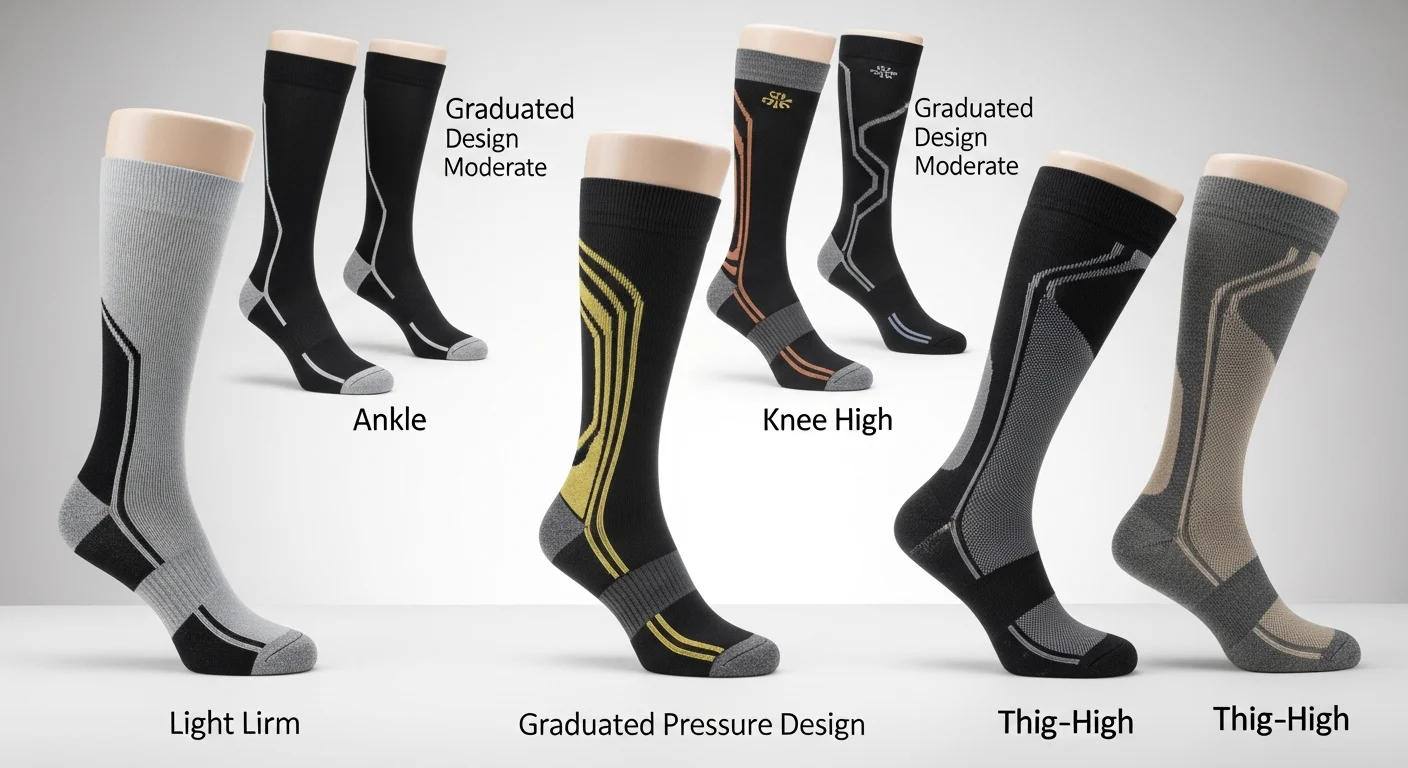
Compression socks apply controlled pressure to the lower leg, strongest at the ankle and gradually decreasing toward the calf. This graduated pressure profile pushes blood upward against gravity, improving venous return and reducing blood pooling in the feet and ankles. The pressure is measured in millimeters of mercury (mmHg), the same unit used for blood pressure readings.
Four standard compression levels cover virtually every use case. Light compression (8–15 mmHg) provides gentle support for everyday wear, long flights, and desk jobs where legs feel tired by afternoon. Moderate compression (15–20 mmHg) is the sweet spot for athletic recovery, travel lasting more than four hours, and mild swelling prevention. Firm compression (20–30 mmHg) enters medical-grade territory and is commonly prescribed for moderate varicose veins, post-surgical recovery, and lymphedema management. Extra-firm compression (30–40 mmHg) requires a prescription and treats severe venous insufficiency and deep vein thrombosis prevention.

Most custom compression sock providers offer moderate (15–20 mmHg) and firm (20–30 mmHg) options for branded orders. Light compression socks are widely available as stock products, while extra-firm options require medical-device certification and are rarely available for custom branding without partnering with a certified manufacturer.
Medical vs Athletic Compression
Medical compression socks are classified as medical devices in many countries and must meet specific pressure tolerance standards verified through independent testing. In the United States, compression socks rated at 20 mmHg and above fall under FDA oversight as Class I medical devices. Medical-grade socks undergo quality testing to ensure pressure consistency across production runs, with tolerances typically within plus or minus 3 mmHg of the stated rating.
Athletic compression socks, by contrast, focus on performance recovery rather than treating diagnosed conditions. They typically operate in the 15–20 mmHg range and emphasize moisture management, breathability, and cushioning in addition to compression. Athletic compression socks do not require FDA registration unless they make specific medical claims in marketing materials. For sports teams ordering custom athletic socks, moderate compression adds recovery value without the regulatory complexity of medical-grade products.
Design Considerations for Compression Socks
Designing for compression socks introduces unique constraints that standard crew or ankle socks do not have. The primary challenge is stretch distortion — compression fabric stretches 30–50% more than standard sock fabric when worn, which means designs must account for significant horizontal expansion. A logo that looks perfectly proportioned on a flat sock may appear wide and squat when the sock stretches around a calf.
The usable print area on compression socks is also more limited. The graduated pressure zones restrict where knit-in patterns can be placed without disrupting the compression profile. Most manufacturers recommend keeping complex designs in the mid-calf region (the decorative zone) and avoiding intricate patterns in the ankle and foot areas where precise pressure calibration is critical. Simple repeat patterns, vertical stripes, and text-based designs handle stretch distortion better than photographic images or circular logos.
Color choices also matter more on compression socks because the higher spandex content can affect dye uptake. Dark base colors (black, navy, charcoal) hide any slight color variation better than pastels or white. For detailed guidance on matching print methods to sock fabrics, review the custom sock fabric guide.
Material Requirements: Higher Nylon and Spandex Content
Standard custom socks contain 3–8% spandex for basic elasticity. Compression socks require a minimum of 15–20% spandex (Lycra or elastane) to generate and maintain the graduated pressure profile over repeated wear and washing cycles. The remaining composition is typically 60–70% nylon for durability and shape retention, with 10–15% polyester or cotton for comfort against the skin.
Nylon is the backbone of compression sock construction because it provides the tensile strength needed to maintain consistent pressure. Cotton-heavy blends cannot sustain graduated compression — the cotton fibers relax over time, causing the sock to lose its therapeutic pressure within a few wears. This is why compression socks feel noticeably different from casual cotton socks: the higher nylon-spandex content creates a firmer, more structured feel.
For organizations ordering custom compression socks, specifying the exact spandex percentage is critical. A sock labeled "compression" with only 8% spandex will not deliver clinically meaningful pressure and may disappoint recipients expecting genuine compression benefits. Always request the material composition breakdown and the mmHg rating verified by third-party testing. Refer to the custom sock sizing guide for additional fit recommendations.
Custom Branding on Compression Socks
Branding compression socks requires balancing visibility with the technical constraints of the garment. The most effective branding placements are the mid-calf band (a 2–3 inch horizontal stripe around the widest part of the calf), the sole of the foot (visible when legs are crossed or elevated), and the cuff (the top 1–2 inches of the sock).
Knit-in construction is the preferred branding method for compression socks because it integrates the design into the fabric without adding an extra layer that could interfere with compression uniformity. Sublimation printing works on polyester-dominant compression socks but requires careful pressure testing after printing to confirm the heat process has not altered the compression profile. Screen printing and DTG are not recommended for compression socks because the ink layer disrupts the fabric's stretch characteristics.
Corporate wellness programs, hospital systems, and running event organizers represent the largest buyers of branded compression socks. A hospital ordering 500 pairs of 20–30 mmHg compression socks with the facility logo creates both a functional employee benefit and a walking brand impression during every shift.
Use Cases: Nurses, Runners, Travelers, Office Workers
Nurses and healthcare workers stand for 10–12 hours per shift, making them the single largest consumer group for compression socks. Hospital-branded compression socks at the 15–20 mmHg level reduce end-of-shift leg fatigue by up to 30% according to occupational health studies. Custom socks with department colors or hospital logos add team identity to a practical benefit.
Runners and endurance athletes use compression socks during training and recovery. The 15–20 mmHg range supports blood flow during long runs, while post-race compression at 20–30 mmHg accelerates recovery by reducing muscle soreness and swelling. Race organizers increasingly include branded compression socks in premium registration packages as a functional upgrade over standard cotton event socks.
Frequent travelers benefit from compression during flights longer than four hours, when prolonged sitting increases the risk of blood pooling and deep vein thrombosis. Corporate travel programs and airline loyalty clubs have begun offering branded compression socks as premium traveler perks, typically in the 15–20 mmHg range with subtle branding.

Office workers who sit for eight or more hours daily experience similar circulatory challenges as travelers. Wellness-focused companies include branded compression socks in employee health kits alongside ergonomic accessories, positioning them as a tangible benefit that employees actually use.
Sizing Is Critical: Calf Circumference Charts
Compression sock sizing differs fundamentally from standard sock sizing. While regular socks are sized by shoe size alone, compression socks must be sized by calf circumference to deliver the correct pressure. A sock that is too large will not compress adequately; one that is too small may constrict blood flow rather than support it.
Standard compression sock sizing uses calf circumference measured at the widest point of the calf muscle: Small fits 11–13 inches, Medium fits 13–15 inches, Large fits 15–17 inches, and Extra-Large fits 17–20 inches. Some manufacturers also measure ankle circumference as a secondary fit point, with typical ranges from 7.5 inches (Small) to 12 inches (Extra-Large).
When ordering custom compression socks for a group, provide a size collection form that asks recipients to measure their calf circumference rather than simply selecting a shoe size. Include visual measurement instructions — a flexible tape measure wrapped around the widest part of the calf while standing — to reduce sizing errors. Incorrect sizing is the number-one reason compression sock orders experience returns, so investing in proper size collection saves money and frustration.
FDA and Medical Disclaimer Considerations
Any organization selling or distributing compression socks rated at 20 mmHg or above should be aware of FDA classification requirements. In the United States, graduated compression hosiery above 20 mmHg is classified as a Class I medical device and must be manufactured in an FDA-registered facility. This does not prevent custom branding, but it does mean the manufacturer must maintain quality management systems and device registration.
Marketing claims must also be carefully worded. Statements like "treats varicose veins" or "prevents blood clots" constitute medical claims that require clinical evidence and FDA clearance. Safer marketing language focuses on general wellness benefits: "supports healthy circulation," "reduces leg fatigue," and "promotes recovery after physical activity." Including a disclaimer such as "Not intended to diagnose, treat, cure, or prevent any disease. Consult a healthcare professional before use" protects the ordering organization from regulatory issues.
For athletic and corporate wellness applications in the 15–20 mmHg range, regulatory concerns are minimal. This level is widely considered a wellness product rather than a medical device, though consulting legal counsel before making health-related marketing claims is always prudent.
Frequently Asked Questions
Can custom compression socks include full-color sublimation designs?
Yes, but only on compression socks with a high polyester content (60%+ polyester). Sublimation bonds ink into polyester fibers without affecting stretch. However, the manufacturer should verify that the compression mmHg rating remains consistent after the sublimation heat process. Knit-in designs are the most reliable branding method for compression socks of any fiber composition.
What compression level should a corporate wellness program choose?
Most corporate wellness programs order 15–20 mmHg moderate compression. This level provides meaningful circulatory support for desk workers and travelers without requiring a medical prescription or FDA registration. It is comfortable enough for all-day wear and does not feel overly tight for first-time compression sock users.
How long do custom compression socks maintain their pressure?
High-quality compression socks with 15–20% spandex content maintain their rated pressure for approximately 6 months of daily wear (roughly 150–180 washes). After that period, the spandex gradually loses elasticity, and the compression level decreases. Replacing compression socks every 4–6 months ensures consistent therapeutic or recovery benefits.
Share this article
Written by
Aisha Patel
Head of Materials Science & Sustainability at RareCustom. M.S. in Textile Engineering from NC State with AATCC certification and ISSP Sustainability Practitioner certification. 7+ years evaluating fabrics, materials, and eco-friendly production processes.