Custom Photo Rugs: How to Turn Your Memories Into Stunning Floor Art
Learn how to create custom photo rugs from your favorite pictures. Covers resolution, collage layouts, color accuracy, materials, and gift ideas for every occasion.
Priya Shankar
Customer Success Lead at RareCustom. CCXP certified with 6 years in education. Priya helps customers transform their favorite photos into stunning personalized rug keepsakes.
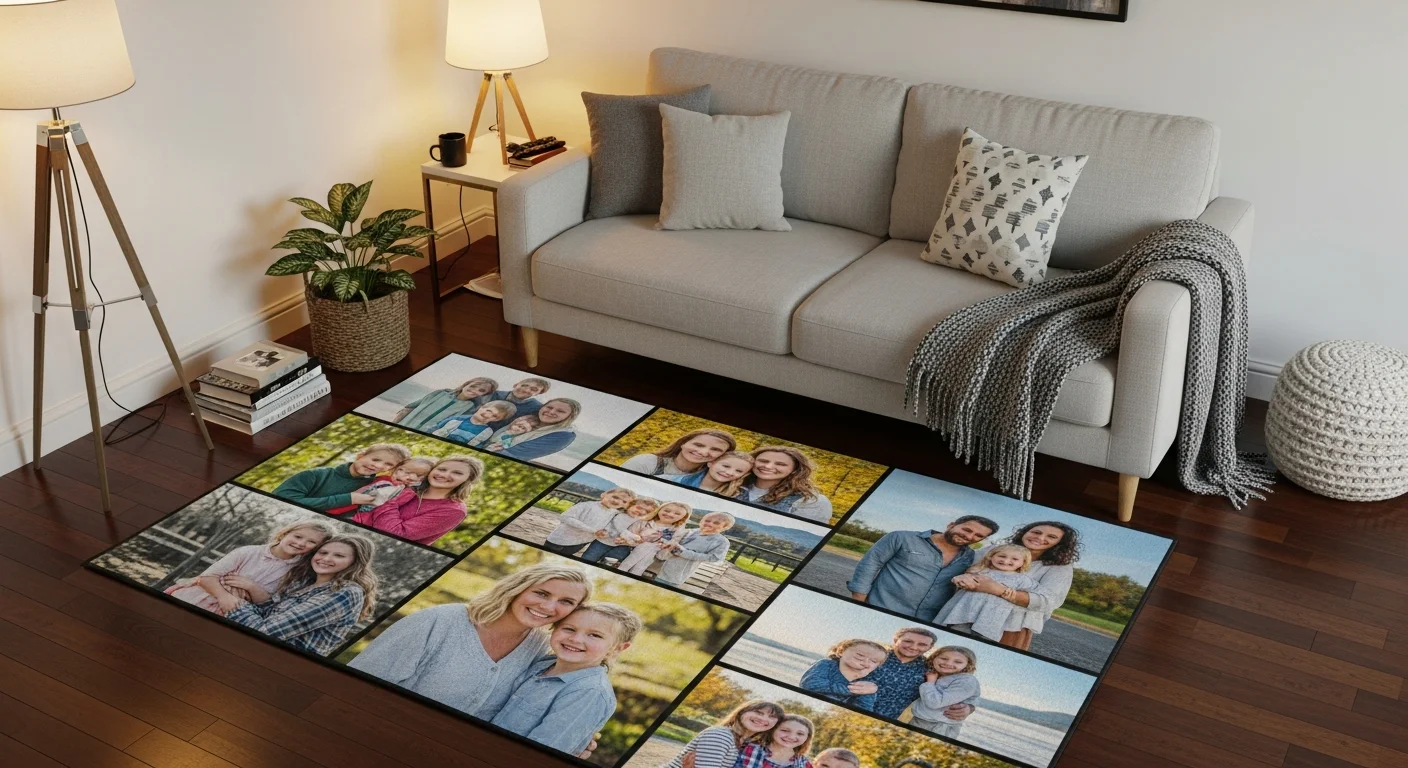
Photographs capture the moments that matter most — birthdays, weddings, vacations, the quiet afternoons spent with a beloved pet. But photos confined to a phone screen or tucked into an album rarely become part of your daily environment. A photo rug changes that equation entirely. By transferring your favorite images onto a custom-printed floor piece, you create functional art that greets you every time you walk into the room. Whether it is a single dramatic portrait covering an entire area rug or a carefully arranged photo collage rug showcasing a year of memories, personalized photo rugs turn passive pixels into tactile, room-defining décor.
The process of creating a personalized photo rug has become remarkably accessible. Modern dye sublimation and digital printing technologies reproduce photographic detail with impressive accuracy, and online design tools let you upload, crop, arrange, and preview your images before committing to production. This guide covers everything you need to know — from photo resolution requirements and collage layout strategies to color accuracy expectations, material selection, text overlays, and gift-giving inspiration. By the end, you will have the knowledge to transform any cherished image into a stunning piece of floor art through custom rugs designed exactly to your vision.
Why Photo Rugs Are the Ultimate Personalized Gift
The gift market is saturated with personalized products — mugs, phone cases, blankets, and more — but a photo rug gift stands apart because of its sheer presence in a living space. A custom mug sits in a cupboard between uses. A photo blanket folds into a closet. But a picture rug occupies prominent real estate on the floor, visible every day and to every guest who enters the room. That visibility transforms it from a novelty item into a genuine conversation piece and a constant reminder of the memories it celebrates.
Photo rugs work for virtually every gifting occasion. A wedding photo rug featuring the couple's favorite engagement portrait makes a stunning first-anniversary gift. A baby photo rug printed with newborn portraits or milestone images creates a keepsake that families display for years. A graduation photo rug captures the pride of academic achievement in a way that a framed diploma cannot replicate. A pet portrait rug immortalizes a furry family member in a format that brings joy and comfort every single day — and for those grieving a lost companion, a pet memorial photo rug offers a touching tribute that keeps their memory close.
The emotional impact of receiving a photo rug is amplified by the effort behind it. Selecting the right photos, choosing a layout, picking colors — the process itself communicates thoughtfulness. Recipients immediately recognize the care invested, which elevates the gift far beyond something purchased off a shelf. Combined with the practical functionality of an area rug, doormat, or runner, a personalized photo rug delivers both sentimental value and everyday utility.
From a cost perspective, photo rugs are surprisingly affordable compared to custom artwork or commissioned paintings. A quality custom photo floor mat in doormat size starts at a price point comparable to a framed canvas print, yet it serves a functional purpose and endures foot traffic thanks to durable printing methods. Larger area-rug sizes cost more, naturally, but even those fall well within the range of mid-tier home décor purchases — making them accessible gifts for holidays, birthdays, housewarmings, and memorials alike.
Photo Resolution — Most Important Factor
The single biggest factor determining whether your photo rug looks stunning or disappointing is photo resolution rug quality. Resolution refers to the number of pixels in your image, and it directly controls how sharp and detailed the printed result appears at the rug's physical dimensions. An image that looks crisp on a phone screen may appear blurry and pixelated when stretched across a three-by-five-foot rug — unless the source file contains enough pixel data to maintain clarity at that scale.
The industry standard for high-quality rug printing is 200 DPI rug resolution at the actual print size. DPI stands for dots per inch and represents how many ink dots the printer places in each linear inch of fabric. At 200 DPI, a 2×3-foot rug requires a source image of approximately 4,800 × 7,200 pixels. A 5×7-foot area rug demands roughly 12,000 × 16,800 pixels for optimal sharpness. These numbers may sound large, but modern smartphone cameras routinely capture images at 12 megapixels or higher, which translates to approximately 4,000 × 3,000 pixels — sufficient for smaller rug sizes and acceptable for medium sizes when the viewing distance is factored in.

For the sharpest results on larger rugs, source your images from the highest-resolution originals available. DSLR and mirrorless camera RAW files, professional portrait sessions, and high-resolution scans of printed photographs all provide the pixel density needed for high resolution rug photo results. Avoid screenshots, social media downloads (which are heavily compressed), and images cropped to a small fraction of the original — these files simply lack the data needed for quality enlargement.
A practical minimum guideline is 3,000 pixels on the longest edge for acceptable quality on rugs up to 3×5 feet. For anything larger, aim for 5,000 pixels or more on the longest edge. Most reputable custom rug providers, including RareCustom, include resolution warnings in their design tool when an uploaded image falls below the recommended threshold. Taking advantage of the photo rug mockup preview ensures you see exactly how your image will look before production begins. For a complete guide to file preparation, see the beginner's guide to custom rugs.
Choosing the Best Photos
Not every photograph translates well to a rug format. The transition from a backlit screen to a fabric surface introduces variables — texture, viewing angle, ambient lighting — that affect how the image reads in a room. Selecting the right photos upfront prevents disappointment and ensures your photo rug delivers the visual impact you envision.
High-contrast images with bold colors and clear subjects perform best. Portraits with a simple, uncluttered background reproduce beautifully because the subject stands out against the fabric texture. Landscape and travel photos with vivid skies, saturated foliage, or dramatic architecture also translate well, provided the source resolution is adequate. A travel photo rug featuring a sunset over Santorini or the Northern Lights can become a breathtaking focal point in a living room or bedroom.
Photos with extensive fine detail — distant crowd shots, intricate textures, tiny text — may lose clarity when printed on a textured rug surface. The weave of the fabric naturally softens very fine lines, so images that rely on macro-level sharpness (like a close-up of a printed page) are poor candidates. Similarly, dark or underexposed photos can appear muddy on fabric because the printing process cannot add light that was not captured in the original image. Brighten and adjust contrast before uploading.
For family photo rug projects, choose images where faces are well-lit, centered, and occupy a significant portion of the frame. Group photos work best when everyone is close together and the background is not distracting. Candid shots with motion blur should be avoided unless the blur is intentional and artistic. For kids artwork rug projects, scan the original drawing at 300 DPI or higher to capture every crayon stroke with fidelity.
Single Photo vs Collage Layouts
Once you have selected your images, the next decision is layout. The two primary approaches for photo rugs are a single photo rug design — one image filling the entire surface — and a photo collage rug that arranges multiple images in a structured grid or artistic composition. Each approach creates a different visual effect and suits different use cases.
A single image rug maximizes the impact of one standout photograph. The image fills the rug edge to edge, creating a dramatic, gallery-like effect. This layout works best for high-resolution photographs with strong composition — a stunning landscape, a professional portrait, a beloved pet photo, or a piece of digital art. Because the entire rug surface is dedicated to one image, the visual clarity and color saturation are maximized. Single-image layouts are the preferred choice for pet portrait rug designs, couple photo rug gifts, and travel photography showcases.

A collage layout rug tells a broader story by combining multiple images into a unified composition. Collages work especially well for milestone celebrations — a first-year baby collage, a year-in-review family collection, a wedding weekend highlights compilation, or a graduation photo rug featuring school memories across multiple years. The challenge with collages is maintaining visual coherence when combining images of varying quality, orientation, and subject matter. Thoughtful arrangement, consistent color grading, and intentional negative space all contribute to a collage that reads as a designed piece rather than a cluttered patchwork.
Consider the rug's placement when choosing between layouts. A rug placed in a high-visibility area like the center of a living room benefits from the clean, uncluttered impact of a single dramatic image. A rug tucked beside a bed, displayed in a playroom, or hung on a wall (yes, photo rugs make excellent wall art) can accommodate the detailed storytelling of a collage layout because viewers interact with it at closer range. For guidance on room placement strategies, see the custom rugs home décor room-by-room guide.
Collage Design Best Practices
Creating a visually balanced photo collage rug requires more thought than simply uploading a batch of images and hoping for the best. The arrangement, spacing, color harmony, and image selection all influence whether the finished rug looks polished or chaotic. Following a few key design principles ensures your collage communicates the story you intend.
Start with a grid layout rug format if you want a clean, organized look. Grids divide the rug surface into equal cells — a 3×3 grid for nine photos, a 4×3 grid for twelve, or a 2×5 grid for ten. Each photo occupies one cell, creating a structured, symmetrical composition. Grid layouts are the easiest to execute and produce consistently good results because the uniform sizing prevents any single image from dominating or getting lost.
For a more dynamic composition, consider a mosaic or mixed-size layout where one or two hero images occupy larger cells while supporting images fill smaller surrounding cells. This approach creates a clear visual hierarchy — the hero image draws the eye first, and the surrounding photos provide context and variety. Mosaic layouts work beautifully for wedding photo rug designs where the main portrait takes center stage and detail shots (rings, venue, flowers, cake) fill the periphery.
Regardless of layout style, maintain consistent spacing between images. Even gaps of a quarter inch at rug scale create a professional border effect that prevents images from bleeding into each other. Choose a photo rug background color that complements the photos — black or charcoal adds drama and frames each image with contrast, white creates an airy gallery feel, and muted earth tones offer warmth without competing with the photographs. Avoid bright or neon background colors that distract from the images themselves.
Color consistency across images improves the overall cohesion of a collage. If some photos are warm-toned and others are cool, consider applying a subtle filter or color adjustment before uploading so the entire set shares a harmonious palette. This step is especially important for family photo rug projects where images may span years and different lighting conditions.
Color Accuracy Screen to Fabric
One of the most common concerns buyers express about personalized photo rugs is whether the colors on their finished rug will match what they see on screen. The short answer is that well-produced photo rugs achieve very good color accuracy, but an exact pixel-for-pixel match between a backlit screen and a fabric surface is physically impossible. Understanding why — and how to manage expectations — ensures you are delighted rather than disappointed with the result.

Photo rug color accuracy is influenced by several factors. Screens emit light (RGB color model), while printed fabric reflects light (CMYK color model). This fundamental difference means that highly saturated neon greens, electric blues, and vivid magentas on screen may appear slightly more muted on fabric because the printing inks cannot reproduce the full luminance of an illuminated display. Dye sublimation printing on polyester achieves the closest match to screen colors among all rug printing methods because the dye bonds chemically with the fibers, producing deep saturation and rich color depth.
Fabric texture also affects perceived color. A smooth, flat-weave polyester surface reproduces colors more faithfully than a textured chenille or high-pile material because the flat surface reflects light uniformly. If color accuracy is your top priority — for a photorealistic portrait or a product-exact brand logo — choose a low-pile polyester material with dye sublimation photo rug printing for the most accurate results.
To minimize surprises, calibrate your monitor before finalizing your design (most operating systems include a built-in calibration tool), view your images on multiple devices to average out screen variations, and take advantage of the digital photo rug mockup preview provided by the design tool. The mockup simulates how your image will appear on fabric, accounting for color gamut differences. For clients with strict color requirements — corporate logos, brand-specific Pantone colors — requesting a physical sample or proof swatch before full production is advisable.
Adding Text to Photo Rugs
Many personalized photo rug designs incorporate text alongside photographs — names, dates, short quotes, monograms, or captions that add context and meaning to the visual imagery. Text on photo rug designs requires careful attention to font selection, sizing, placement, and contrast to ensure the words are legible and aesthetically integrated with the photographs.

Font selection matters more on a rug than on a screen because the fabric texture can soften thin lines and small serifs. Bold, clean sans-serif fonts (like Montserrat, Raleway, or Futura) reproduce with the highest clarity on woven surfaces. Script and cursive fonts add elegance but should be used at larger point sizes to maintain readability — a minimum of two inches in letter height at rug scale is a safe guideline. Serif fonts work well for formal designs (wedding rugs, memorial pieces) but require adequate sizing to prevent the serifs from blending into the fabric texture.
Placement is equally important. Text positioned directly over a busy photograph can become unreadable regardless of font choice. The most effective approach is to place text over a solid-color banner, a semi-transparent overlay, or a negative space area within the photo. Alternatively, position text in a dedicated border area outside the photograph zone — below the main image, above it, or in a side panel. This approach keeps the photo composition intact while giving the text its own visual territory.
Contrast between text color and background is critical. White text on a dark photo or dark banner stands out clearly, as does black text on a light background. Avoid placing medium-tone text over medium-tone photos — the lack of contrast renders the text nearly invisible from standing height. If your design includes a photo rug background color surrounding the images, match the text color to complement that background for a cohesive look.
Keep text concise. A rug is not a book — long sentences or paragraphs will be too small to read or will overwhelm the visual design. Names, dates, short sentiments ("Our Family," "Forever Loved," "Adventure Awaits"), and monograms are the most effective text elements for photo rugs. For design composition advice beyond text, check the custom rug design tips guide.
Best Materials for Photo Rugs
Material selection has a direct impact on how well your photographs reproduce on a custom rug. Different fabrics interact with ink differently, and the surface texture affects the perceived sharpness and color depth of the printed image. Choosing the right material ensures your photo rug looks its best and lasts for years.
Polyester is the gold standard for photo rug printing. Its synthetic fibers accept dye sublimation photo rug printing exceptionally well, producing the widest color gamut, sharpest detail, and most vibrant saturation of any rug material. Low-pile polyester in the 200–400 GSM range offers a smooth printing surface that faithfully reproduces photographic detail — fine facial features, subtle color gradations, and complex textures all print clearly. Polyester is also machine washable, stain-resistant, and fade-resistant, making it practical for daily use in living rooms, bedrooms, and entryways.
Chenille provides a softer, more luxurious feel underfoot but introduces a slight softening effect on fine photographic detail due to its tufted texture. Chenille photo rugs work well for images with bold shapes and strong color contrasts — abstract art, dramatic landscapes, and stylized portraits. Images that rely on micro-level sharpness (fine text, intricate patterns, detailed facial features at small scale) may lose some definition on chenille compared to polyester.
Nylon offers the highest durability for photo rugs placed in high-traffic areas — commercial entrances, retail floors, gym spaces. Nylon accepts digital inkjet printing with good color reproduction, though slightly less saturated than polyester under sublimation. If your photo rug will endure heavy foot traffic, nylon's crush resistance and longevity make it the practical choice despite the marginal trade-off in color vibrancy. For all custom rug material options, the design tool lets you compare previews across fabrics before ordering.
Photo Rug Ideas for Every Occasion
The versatility of photo rugs extends across every gifting occasion and personal use case. Whether you are celebrating a milestone, honoring a memory, or simply adding personality to your home, there is a photo rug idea that fits the moment.

Wedding photo rug designs make exceptional first-anniversary gifts or reception décor pieces. Use the couple's favorite engagement photo, a candid ceremony moment, or their wedding date and monogram. Bridal parties can gift a photo rug to the newlyweds featuring a collage of the wedding weekend's best moments — a keepsake that becomes a permanent part of their new home.
A baby photo rug preserves the fleeting moments of infancy in a format parents interact with daily. Monthly milestone photos arranged in a grid, a close-up of tiny hands or feet, or the baby's first-year collage all create meaningful nursery décor. As the child grows, a kids artwork rug printed with their drawings or paintings turns their creativity into a functional art piece the whole family enjoys.
Pet portrait rug designs are among the most popular photo rug categories. Dogs, cats, horses, and other beloved animals make striking rug subjects because their faces are naturally photogenic and emotionally resonant. A vibrant action shot of a dog at the beach, a serene portrait of a cat curled up, or a dramatic equestrian photo all translate beautifully to rug format. For those who have lost a pet, a pet memorial photo rug offers comfort and a daily reminder of the bond they shared.
A couple photo rug celebrating an anniversary, a graduation photo rug honoring academic achievement, or a travel photo rug showcasing a life-changing journey — each tells a unique story. Corporate teams can create photo rugs featuring group photos, milestone celebrations, or motivational imagery for office common areas. The applications are limited only by imagination and available photographs. Similar personalization approaches work beautifully with custom photo blankets for complementary gifts.
Common Photo Rug Mistakes to Avoid
Even with the best intentions, certain mistakes can undermine the quality and impact of a personalized photo rug. Knowing what to watch for before you finalize your order prevents costly do-overs and ensures your finished rug meets expectations.
The most common error is using low-resolution images. Photos downloaded from social media, screenshots from messaging apps, and heavily cropped images almost always lack sufficient pixel density for quality rug printing. Always use the original, uncompressed file from your camera or photographer. If you are unsure whether your image is large enough, check the pixel dimensions — anything below 2,000 pixels on the longest edge will produce noticeable softness on rugs larger than doormat size.
Photo rug cropping mistakes are another frequent issue. When cropping an image to fit a rug's aspect ratio, it is easy to accidentally remove important elements — cutting off the top of a head, losing a pet's tail, or eliminating a scenic background element that makes the composition work. Always preview the cropped result at the rug's actual proportions before confirming. Choosing between landscape vs portrait rug photo orientation at the outset simplifies cropping because you match the image orientation to the rug shape rather than forcing a fit.
Over-saturating colors before uploading is another trap. While boosting saturation may make an image pop on screen, the dye sublimation process adds its own vibrancy, and over-saturated source files can result in unnatural, garish prints. Keep color adjustments subtle — increase contrast slightly for fabric printing, but avoid pushing saturation beyond what looks natural on a calibrated monitor.
Finally, neglecting photo rug care after delivery shortens the lifespan of your investment. Photo rugs printed with dye sublimation are machine washable on cold, gentle cycles, but should never be bleached, dry cleaned with harsh solvents, or dried on high heat. Vacuum regularly with suction only (no beater bar on the printed surface), treat spills promptly with mild detergent and blotting, and rotate the rug periodically to distribute wear evenly.
Create Your Photo Rug at RareCustom
RareCustom makes creating a personalized photo rug simple, fast, and affordable. The online design tool lets you upload your photos, choose from single-image and collage layouts, add text and borders, select your preferred material and size, and preview a realistic photo rug mockup before placing your order. No design experience is required — the intuitive drag-and-drop interface guides you through every step.
Every photo rug is printed using professional-grade dye sublimation photo rug technology on premium polyester fabric, delivering vibrant, fade-resistant results that withstand daily use and machine washing. No minimum order quantities mean you can order a single rug for a personal gift or scale up to bulk orders for events and retail. Free shipping on every order makes the pricing even more accessible.
Ready to turn your memories into floor art? Browse custom photo rug options or jump directly into the free design tool to start creating your personalized rug today.
Related Articles
Share this article
Written by
Priya Shankar
Customer Success Lead at RareCustom. CCXP certified with 6 years in education. Priya helps customers transform their favorite photos into stunning personalized rug keepsakes.