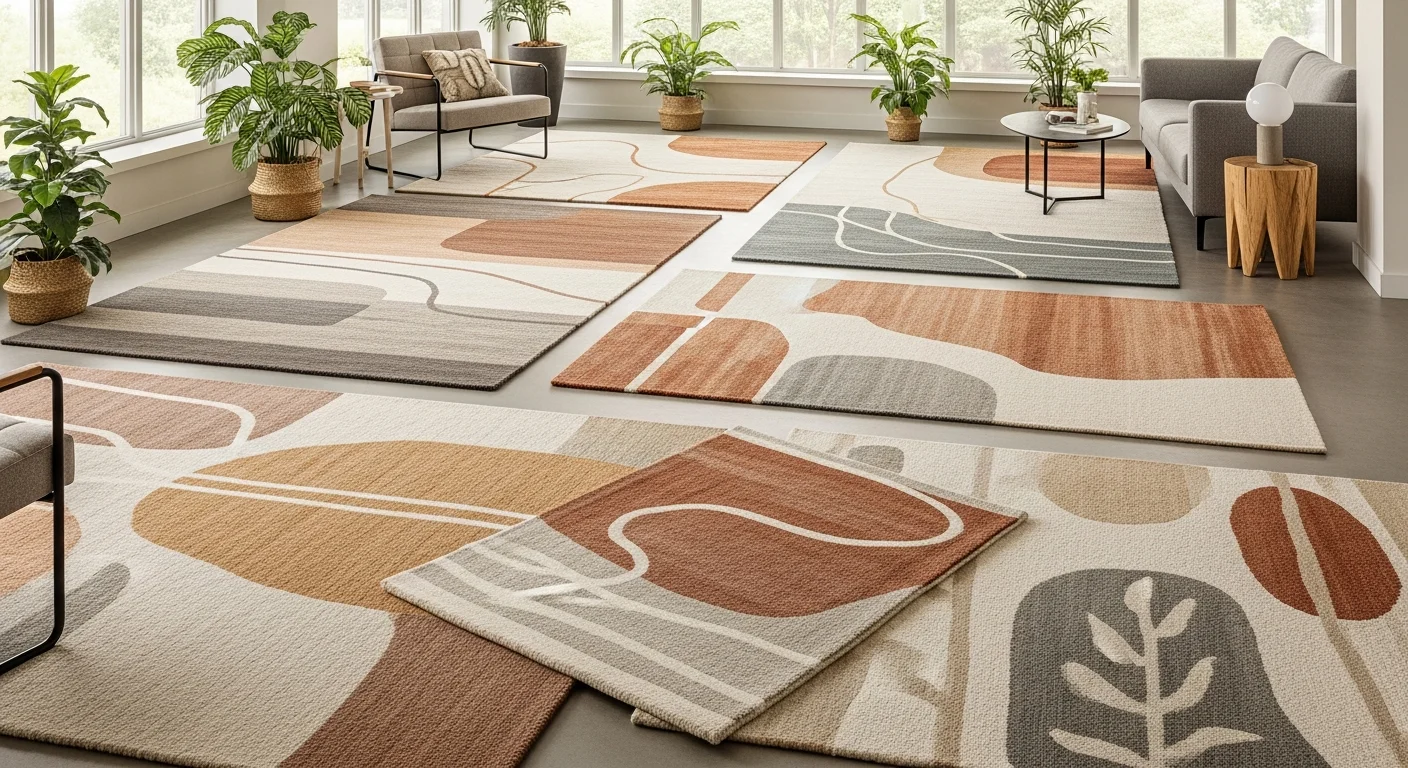
Custom Rugs for Home Décor: A Room-by-Room Style Guide
Transform every room with custom rugs. Room-by-room guide covering living room, bedroom, kitchen, entryway, nursery, and outdoor placement tips for personalized rugs.
Priya Shankar
Customer Success Lead at RareCustom. CCXP certified with 6 years in education. Priya guides homeowners through room-by-room custom rug selection for beautiful, functional interiors.
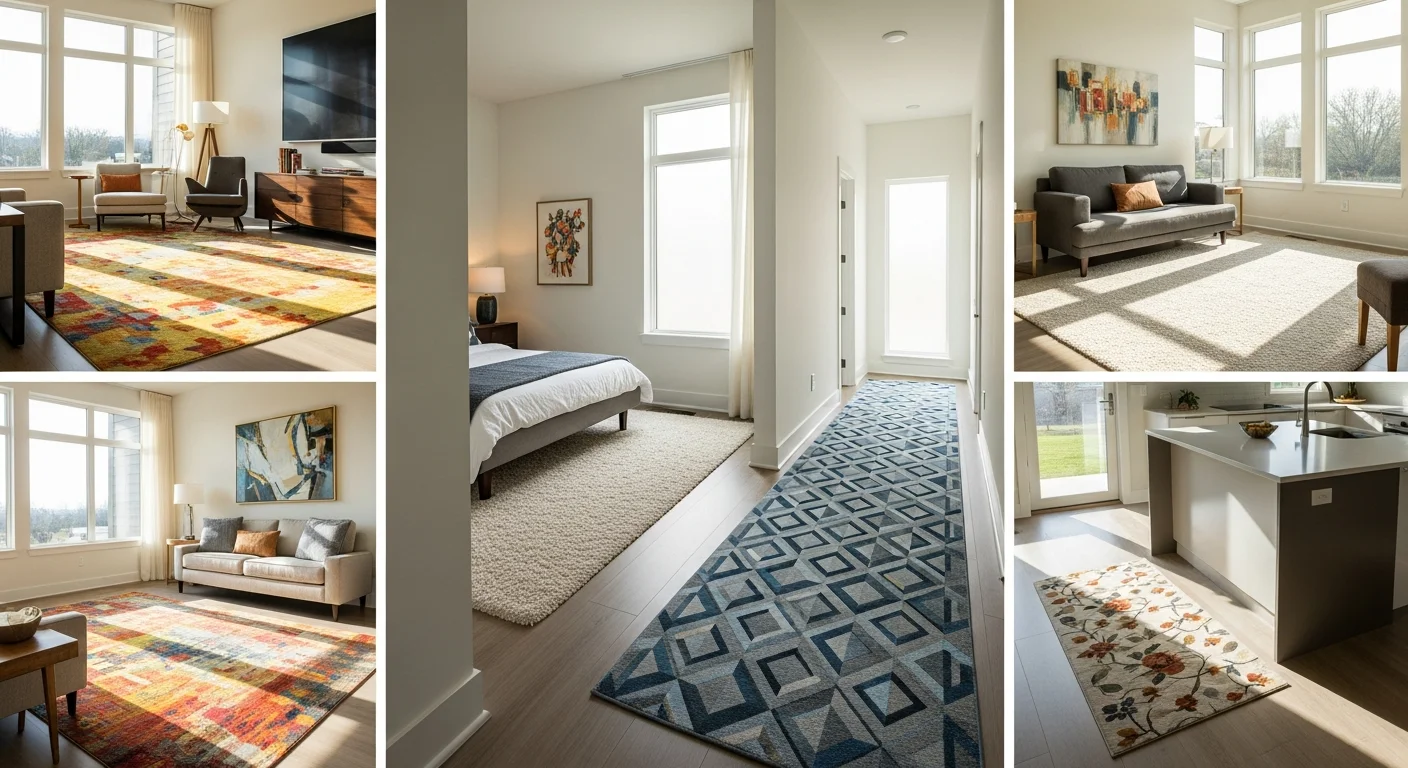
A well-chosen rug does more than cover a floor — it defines a space, anchors furniture, absorbs sound, adds warmth, and expresses personal style. When that rug is custom designed with your own artwork, photographs, colors, or text, it becomes a statement rug décor piece that transforms a room from generic to genuinely personal. Custom rugs give you complete control over dimensions, colors, patterns, and imagery, allowing you to create floor coverings that perfectly complement every room in your home.
This room-by-room guide covers rug placement tips, sizing recommendations, material suggestions, and design inspiration for every space in your house — from the living room and bedroom to the kitchen, nursery, hallway, and outdoor patio. Whether you are designing a single accent rug placement piece or outfitting an entire home with coordinated custom floor coverings, you will find practical, actionable guidance for making the most of personalized rugs in every room.
How Custom Rugs Transform Spaces
Custom rugs serve as a rug visual anchor that organizes a room's visual hierarchy. In interior design, a rug defines the boundaries of a conversation area, dining zone, or sleeping space — creating distinct functional areas within an open floor plan. When that rug features a custom design, it becomes the rug as focal point that sets the tone for the entire room's aesthetic direction.
The power of a custom rug lies in its specificity. Mass-produced rugs force you to build your room's color palette around whatever patterns and hues are available in stores. A custom rug reverses that equation — you design the rug to match your existing décor, wall colors, furniture, and personal style. If your living room uses a specific shade of sage green and warm terracotta, you can design a rug that incorporates those exact colors. If your bedroom features a gallery wall of family photographs, a custom photo rug can extend that personal gallery to the floor.
Beyond aesthetics, custom rugs contribute practical benefits that are easy to overlook. They absorb sound in rooms with hard floors, reducing echo and creating a quieter, more comfortable environment. They add insulation, keeping feet warm on cold tile or hardwood surfaces. They protect flooring from wear, scratches, and furniture indentation. And for homes with children and pets, washable rug for kitchen and entryway applications provide easy-clean surfaces that handle daily life without requiring professional cleaning. The room flow with rugs principle also applies — properly placed rugs guide foot traffic naturally through a space.
Living Room
The living room is the most popular location for a custom rug living room installation, and for good reason — it is the room where the most time is spent, the most guests are entertained, and the most visual impact is desired. A well-designed living room rug anchors the seating area, defines the conversation zone, and sets the color and style foundation for the entire room.
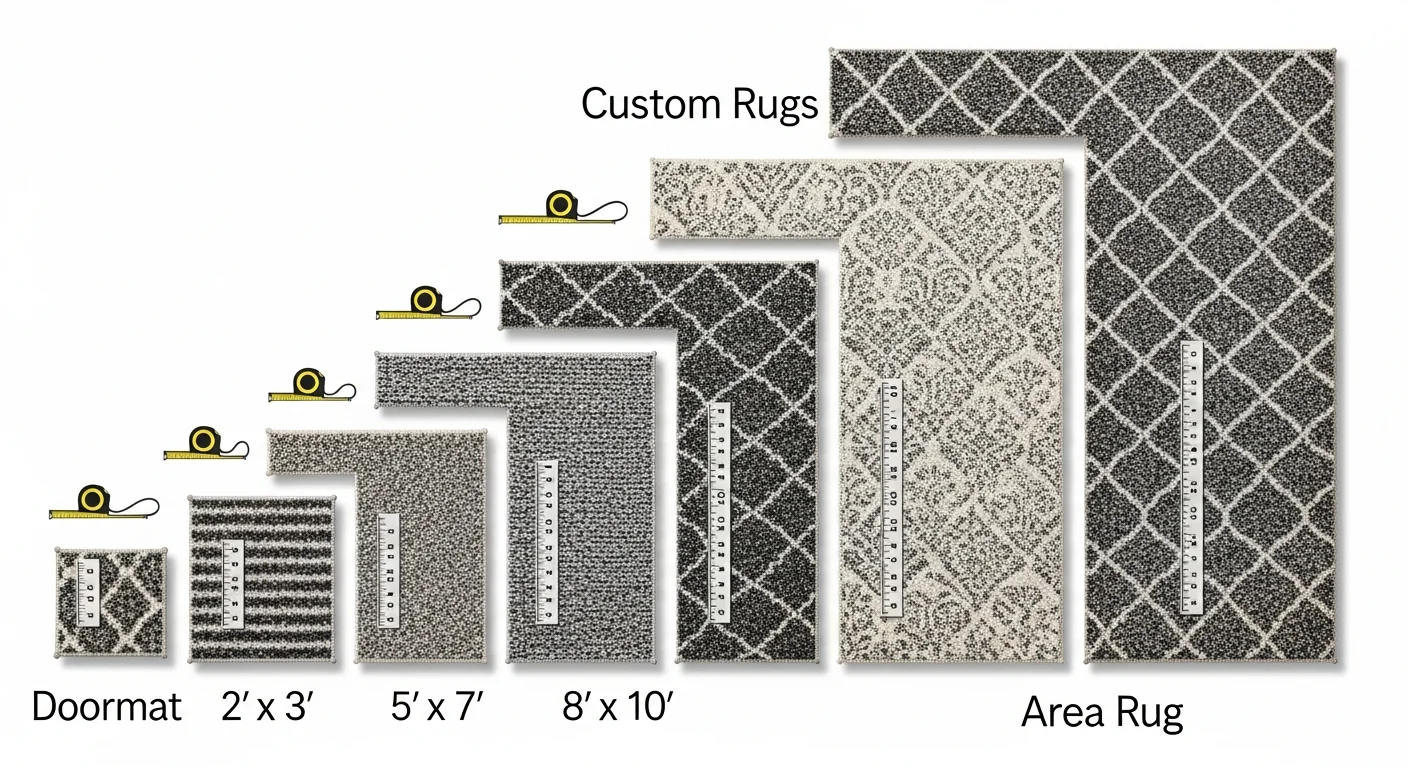
The rug under sofa guide principle is the starting point for living room rug sizing. The ideal living room rug should be large enough for all major seating pieces to sit on the rug with at least their front legs. For a standard sofa and two armchairs arranged in a conversation grouping, a 5' x 7' or 8' x 10' rug typically provides the right footprint. The rug should extend at least 6–8 inches beyond the furniture on all sides to create a visual frame around the seating area.
For open-concept living rooms, a rug as room divider creates visual separation between living, dining, and kitchen zones without the need for walls or physical barriers. A large custom rug under the seating area clearly communicates "this is the living room" even in a completely open floor plan. Use complementary custom rugs in adjacent zones (dining area, reading nook) to create a cohesive visual flow while maintaining distinct functional areas.
Design inspiration for living room rugs ranges from modern custom rug aesthetics — bold geometric patterns, abstract art reproductions, and minimalist color-block designs — to boho custom rug styles with rich textures and eclectic patterns to farmhouse style rug designs with natural tones and rustic motifs. A minimalist rug in a neutral palette can ground a room without competing with bold wall art or patterned upholstery, while a vibrant statement rug can serve as the room's primary design focal point around which all other elements are coordinated.

Bedroom
The bedroom is the room where barefoot comfort matters most, and a custom rug bedroom installation provides a warm, soft landing for your feet every morning. Bedroom rugs also add visual warmth and personality to what is often the most private, personal space in the home.
The rug under bed rules principle determines bedroom rug placement and sizing. The most popular arrangement places a large rug (8' x 10' or 9' x 12') under the bed so that it extends at least 18–24 inches on each side and 24–36 inches at the foot. This ensures you step onto the rug when getting out of bed from either side. For smaller bedrooms or budget-conscious projects, a runner along each side of the bed (2' x 6' or 2.5' x 8') provides the same barefoot landing effect at a lower cost.
Bedroom rug designs tend toward softer aesthetics — muted colors, gentle gradients, calming nature imagery, and personal photographs that create a restful atmosphere. Custom photo rugs featuring landscape photography (beaches, forests, mountains) create a serene backdrop for sleep. Personalized rugs with family names, meaningful dates, or inspirational quotes add a personal touch that mass-produced bedroom rugs cannot replicate. For the softest possible bedroom rug experience, chenille and velvet materials provide the plush comfort that makes getting out of bed a pleasure rather than a shock. For tips on turning your favorite photos into floor art, read the custom photo rugs guide.

Entryway and Welcome Mats
The entryway is the first interior space guests experience, and a custom entryway mat sets the tone for your entire home. A welcome mat personalized with your family name, house number, a greeting, or a custom graphic creates an immediate sense of warmth and hospitality that generic "Welcome" mats simply cannot achieve.
Entryway mats serve both decorative and functional purposes. Functionally, they trap dirt, absorb moisture, and protect interior flooring from the debris tracked in on shoes. Decoratively, they establish your home's design personality from the very first step inside. Seasonal custom mats — holiday themes, spring florals, autumn motifs — can be rotated throughout the year to keep the entryway feeling fresh and festive.
For sizing, a 2' x 3' doormat works for single-door entries, while a 3' x 5' mat accommodates double doors and wider foyers. The mat should be wide enough for a person to stand on with both feet while opening the door, ensuring effective dirt capture and a comfortable welcome experience. Durability is important for entryway mats — polyester or nylon with rubber backing provides the best combination of print quality, grip, and resistance to the heavy foot traffic that entrance areas endure.

Hallway Runners
Hallways are among the most underutilized spaces in home décor, and a custom hallway runner transforms these transitional corridors into design features in their own right. A runner rug hallway adds color, pattern, and warmth to long narrow spaces that are otherwise defined only by blank walls and overhead lighting.
Runner sizing follows a simple guideline: the runner should be 4–6 inches narrower than the hallway on each side, leaving a visible border of flooring along both walls. Standard runner widths of 2' to 2.5' fit most residential hallways, with lengths of 6', 8', or 10' depending on the corridor length. For very long hallways, multiple coordinated runners placed end-to-end with small gaps between them can create a cohesive design flow without requiring a single oversized piece.
Design opportunities for hallway runners are abundant. A repeating geometric pattern creates visual rhythm that guides the eye (and the feet) through the space. A nature-inspired gradient that shifts color from one end to the other adds artistic interest to an otherwise static corridor. Custom runners featuring family photographs, children's artwork, or milestone dates create a personal gallery along the walkway. The narrow format of runners also makes them an accessible entry point for custom rug design — the smaller surface area keeps costs manageable while still delivering dramatic visual impact.
Kitchen
Kitchen rugs face the toughest conditions in the home — heat, moisture, food spills, grease splatters, and heavy foot traffic all converge in this high-activity space. A custom kitchen rug designed for this environment needs to balance style with serious practicality.
Material selection is critical for kitchen rugs. A washable rug for kitchen use is non-negotiable — machine-washable polyester with rubber backing provides the best combination of print durability, slip resistance, and easy cleaning. The rug should be thin enough to fit under cabinet doors and appliances without bunching, and the backing should grip tile or hardwood floors securely to prevent dangerous sliding when wet feet or spills are present.
Placement typically falls into two zones: a runner along the main work corridor (in front of the sink, stove, and prep counter) and a smaller accent rug at the kitchen entrance. The runner provides cushioned standing comfort during long cooking sessions and catches drips and splatters before they reach the floor. Kitchen rug designs range from practical (solid dark colors that hide stains) to decorative (food-themed graphics, herb illustrations, family recipe text, or personalized kitchen signs). For custom rug for small spaces like galley kitchens, a narrow 2' x 4' runner maximizes comfort without crowding the limited floor area.

Dining Room
A custom dining room rug anchors the dining table and chairs, defines the eating area, and protects flooring from chair scrapes and food spills. The dining room rug is one of the most demanding applications for custom rugs because it must accommodate furniture movement, resist staining, and still look beautiful.
The rug under dining table size rule is straightforward: the rug must extend at least 24 inches beyond the table on all sides so that chairs remain on the rug even when pulled out for seating. For a standard 6-person dining table (3.5' x 6'), the minimum rug size is approximately 7.5' x 10'. For round tables, add 48 inches to the table diameter to determine the minimum rug size. Undersized dining room rugs create an awkward visual effect where chairs straddle the rug edge, catching and bunching the mat with every movement.
Flatweave polyester is the recommended material for dining room rugs — the flat surface is easy to clean, resists food stains, and allows chairs to slide smoothly. Dark or patterned designs are practical choices that camouflage minor stains between cleanings. Custom designs featuring family crests, monograms, or thematic artwork (wine motifs, botanical prints, Mediterranean patterns) add personal character to the dining experience.
Nursery and Kids' Rooms
A custom nursery rug is one of the most meaningful custom home products you can create — a personalized floor covering that welcomes a new baby, stimulates early learning, and grows with the child through the toddler years. Custom nursery rugs combine the practical benefits of floor protection and sound absorption with deeply personal design opportunities.
Popular nursery rug designs include the baby's name and birth statistics (date, weight, length), alphabet and number educational patterns, beloved storybook characters, animal illustrations, celestial themes (stars, moons, constellations), and family-significant imagery. A pet-friendly custom rug in a nursery — made from stain-resistant, machine-washable polyester — handles the inevitable messes of early childhood while protecting small knees during crawling and play.
Safety is paramount in nursery rug selection. Choose materials that are hypoallergenic and free of harsh chemical treatments. Ensure the rug has secure non-slip backing to prevent shifting on hard floors, and select a pile height that is plush enough for comfort but short enough to prevent tripping hazards for unsteady toddler feet. A 4' x 6' or 5' x 7' rug typically provides adequate play space while fitting comfortably in standard nursery dimensions.

Home Office
The home office has evolved from a secondary workspace to a primary professional environment for millions of workers, and a custom rug can elevate both the aesthetics and functionality of your work-from-home setup. A well-chosen office rug defines the workspace boundary, adds warmth to what is often a utilitarian room, and provides a professional backdrop for video calls.
For desks with rolling chairs, a flatweave rug or a dedicated chair mat area is essential — high-pile rugs make chair movement difficult and can damage caster wheels over time. A flatweave custom rug under the desk area provides the smooth rolling surface chairs require while still adding visual interest and personal expression to the space. Position the rug so it extends at least 12 inches beyond the chair's maximum rolling range in all directions.
Design options for home office rugs range from professional and subdued (geometric patterns, subtle brand colors, motivational typography) to creative and expressive (artistic prints, photographic landscapes, abstract compositions). If your home office doubles as a guest room or reading space, a larger area rug that extends beyond the desk zone creates a cohesive visual environment for both functions. Pair your custom office rug with a custom blanket for the reading chair and a custom mug on the desk to create a fully personalized workspace.
Outdoor and Patio
A custom outdoor rug patio installation extends your personal style beyond the house walls, creating inviting outdoor living spaces that feel as intentional and designed as your interior rooms. Outdoor custom rugs define dining areas, conversation zones, and relaxation spaces on patios, decks, porches, and pool surrounds.
Material selection is critical for outdoor rugs. UV-resistant polyester or polypropylene with weather-resistant rubber backing provides the best combination of print durability, moisture resistance, and mold prevention. UV-stable inks resist fading under direct sunlight, though placing the rug in a shaded or partially covered area will extend its visual lifespan. Outdoor rugs should be designed for easy drainage — avoid materials and backings that trap water, as standing moisture leads to mold growth and backing deterioration.
Sizing for outdoor rugs follows the same general principles as indoor areas — the rug should be large enough to anchor the furniture grouping while leaving a border of visible deck or patio surface. For outdoor dining, extend the rug 18–24 inches beyond the table on all sides. For conversation seating (outdoor sofa and chairs), a 5' x 7' or 6' x 9' rug provides adequate coverage. Outdoor rug designs range from bold tropical patterns and nautical themes to simple monograms and family names — any design that reflects how you use and enjoy your outdoor space.

Design Your Perfect Rug at RareCustom
Ready to transform your space? RareCustom's custom rug collection offers the materials, sizes, and design flexibility to create the perfect rug for every room in your home. Upload your design, choose your specifications, and preview your finished rug in real time using our free online design tool — all with no minimum order requirements and free shipping on every order.
From a personalized welcome mat at your front door to a statement area rug in your living room, every custom rug is printed to order using professional-grade equipment that ensures vibrant color, sharp detail, and long-lasting durability. For design technique guidance, explore the custom rug design tips guide covering layout composition, color coordination, and rug and curtain coordination for polished, cohesive room aesthetics.
Frequently Asked Questions
What size rug should I get for my living room? For a standard living room seating arrangement, a 5' x 7' or 8' x 10' rug is recommended. The rug should be large enough for the front legs of all seating pieces to rest on the rug surface, with 6–8 inches of extension beyond the furniture on all sides.
Are custom rugs safe for nurseries? Yes — custom rugs made from hypoallergenic polyester with non-slip backing are safe for nurseries and children's rooms. Choose machine-washable materials and low pile heights to minimize tripping hazards for crawling babies and toddler walkers.
Can custom rugs be used outdoors? Yes — outdoor-rated custom rugs use UV-stable inks and weather-resistant backing to withstand sun, rain, and temperature changes. Place outdoor rugs on covered or partially covered surfaces for the longest lifespan.
How do I clean a custom kitchen rug? Machine-washable polyester kitchen rugs can be cleaned on a cold gentle cycle and air dried. For spot cleaning, blot spills immediately with a damp cloth and mild detergent. Avoid bleach and harsh chemical cleaners that can damage the printed surface.
Related Articles
Continue exploring custom rug design and placement:
Share this article
Written by
Priya Shankar
Customer Success Lead at RareCustom. CCXP certified with 6 years in education. Priya guides homeowners through room-by-room custom rug selection for beautiful, functional interiors.