Heat Transfer Vinyl vs Sublimation Printing: Which Method Is Right for Your Custom Shirts?
Compare heat transfer vinyl vs sublimation printing for custom t-shirts. Learn key differences in durability, cost, color vibrancy, and fabric compatibility.
Tony Vu
Founder & President of RareCustom. Tony's hands-on experience with every major printing technology—from his family's screen printing shop to modern DTG and sublimation—gives him unique insight into choosing the right print method.
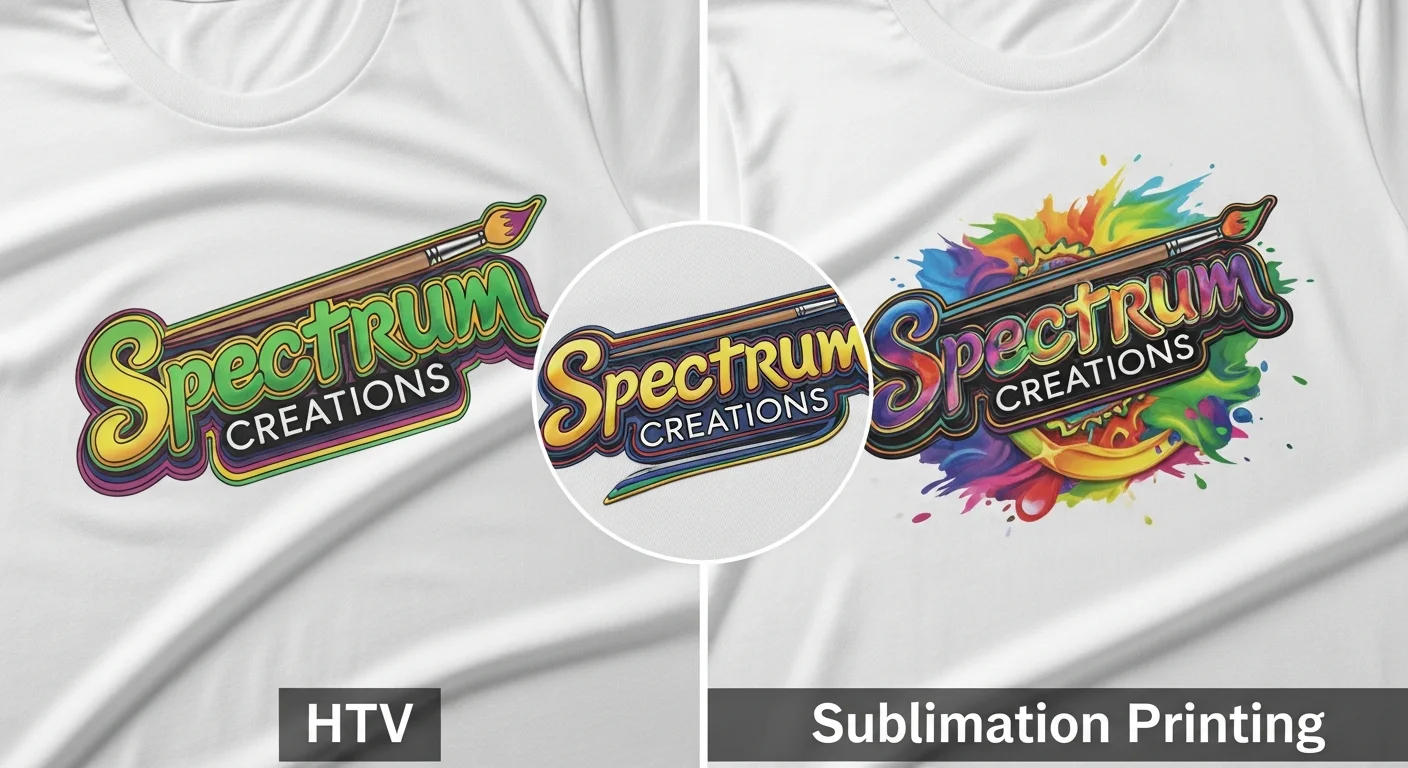
When it comes to creating custom t-shirts, two printing methods dominate the conversation for home crafters and small-batch producers: heat transfer vinyl and sublimation printing. Both use heat presses to apply designs to garments, but the similarities largely end there. The technology behind each method, the types of fabrics they work with, the durability of the finished product, and the cost structure are fundamentally different, and choosing the wrong method for your project can lead to disappointing results, wasted materials, and unnecessary expense.
This comprehensive comparison of heat transfer vinyl vs sublimation breaks down everything you need to know to make the right choice for your specific project. Whether you are producing shirts for a side business, crafting personalized gifts, or ordering custom t-shirts for an event, understanding these two methods will help you achieve professional results every time.
What Is Heat Transfer Vinyl (HTV)?

Heat transfer vinyl, commonly abbreviated as HTV, is a thin, flexible material that is cut into shapes or letters using a vinyl cutter or craft cutting machine and then adhered to fabric using heat and pressure. The vinyl comes in rolls or sheets in a wide variety of colors, finishes, and specialty effects including glitter, metallic, holographic, glow-in-the-dark, and flock textures.
The HTV process begins with designing your artwork in vector format using software like Adobe Illustrator or free alternatives like Inkscape. The design is then sent to a cutting machine such as a Cricut or Silhouette, which precisely cuts the vinyl along your design outlines. After cutting, you weed the excess vinyl away from the design, leaving only the portions you want to transfer. The weeded design is placed face-down on the garment using a carrier sheet, and a heat press applies consistent temperature and pressure for a specified duration, bonding the vinyl permanently to the fabric.
HTV works on a wide range of fabrics including cotton, polyester, cotton-poly blends, nylon, and even leather. This fabric versatility is one of its greatest strengths. The finished product has a slightly raised, smooth texture that sits on top of the fabric rather than integrating into it. Depending on the vinyl type, this texture can range from thin and flexible to thick and rubbery.
What Is Sublimation Printing?

Sublimation printing, also called dye sublimation, uses a fundamentally different approach to apply designs to fabric. Instead of placing a material on top of the garment, sublimation infuses special dye directly into the polyester fibers of the fabric at a molecular level. The result is a print that becomes part of the fabric itself rather than sitting on its surface.
The sublimation process starts with printing your design onto special sublimation transfer paper using a sublimation printer loaded with sublimation ink. When the printed transfer is placed on the garment and subjected to high heat (typically around 400 degrees Fahrenheit) and pressure for forty-five to sixty seconds, the solid ink converts directly into a gas without passing through a liquid phase. This gas permeates the polyester fibers and solidifies within them, creating a permanent, full-color image that will never crack, peel, or fade.
The critical limitation of sublimation is that it only works on polyester or polymer-coated substrates. The dye needs synthetic fibers to bond with, which means traditional one hundred percent cotton shirts are not compatible. For garments, you need at least sixty-five percent polyester content for vibrant results, and one hundred percent polyester produces the most vivid colors. White or very light-colored fabrics are also required since sublimation ink is transparent and cannot produce white.
Key Differences at a Glance
Before diving deeper into each category, here is a high-level comparison of the most important differences between HTV and sublimation printing:
| Feature | Heat Transfer Vinyl (HTV) | Sublimation Printing |
|---|---|---|
| How it works | Vinyl layer adhered on top of fabric | Dye infused into fabric fibers |
| Fabric compatibility | Cotton, polyester, blends, nylon | Polyester and poly-coated only |
| Color range | Limited by vinyl sheet colors | Unlimited CMYK color spectrum |
| Design complexity | Best for simple shapes and text | Best for photos and complex art |
| Hand feel | Raised, smooth layer on fabric | No texture, part of the fabric |
| Durability | Good (30-50 washes with proper care) | Excellent (permanent, never cracks) |
| Base shirt color | Works on any color | White or very light colors only |
| Production speed | Slow (cutting and weeding required) | Fast (print and press) |
| Cost per shirt (small runs) | Low ($1-3 in materials) | Low ($1-4 in materials) |
| Best for | Names, numbers, simple graphics | All-over prints, photos, gradients |
Fabric Compatibility Comparison
Fabric compatibility is perhaps the most decisive factor when choosing between HTV and sublimation. If you need to print on one hundred percent cotton t-shirts, sublimation is not an option, and HTV becomes your go-to method. This single constraint often makes the decision for you before any other factor comes into play.
HTV excels in versatility. It bonds effectively to cotton, polyester, poly-cotton blends, nylon, spandex, and even unconventional materials like canvas, burlap, and faux leather. This broad compatibility makes it the preferred method for customizing a wide range of garments and accessories. Whether you are personalizing a cotton tote bag or a polyester performance jersey, HTV delivers consistent results.
Sublimation's polyester requirement can feel limiting, but it is worth noting that the quality of modern polyester garments has improved dramatically. Today's performance polyester shirts are lightweight, breathable, moisture-wicking, and incredibly soft. Many people cannot tell the difference between a high-quality polyester tee and a cotton blend by touch alone. For a deeper look at fabric options, read our t-shirt fabric guide.
If your project requires dark-colored shirts, HTV is the clear winner. Sublimation inks are transparent, meaning they cannot produce visible designs on dark fabrics. HTV, on the other hand, comes in opaque colors that pop against any shirt shade, from jet black to deep navy to forest green.
Durability and Longevity
When it comes to print durability, sublimation holds a significant advantage. Because the dye becomes part of the polyester fiber itself, sublimation prints will never crack, peel, flake, or fade. You can wash a sublimated shirt hundreds of times and the design will look virtually identical to the day it was printed. The color is locked into the molecular structure of the fabric.
HTV durability depends heavily on the quality of the vinyl used, the accuracy of the heat press settings, and how the garment is cared for after application. High-quality HTV from reputable brands can last thirty to fifty washes or more when properly applied and cared for. However, all HTV will eventually show signs of wear because it is a physical layer sitting on top of the fabric. Edges may begin to lift, colors may fade slightly, and the overall feel can become stiffer over time. Following proper care and washing instructions extends HTV lifespan significantly.
For products that need to withstand heavy use, frequent washing, and years of wear, sublimation is the superior choice. For occasional-wear items like party shirts, event tees, and seasonal gifts, HTV provides more than adequate durability at a lower barrier to entry.
Cost Analysis: Materials, Equipment, and Per-Unit Pricing
Understanding the full cost breakdown of each method helps you make a financially sound decision, especially if you are producing custom shirts at volume or starting a small business.
HTV Cost Structure
A basic HTV setup requires a cutting machine (two hundred to four hundred dollars), a heat press (two hundred to five hundred dollars), and vinyl rolls (five to fifteen dollars per roll, covering five to ten shirts). The total startup investment ranges from four hundred to nine hundred dollars. Per-shirt material costs typically run one to three dollars for simple designs, making HTV extremely affordable for small batches. However, labor costs are higher because each design requires cutting and weeding, which is time-intensive for complex artwork.
Sublimation Cost Structure
A sublimation setup requires a sublimation printer (three hundred to eight hundred dollars for entry-level), sublimation ink (fifty to one hundred dollars per set), transfer paper (twenty to forty dollars for one hundred sheets), and a heat press (two hundred to five hundred dollars). Total startup investment ranges from five hundred to fourteen hundred dollars. Per-shirt material costs are typically one to four dollars, comparable to HTV. However, production speed is significantly faster since there is no cutting or weeding involved.
| Cost Category | HTV | Sublimation |
|---|---|---|
| Entry-level equipment | $400-$900 | $500-$1,400 |
| Materials per shirt | $1-$3 | $1-$4 |
| Labor time per shirt | 15-30 minutes | 5-10 minutes |
| Blank shirt cost (compatible) | $2-$8 (any fabric) | $4-$10 (polyester required) |
| Break-even point | ~50 shirts | ~75 shirts |
For those who prefer to skip the equipment investment entirely, ordering from a professional service like RareCustom gives you access to commercial-grade printing with no upfront costs. Visit our custom t-shirt pricing guide for transparent per-unit pricing at every volume tier.
Color Vibrancy and Design Complexity
Color performance is an area where sublimation clearly outshines HTV. Sublimation uses a CMYK color model that can reproduce millions of colors, gradients, photographic images, and intricate details with stunning accuracy. The colors are vibrant, the transitions are smooth, and the level of detail is limited only by the resolution of your source file. This makes sublimation ideal for photographic designs, complex illustrations, all-over prints, and anything requiring subtle color variations.
HTV is limited to the colors available in the vinyl manufacturer's palette. While most manufacturers offer fifty to one hundred standard colors plus specialty finishes, you cannot create gradients, photographs, or seamless color transitions with traditional HTV. Printable HTV is a hybrid option that allows you to print full-color designs onto special vinyl using an inkjet printer, but the results are generally less vibrant than sublimation and add an extra step to the production process.
For text-based designs, monochrome logos, jersey numbers, and simple graphic elements, HTV delivers clean, crisp results that look professional and polished. The edges are sharp, the colors are solid, and the finished product has a premium appearance. But when your design demands photographic quality or unlimited color, sublimation is the only viable option.
Best Use Cases for Each Method
Choosing between HTV and sublimation often comes down to what you are making and for whom. Here is a practical breakdown of which method works best for common custom t-shirt projects:
Choose HTV When:
You need to print on cotton or dark-colored shirts. HTV is your only option for cotton fabrics and dark bases where sublimation cannot produce visible results. It is also the best choice for adding individual names and numbers to team uniforms, creating monogrammed gifts, and producing small batches of shirts with simple text or shape-based designs. HTV also excels for specialty effects like glitter, metallic, glow-in-the-dark, and flock finishes that sublimation cannot replicate.
Choose Sublimation When:
You need full-color, edge-to-edge, or photographic prints on light-colored polyester garments. Sublimation is the superior choice for athletic jerseys, all-over print fashion shirts, promotional products with detailed logos, and any design that demands vivid color reproduction and permanent durability. It is also more efficient for medium to large production runs because the print-and-press workflow is faster than cutting and weeding vinyl.
Pros and Cons Summary
Heat Transfer Vinyl Pros
Works on cotton and all fabric types. Produces sharp, opaque colors on dark shirts. Offers specialty finishes like glitter and metallic. Lower startup costs. No printer required for standard vinyl. Easy to learn for beginners.
Heat Transfer Vinyl Cons
Labor-intensive cutting and weeding process. Limited color palette per design. Raised texture on fabric surface. Potential for cracking and peeling over time. Not suitable for photographic designs or gradients. Difficult to produce all-over prints.
Sublimation Pros
Unlimited colors with photographic quality. No hand feel because dye is in the fabric. Permanent prints that never crack, peel, or fade. Faster production per shirt. Supports edge-to-edge and all-over designs. Vibrant, washfast colors.
Sublimation Cons
Only works on polyester or polymer-coated substrates. Requires white or very light colored garments. Higher initial equipment investment. Cannot produce white ink. Polyester blanks can be more expensive than cotton. Requires accurate color management for consistent results.
Equipment Needed for Each Method
If you are considering producing custom shirts yourself, here is a complete equipment checklist for each method:
HTV essential equipment: A vinyl cutting machine such as Cricut Maker or Silhouette Cameo. A quality heat press with adjustable temperature and pressure. HTV rolls or sheets in your desired colors and finishes. Weeding tools for removing excess vinyl. Heat-resistant tape for positioning. A Teflon sheet to protect the vinyl during pressing.
Sublimation essential equipment: A sublimation printer, either a converted Epson EcoTank or a dedicated sublimation printer like Sawgrass. Sublimation ink cartridges or bottles. Sublimation transfer paper. A quality heat press with even heat distribution. Heat-resistant tape for securing transfers. Butcher paper to prevent ink bleed-through.
If investing in equipment is not practical for your situation, professional printing services like RareCustom offer both methods through our streamlined ordering process, giving you access to commercial-grade equipment and expert operators without any capital investment.
Common Mistakes to Avoid
Both methods have learning curves, and understanding the most common pitfalls saves time, materials, and frustration. For a comprehensive list of ordering errors, review our custom t-shirt mistakes to avoid guide.
HTV mistakes: Forgetting to mirror the design before cutting is the number one beginner error. Since HTV is applied face-down, the design must be horizontally flipped in your cutting software. Applying insufficient pressure or incorrect temperature leads to vinyl that peels off after the first wash. Using low-quality vinyl from discount suppliers often results in premature cracking and fading.
Sublimation mistakes: Attempting to sublimate onto cotton fabric produces washed-out, faded results because the dye has no polyester fibers to bond with. Using regular inkjet ink instead of sublimation ink wastes transfer paper and produces no usable result. Insufficient heat press time leads to incomplete dye transfer with muted colors. Moving the transfer paper during pressing causes ghosting or double images.
Frequently Asked Questions
Can I use heat transfer vinyl and sublimation on the same shirt?
Yes, some crafters combine both methods on a single garment. You might sublimate a full-color background design onto a white polyester shirt and then add HTV lettering or a name on top. This hybrid approach lets you leverage the strengths of both methods. However, apply the sublimation print first, then add the HTV layer, as the heat from sublimation can damage previously applied vinyl.
Which method lasts longer after washing?
Sublimation prints are permanent and will outlast the garment itself. HTV typically lasts thirty to fifty washes with proper care, including washing inside out on a gentle cycle and air drying or tumble drying on low heat. Both methods produce professional-quality results when applied correctly.
Is sublimation better than HTV for starting a t-shirt business?
It depends on your target market and product line. If you plan to sell cotton t-shirts on dark backgrounds, HTV or DTG printing is more practical. If you focus on performance wear, athletic apparel, or all-over print fashion, sublimation offers superior quality and faster production. Many successful t-shirt businesses use both methods to cover different product categories.
What about DTG and screen printing as alternatives?
DTG and screen printing are professional-grade methods that handle design complexity and volume differently from HTV and sublimation. DTG is excellent for full-color prints on cotton, while screen printing excels at high-volume orders with limited colors. Read our detailed screen printing vs DTG comparison for a complete breakdown of these professional alternatives.
Let RareCustom Handle the Printing for You
Understanding the differences between heat transfer vinyl and sublimation is valuable whether you are producing shirts yourself or ordering from a professional service. At RareCustom, we use commercial-grade equipment across multiple printing methods to ensure every custom t-shirt meets the highest quality standards. Upload your design, choose your garment, and let our production team select the optimal printing method for your specific project. No equipment investment, no learning curve, no wasted materials. Just professional results delivered to your door with free shipping and no minimum order requirements.
Related Articles
Share this article
Written by
Tony Vu
Founder & President of RareCustom. Tony's hands-on experience with every major printing technology—from his family's screen printing shop to modern DTG and sublimation—gives him unique insight into choosing the right print method.