How to Create a T-Shirt Design That Sells: Proven Strategies for Profitable Custom Shirts
Learn how to create a t-shirt design that sells with proven strategies for typography, color psychology, niche targeting, pricing, and marketing your custom shirts.
Tony Vu
Founder & President of RareCustom. Forbes 30 Under 30 alumni. Tony has helped launch 200+ merchandise lines and shares the design principles that consistently drive sales across custom apparel businesses.
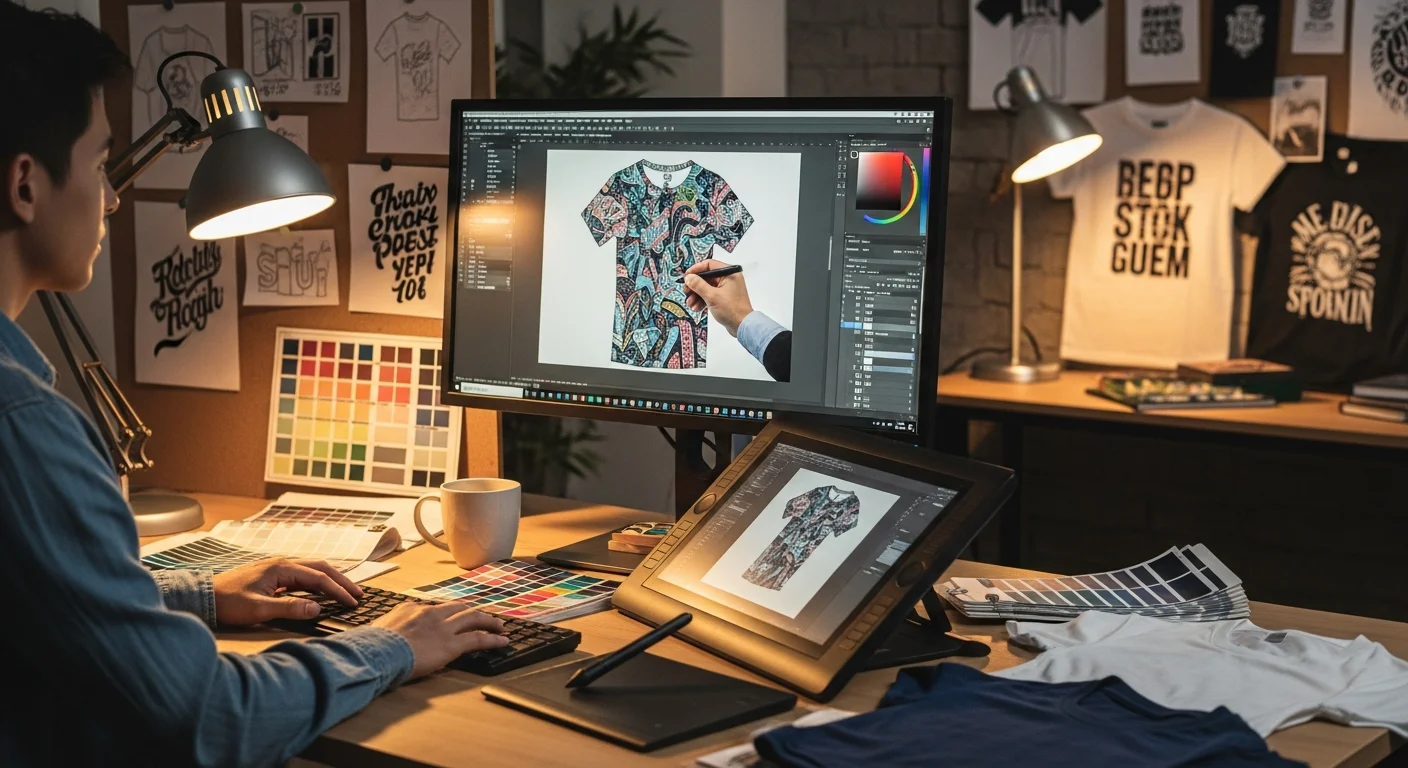
Creating a t-shirt design that sells requires more than artistic talent. It demands a strategic understanding of your target audience, market trends, visual psychology, and the business mechanics of custom apparel. The gap between a design that looks cool and a design that consistently generates sales is enormous, and bridging that gap is what separates hobbyists from profitable t-shirt entrepreneurs.
Whether you are launching a print-on-demand brand, designing merchandise for a client, or creating custom shirts for your own business, this guide provides actionable strategies for every stage of the design-to-sale pipeline. From choosing the right niche to pricing for profit to scaling your production, you will learn the principles that drive the most successful custom apparel brands in the market. And when you are ready to bring your designs to life, custom t-shirts from RareCustom give you professional-quality printing with no minimums, free shipping, and the flexibility to test designs before committing to large runs.
What Makes a T-Shirt Design Sell
Before diving into design techniques, it is essential to understand the fundamental psychology behind why people buy custom t-shirts. Consumers purchase graphic tees for three primary reasons: self-expression, identity signaling, and emotional connection. A shirt that taps into one or more of these motivations has a dramatically higher chance of selling than one that is merely aesthetically pleasing.
Self-expression drives people to wear shirts that communicate their interests, beliefs, humor, and personality to the world. A well-designed shirt becomes a conversation starter and a way to connect with like-minded people. Designs that make a bold statement, whether through wit, artistic style, or cultural reference, give wearers a tool for expressing who they are without saying a word.
Identity signaling is about belonging to a group or tribe. People buy shirts that identify them as part of a community: runners, gamers, dog lovers, nurses, engineers, parents, or fans of a particular band, show, or sports team. The more specific and authentic the identity signal, the more likely the target audience will feel compelled to purchase.
Emotional connection creates the impulse to buy. Designs that evoke nostalgia, humor, pride, inspiration, or a sense of purpose trigger an emotional response that overrides price sensitivity. When someone sees a shirt and thinks "that is so me," you have achieved emotional connection, and the sale becomes almost inevitable.
Understanding Your Target Audience
The single biggest mistake aspiring t-shirt designers make is designing for themselves instead of for a specific audience. A design you personally love may not resonate with the people who are most likely to purchase it. Audience research is the foundation of every successful custom apparel brand.
Start by identifying a niche market you want to serve. The more specific your niche, the less competition you face and the stronger the connection between your designs and your audience. "Dog lovers" is a broad market with fierce competition. "French Bulldog owners who work from home" is a niche with a passionate audience that will eagerly buy shirts that speak to their specific experience.
Research your target audience by spending time in their online communities. Join Facebook groups, subreddits, Discord servers, and forums where your niche hangs out. Pay attention to the language they use, the jokes they share, the frustrations they voice, and the milestones they celebrate. This raw material becomes the foundation for designs that feel authentic and insider-level rather than generic and mass-produced.
Study what is already selling in your niche by browsing marketplaces like Etsy, Amazon Merch, Redbubble, and Teespring. Identify patterns in best-selling designs without copying them. Note the themes, styles, colors, and messaging that resonate, then find your unique angle within those patterns. If you are new to the t-shirt business, our complete guide to starting a t-shirt business in 2026 covers market research strategies in depth.
Design Styles That Consistently Perform

Certain design styles have proven track records of generating consistent sales across multiple niches. Understanding these styles gives you a toolkit for creating profitable t-shirt designs regardless of your target market.
Typography-Based Designs
Typography shirts are among the best-selling categories in custom apparel because they communicate messages directly and can be produced without illustration skills. The key to profitable text-based designs is combining the right message with the right font treatment. A witty phrase in a bold sans-serif font, a motivational quote in elegant script, or a niche-specific inside joke in retro typography all perform well when the message resonates with the target audience.
Typography designs succeed because they are instantly readable and shareable. When someone wearing your shirt walks through a crowd, the message is communicated in a fraction of a second. This rapid readability drives impulse purchases because the buyer immediately understands the statement the shirt makes. For font selection guidance, review our best fonts for t-shirt designs article.
Illustration and Graphic Designs
Original illustrations create a premium perception that commands higher price points. Hand-drawn artwork, digital illustrations, and custom graphic compositions feel artistic and unique, differentiating your brand from the sea of text-only competitors. Illustration-heavy designs work particularly well in the art print, gaming, fantasy, nature, and pop culture niches.
If you lack illustration skills, consider collaborating with freelance artists on platforms like Fiverr, Upwork, or Dribbble. Many successful t-shirt brands are built on collaborations between business-minded entrepreneurs and talented artists. The upfront investment in quality artwork pays dividends through higher conversion rates and stronger brand perception.
Minimalist Designs
Minimalist t-shirt designs have surged in popularity as consumers increasingly favor clean, understated aesthetics over busy, maximalist graphics. A small chest-placed logo, a single-line illustration, or a two-word phrase in a clean font creates a sophisticated look that appeals to design-conscious buyers. Minimalist designs also cost less to produce because they use less ink and simpler print setups, improving your profit margins.
Color Psychology for T-Shirt Sales
Color choices directly influence purchasing decisions, and understanding color psychology gives you a competitive edge in designing shirts that sell. Different colors evoke different emotional responses, and aligning your color palette with your design's intended message amplifies its impact.
Black shirts are the best-selling base color in custom apparel, outselling every other color combined in many marketplaces. Black conveys sophistication, versatility, and a universal appeal that transcends demographics. White, red, and bright-colored prints on black fabric create high contrast that is visually striking and photographs well for product listings.
White shirts are the second most popular choice and offer the broadest color reproduction for printed designs. They create a clean, classic canvas that works for every design style from minimalist typography to full-color illustrations. The neutral base allows the design itself to take center stage.
Color combinations matter as much as individual colors. Complementary color pairings (colors opposite on the color wheel) create dynamic, attention-grabbing designs. Analogous color schemes (colors adjacent on the wheel) produce harmonious, sophisticated results. Limiting your palette to two or three colors keeps designs clean and reduces production costs. Dive deeper into strategic color use with our color theory for t-shirt design guide.
Trending Design Niches in 2026
Staying ahead of trending t-shirt design niches positions you to capture emerging demand before the market becomes saturated. Here are the niches showing the strongest growth:
Occupation pride. Shirts that celebrate specific professions continue to perform well. Nurse humor, teacher appreciation, engineer jokes, and first responder pride designs have dedicated audiences that buy repeatedly. The key is authentic, insider-level messaging that feels like it was designed by someone who actually works in the field.
Hobby and lifestyle. Shirts for runners, hikers, gardeners, gamers, book lovers, and other hobby enthusiasts tap into passionate communities with strong purchasing intent. These audiences buy not just for themselves but as gifts for fellow enthusiasts, multiplying your sales potential.
Pet-specific designs. Breed-specific dog and cat shirts have exploded in popularity. Golden Retriever mom, Dachshund dad, Maine Coon lover, and similar breed-focused designs attract buyers who deeply identify with their pet's breed and are willing to spend on products that celebrate that bond.
Social causes and values. Shirts that align with social values like sustainability, mental health awareness, community support, and inclusivity resonate with consumers who use their purchasing power to signal their beliefs. Pair these themes with eco-friendly printing methods for added authenticity. For more on current trends, see our 2026 design trends report.
Composition and Layout Principles

Even a great concept falls flat if the layout and composition are poorly executed. Professional t-shirt designers follow specific composition principles that ensure their designs look balanced, intentional, and visually compelling on a garment.
Visual hierarchy. Every design needs a focal point that draws the viewer's eye first, followed by supporting elements that provide context. In a text-based design, the most important word or phrase should be the largest and boldest. In an illustration, the central subject should dominate the composition with background elements playing a secondary role.
Breathing room. Leaving adequate negative space around your design gives it room to breathe and prevents the visual clutter that makes amateur designs look unprofessional. A design that fills every inch of the print area feels chaotic, while one with strategic white space feels intentional and polished. As a rule of thumb, leave at least one inch of margin on all sides of your design within the printable area.
Print placement. The most common placement for t-shirt designs is center chest, but alternative placements can differentiate your brand. Left chest pocket prints create a subtle, premium look. Oversized prints that extend across the full chest make a bold statement. Back prints work well for detailed artwork or secondary messaging. Consider how each placement affects the design's visibility and the wearer's comfort.
File Preparation for Print-Ready Designs
The technical quality of your design files directly affects the quality of the printed product. Proper file preparation ensures your vision translates accurately from screen to fabric.
Resolution. All raster (pixel-based) designs should be at least 300 DPI at the final print size. For a standard twelve-inch by twelve-inch print area, this means your file should be 3600 by 3600 pixels minimum. Low-resolution files produce blurry, pixelated prints that scream amateur. Vector files (AI, SVG, EPS) are resolution-independent and always print at maximum sharpness, making them ideal for text-based and logo designs.
Color mode. Design in CMYK color mode if possible, as this matches the color model used by most printing processes. RGB designs can produce unexpected color shifts when converted for printing. If your software does not support CMYK, design in RGB and order a proof sample before committing to a large production run.
File formats. PNG with transparent background is the most universally accepted format for t-shirt printing. AI and SVG files are preferred for vector artwork. Avoid JPEG for designs with transparency, as JPEG does not support transparent backgrounds and will add a white box around your design. For a complete primer on preparing your files, read our mockup and preview guide.
Testing Designs Before Committing to Production
Design validation is the step most new t-shirt sellers skip, and it is the step that separates profitable brands from those that lose money on unsold inventory. Testing your designs before committing to a large production run minimizes financial risk and provides invaluable market feedback.
Social media polls. Post your design concepts on Instagram, Facebook, or TikTok and ask your audience to vote on their favorites. The engagement metrics (likes, comments, shares) provide quantitative data on which designs generate the most interest. Designs that fail to generate engagement in organic posts are unlikely to generate sales.
Pre-orders and mockup campaigns. Create professional mockup images of your designs and run a pre-order campaign. This approach validates demand with actual purchase intent rather than social media likes. Platforms like Kickstarter and Indiegogo have been used successfully to validate and fund custom apparel lines.
Small batch testing. Order five to ten units of your top designs and sell them through your direct channels. Track which designs sell out fastest, which generate repeat purchases, and which receive the most compliments and social media shares. Use this data to inform your next production run. RareCustom's no-minimum ordering makes small batch testing risk-free and cost-effective.
Pricing Your T-Shirt Designs for Profit
Pricing is the lever that determines whether your t-shirt business is profitable or not. Many new sellers underprice their designs out of fear that higher prices will deter buyers, but this approach often leads to thin margins that make the business unsustainable.
Cost-plus pricing model. Calculate your total cost per shirt including the blank garment, printing, packaging, shipping, and marketplace fees. Then add your desired profit margin. A common target is a sixty to seventy percent margin on direct sales, meaning a shirt that costs you twelve dollars all-in should retail for thirty to thirty-five dollars. This margin accounts for marketing costs, returns, and the time invested in design and customer service.
Value-based pricing. If your designs serve a passionate niche with limited competition, you can price based on the perceived value to the customer rather than your production cost. Niche-specific designs for professions, hobbies, and lifestyle groups can command thirty-five to fifty dollars because the buyer perceives the design as personally relevant and hard to find elsewhere. For detailed cost breakdowns, see our t-shirt pricing explained post.
| Pricing Factor | Budget Approach | Premium Approach |
|---|---|---|
| Blank shirt cost | $3-5 (standard cotton) | $8-12 (premium ringspun) |
| Printing cost | $3-5 (screen print) | $5-8 (DTG or specialty) |
| Packaging | $0.50-1 | $2-4 (branded packaging) |
| Total production cost | $7-11 | $15-24 |
| Retail price target | $19-25 | $35-50 |
| Profit margin | $8-14 (53-63%) | $15-26 (50-60%) |
Marketing Your T-Shirt Designs
The best design in the world will not sell if nobody sees it. Marketing strategies for t-shirt brands require a multi-channel approach that builds awareness, drives traffic, and converts browsers into buyers.
Social media content. Create a consistent posting schedule featuring lifestyle photography of people wearing your shirts, behind-the-scenes design process content, and user-generated content from satisfied customers. Instagram, TikTok, and Pinterest are the most effective platforms for visual products like custom apparel. Use hashtags relevant to your niche community rather than generic ones like #tshirt.
Influencer partnerships. Identify micro-influencers (one thousand to fifty thousand followers) within your niche and offer them free shirts in exchange for authentic content. Micro-influencers have higher engagement rates and more trust with their audiences than macro-influencers, making them more cost-effective for niche products.
Email marketing. Build an email list from day one. Offer a discount code in exchange for email sign-ups and send regular newsletters featuring new designs, limited editions, and exclusive offers. Email marketing consistently delivers the highest ROI of any digital marketing channel for e-commerce brands.
Marketplace diversification. Sell your designs on multiple platforms to maximize exposure. List on Etsy for handmade and custom buyers, Amazon Merch for its massive audience, your own website for maximum margins, and social platforms like Instagram Shop for impulse purchases. For more on building a sustainable business, check out our t-shirt business startup guide.
Scaling Production as Sales Grow
As your designs gain traction and orders increase, scaling your production efficiently becomes critical to maintaining profitability and customer satisfaction.
Print-on-demand is the lowest-risk starting point because you only produce shirts after a customer orders. There is no inventory investment, no unsold stock, and no warehousing costs. The trade-off is higher per-unit costs and less control over production quality and shipping times. RareCustom's print-on-demand service handles production, quality control, and shipping so you can focus on design and marketing.
Bulk pre-production becomes more cost-effective once you have validated which designs sell consistently. Ordering fifty to one hundred units of your best sellers reduces per-unit costs by twenty to forty percent compared to print-on-demand pricing. This approach requires upfront capital and accurate demand forecasting, but the improved margins can significantly boost profitability.
Hybrid model. Many successful brands use a hybrid approach: print-on-demand for new and experimental designs, and bulk production for proven best sellers. This strategy minimizes risk on untested designs while maximizing margins on your top performers. As your brand grows, you can gradually shift more designs from on-demand to bulk production as they prove their commercial viability.
Common Design Pitfalls to Avoid
Learning from the mistakes of others saves time, money, and frustration. Here are the most common t-shirt design pitfalls that prevent designs from selling:
Designing for yourself instead of your audience. What you think looks cool is irrelevant if your target customer does not agree. Always validate designs with your intended audience before investing in production. Use social media polls, focus groups, and small batch testing to gather feedback.
Overcomplicating the design. The most successful t-shirt designs are visually simple and instantly understandable. If someone needs more than two seconds to comprehend your design, it is too complex. Simplify, remove unnecessary elements, and let the core message or image take center stage.
Ignoring print limitations. Designs that look stunning on screen may not translate well to fabric. Extremely fine details, tiny text, and gradients with many subtle transitions can be lost in the printing process. Design with the printing method's capabilities in mind. For a rundown of common ordering errors, see our mistakes to avoid guide.
Poor color choices. Colors that clash, lack contrast with the shirt base, or appear muddy when printed can kill an otherwise strong design. Test your color palette on different shirt colors using mockup tools before committing to production.
Copyright infringement. Using copyrighted characters, logos, song lyrics, or trademarked phrases without permission is illegal and will result in takedown notices, legal action, and account suspensions on print-on-demand platforms. Create original designs or properly license any intellectual property you incorporate.
Frequently Asked Questions
How many colors should a best-selling t-shirt design have?
Most top-selling designs use two to four colors. This keeps the design clean and readable while reducing production costs, especially for screen printing where each color requires a separate screen. If you need unlimited colors for a photographic or heavily illustrated design, DTG printing handles the complexity without additional per-color charges.
Do I need to be a professional designer to create shirts that sell?
No. Many successful t-shirt entrepreneurs use online design tools, like RareCustom's free design tool, template customization, and freelance designers to create their products. The most important skill is understanding your audience and choosing designs that resonate with them. Design execution can be outsourced; market insight cannot.
What is the best platform to sell custom t-shirts in 2026?
There is no single best platform. Etsy works well for handmade and niche markets, Amazon Merch provides massive traffic, Shopify gives you maximum control and margins, and social commerce platforms like Instagram and TikTok Shop capture impulse purchases. Start with one to two platforms and expand as you learn what works for your specific niche.
How do I protect my t-shirt designs from being copied?
Register your original artwork with the U.S. Copyright Office for legal protection. Trademark any brand names, logos, or slogans you use commercially. Monitor marketplaces for unauthorized copies and file takedown requests promptly. While you cannot prevent all copying, registered intellectual property gives you strong legal recourse.
Turn Your Design Ideas Into Profitable Custom Shirts
Creating a t-shirt design that sells is a learnable skill that combines audience understanding, visual design principles, and smart business strategy. The most successful custom apparel brands start with thorough audience research, validate their designs before large production runs, and iterate based on real sales data rather than assumptions. With RareCustom, you can bring your designs to life with professional-quality printing, test small batches risk-free with no minimum orders, and scale up as your best sellers prove themselves. Start with our free design tool, explore our custom t-shirt options, and take the first step toward building a profitable t-shirt brand today.
Related Articles
Share this article
Written by
Tony Vu
Founder & President of RareCustom. Forbes 30 Under 30 alumni. Tony has helped launch 200+ merchandise lines and shares the design principles that consistently drive sales across custom apparel businesses.